David Allison: the Scottish head stalker balancing deer, woodland and salmon
We visit David Allison – head stalker at Grosvenor’s Reay Forest Estate and winner of the Working Conservationist category in the 2026 Schöffel Countryside Awards – to learn how his approach to red deer management is helping native woodland and wild Atlantic salmon in one of Scotland’s most remote landscapes.
“It’s a wild day, for sure.”
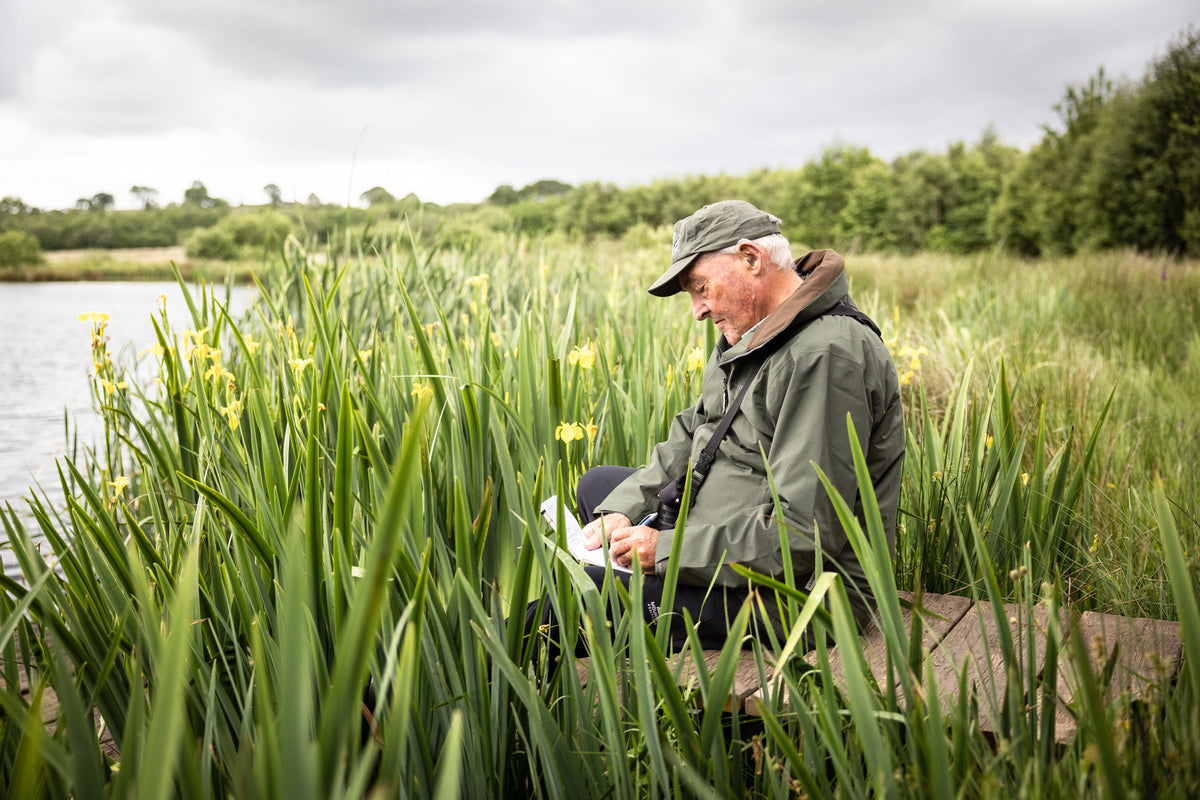
Outside the top pool hut on the River Laxford, the wind hurled itself around with the kind of conviction only the Highlands can muster. Inside, the camera was rolling. David Allison, a man responsible for looking after this corner of Sutherland for 19 years, settled into his seat with the ease of someone far more at home on the hill than in front of a lens.
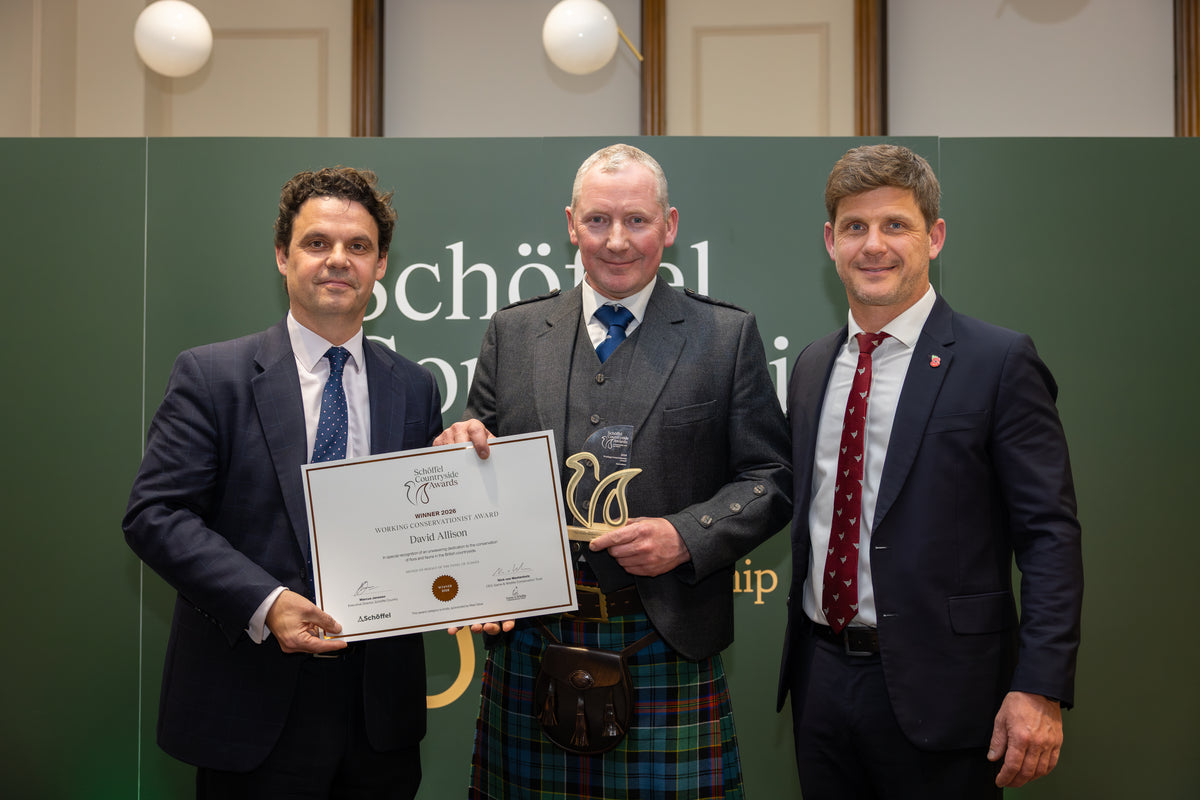
David is the head stalker at Grosvenor’s Reay Forest Estate. This year he won the Working Conservationist Award in the 2026 Schöffel Countryside Awards, which is run in partnership with the Game & Wildlife Conservation Trust. By his own admission, it’s a way of life he initially embarked on “for the sport and the game”. What I really wanted to understand, though, as the hut shook around us, was how a man with those beginnings has today come to measure success by way of seedlings, stag weights and salmon smolts – and what the term ‘working conservation’ really means to him in practice.
A croft, a fox and a father | How David became a head stalker
David grew up on a croft near Lairg and, from the age of eight or nine, followed his father – a keen stalker and fisherman – to estates across the Highlands. “That captured my imagination,” he said. “It was something I always wanted to be part of.”
I asked for his earliest memory of the hill. It came instantly: trailing his father and an old shepherd-stalker, when a fox got up in front of them. “The old shepherd was absolutely mad about that fox,” David grinned. “For some reason it has really stuck in my mind.”
Seasonal work led to a professional career, and in 2007, aged 35, he arrived at Reay Forest. He still can’t imagine being anywhere else. “Every day is a discovery,” he said. “It’s an opportunity, and a real adventure.”
And it’s an adventure that is evolving in tandem with his outlook. “The older I get, the more I realise it’s much more important to be delivering real, meaningful change,” David admitted. “You know, to leave something that’s going to benefit future generations.”
Three key characters: people, deer and salmon
Owned by the trustees of the 4th Duke of Westminster, Grosvenor’s Reay Forest Estate covers 96,000 acres of the far north-west Highlands, with the village of Achfary at its heart. The estate is renowned for its excellence in conservation, leading country sports and the beauty of its unspoilt landscape. It takes in mountain, deep blanket bog, dwarf shrub heath and fragments of native woodland, threaded through by burns, lochs and rivers – the Laxford chief among them.
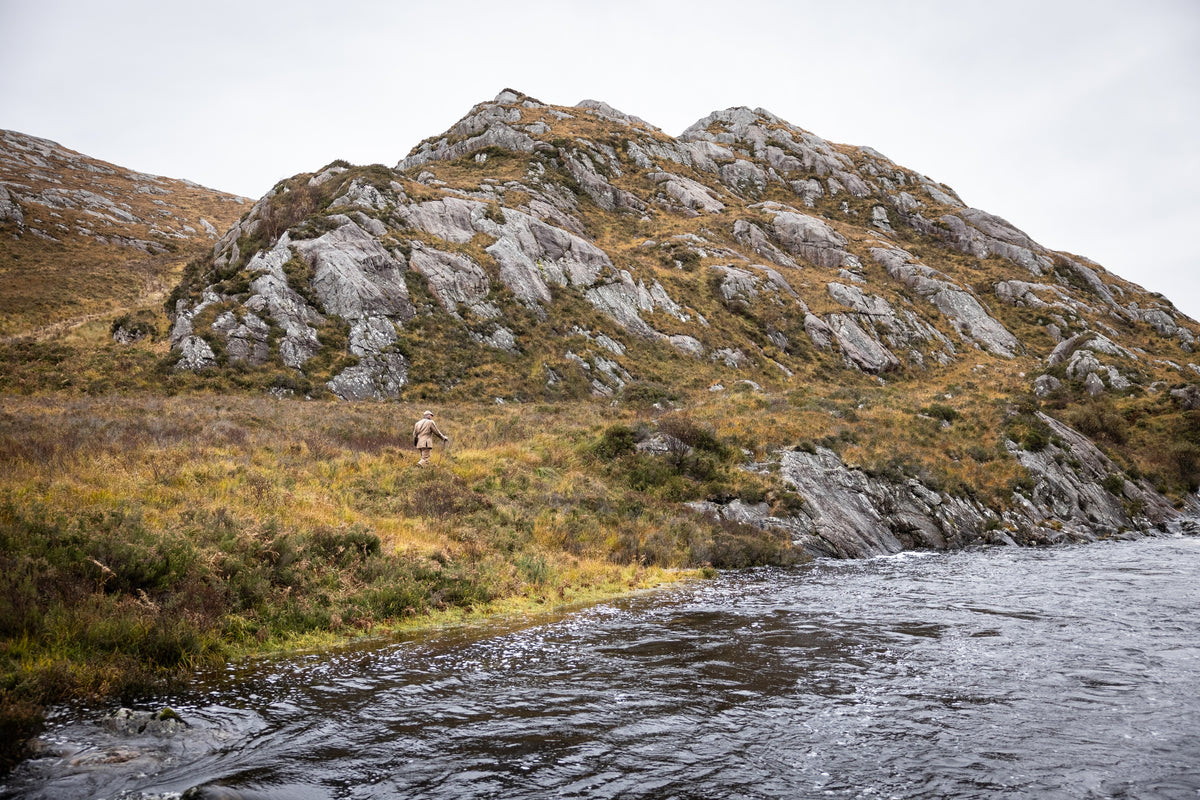
Grosvenor takes a long-term view of its stewardship, aiming to deliver lasting commercial, social and environmental benefit.
Guided by a 25-year-strategy, Reay Forest is carefully managed to protect, enhance and restore its sensitive natural environment while creating lasting value in the rural economy. At its centre are three key characters: people, red deer and wild Atlantic salmon.
“Long-term sustainable employment is such an important part of it all,” David explained. “At the peak of the season, a place like this employs 40 people, and has done so for over 100 years. We can only really sustain that with data-driven decision-making.”
Managing red deer in Scotland | What is the ‘elegant compromise’?
There is a phrase David returns to a few times during our visit – borrowed, he admits, from a guest. “The ‘elegant compromise’, for us, is about seeking a balance with nature, while still being able to deliver stalking opportunities for the estate.”
It matters because, in Scotland, red deer have become something of a political football. In some places, David said, they are treated as public enemy number one, with almost zero tolerance. “That’s a great shame, because deer have a place in the landscape as well as the trees. It shouldn’t be a choice between one or the other,” he said.
There’s more nuance to it than ‘remove the deer and the woodland will recover’, too; “some plants are only there because of a degree of browsing and grazing.
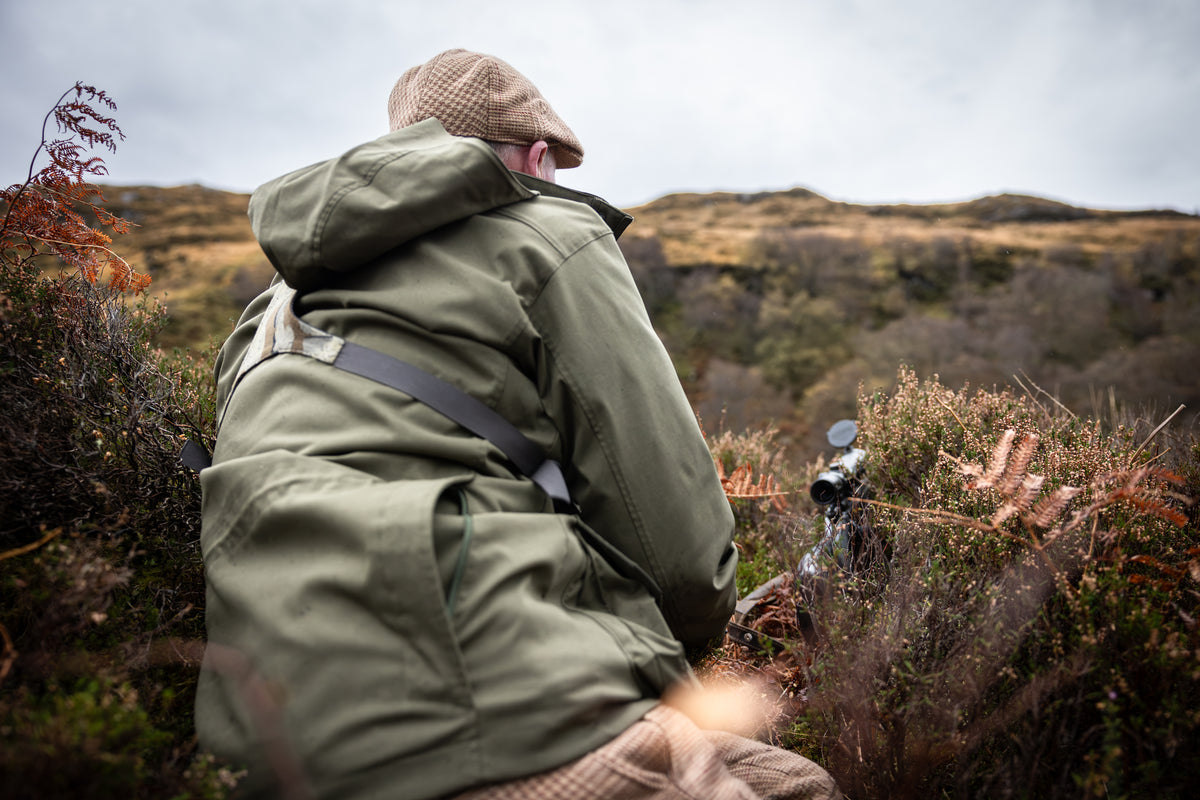
“The deer problem isn’t deer – it’s people,” David added. “We’ve just got to have a long, hard look at ourselves.
“Some folk might say that if you try to tread two lines, you’re going to trip over,” he went on. “Well, we’ll see. But what we’ve seen so far is native woodland recovering, a healthier and stronger population of deer, and lodges still full of guests. What more can you ask for, really?”
How many deer can the land support?
David’s turn towards science began in the early 2000s at Letterewe, where he spent time with ecologists after a three-year deer research project. “Those conversations really helped bring me into their world,” he said. “There are a lot of practitioners out there with great intent, but to really have an impact you need the relationships too.”
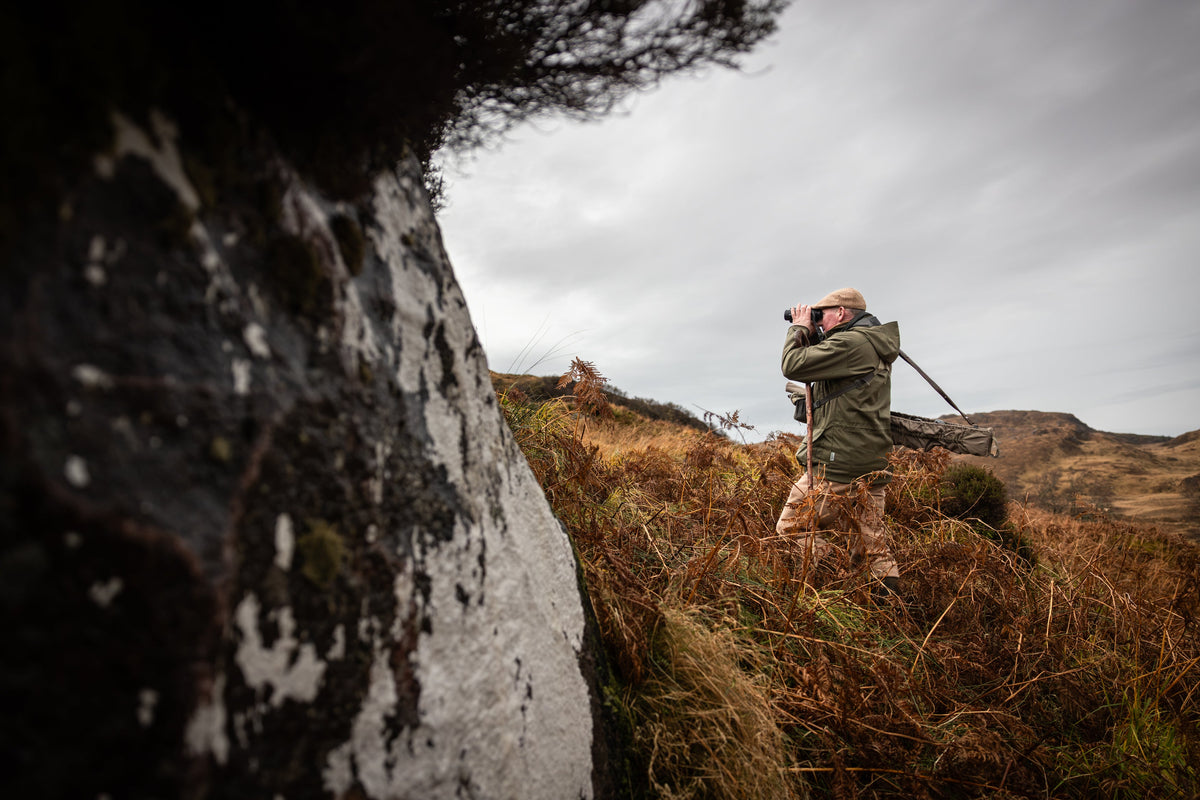
From around 2010, Reay Forest became an early adopter of herbivore impact assessments – systematic surveys of how grazing and browsing affect the vegetation. “I was quite keen that the team here understood what was happening under their feet,” David explained, “rather than just what was standing in front of them.”
Then came the question of how many deer the ground could genuinely carry. Each of the estate’s seven stalking beats was assessed separately – stripping out rock and water, accounting for aspect and habitat, and weighing what the deer eat in a year against what the land offers. The answer ranges from around four deer per square kilometre in the rocky north to around seven in the south-east. “It’s given us something to hang our plan on,” he said. “But what’s right for Reay Forest might not be right for our neighbours.”
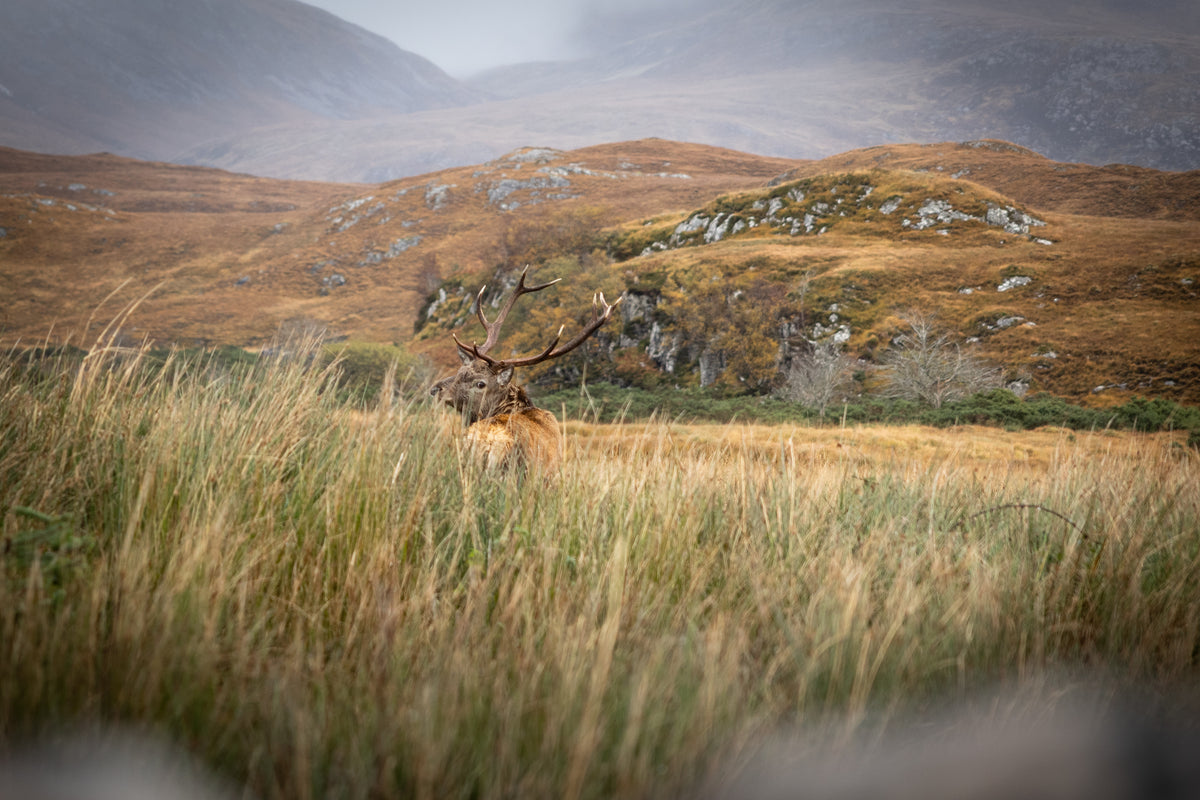
Reaching that level meant a planned reduction of around 1,500 deer a year over two years. The results are already showing: less trampling on the peat, less browsing on the heather and blaeberry, young trees appearing where none have grown for generations – and better deer. “This year we had a number of stags coming in at over 130 kilos,” David said. “I don’t think we’ve ever done that before.
“It’s easy for people to say you don’t care about the deer because you’re reducing numbers,” he said. “Actually, we could turn it on its head and say we care more about the deer, because we’re giving them more shelter, more food, more space – and an opportunity to thrive, not dwindle, through the winter and spring.”
Much of the wild venison is now sold locally. And the stalker who once lived for the hill has found an unlikely ally. “I didn’t think I would enjoy spreadsheets quite so much,” he laughed, “but Excel seems to be one of my best friends at the moment.”
Why do salmon need trees?
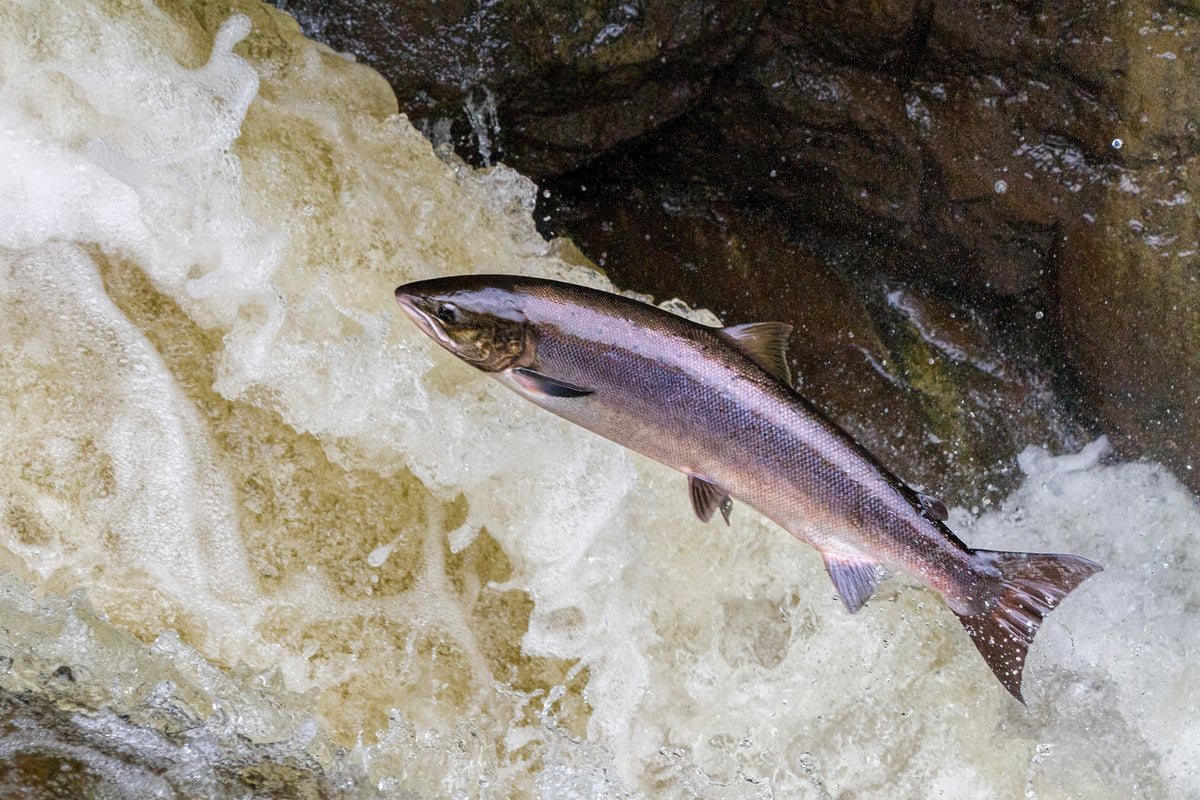
If deer are Reay Forest’s most debated key character, wild Atlantic salmon are its most precious. Grosvenor’s ambitious wild Atlantic salmon conservation initiative, Project Laxford, is one of the UK’s most extensive landscape-scale and ecosystem wide schemes aiming to restore critically endangered populations.
It is hoped the project will restore 118km² of the landscape – an area the size of urban Manchester – planting up to a million trees, enhancing biodiversity and benefitting the whole ecosystem.
In part due to the increased monitoring through Project Laxford, as well as Grosvenor’s wider nature recovery and climate resilience strategy, last year Reay Forest was awarded the highest ever score in Europe for land management and conservation and became the first organisation in the UK to receive a gold accreditation from Wildlife Estates.
“I hope other rivers can see an opportunity to emulate some of what we do here,” David said. “There’ll be some winners and some losers – salmon are facing a lot of headwinds. But I would say we’ve got all of the ingredients to bake a really good cake.”
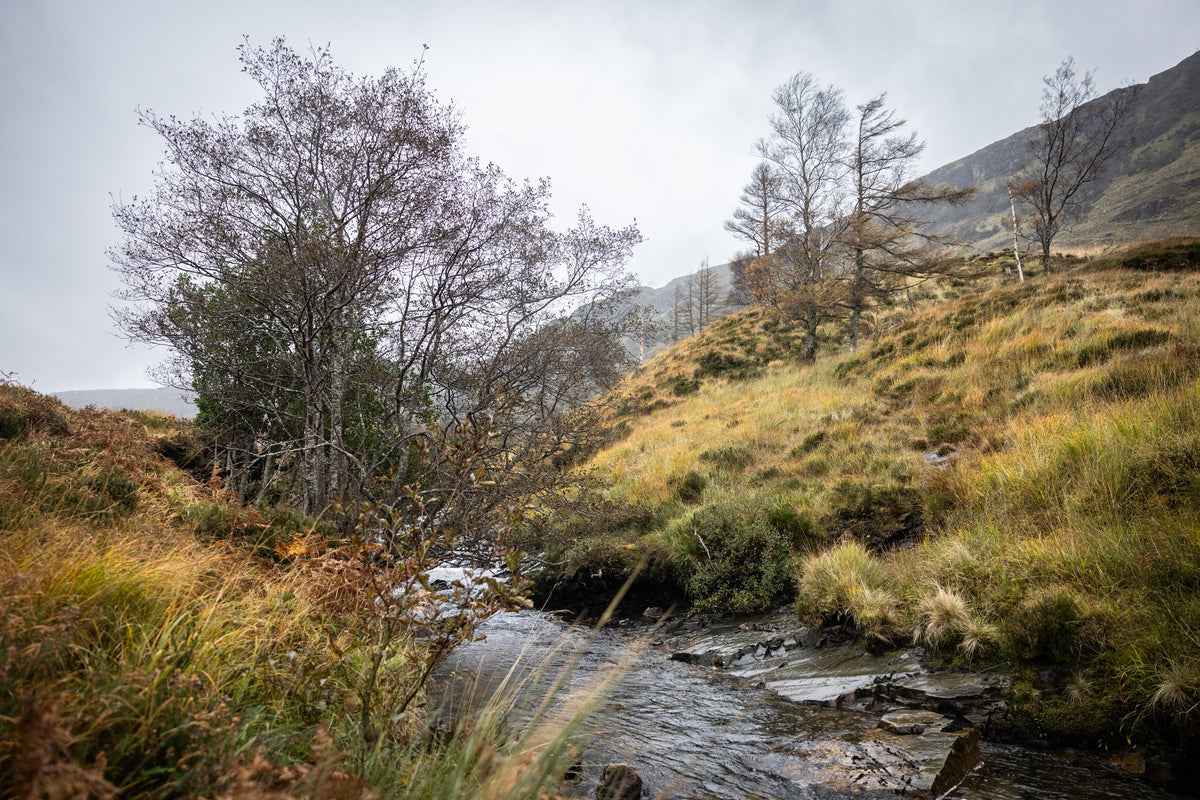
To see what that means on the ground, we drove up to Kinloch, at the head of the river system, where a 1950s conifer plantation was felled around 2018. With burns running right through it, the estate chose to replant with native trees rather than risk more erosion.
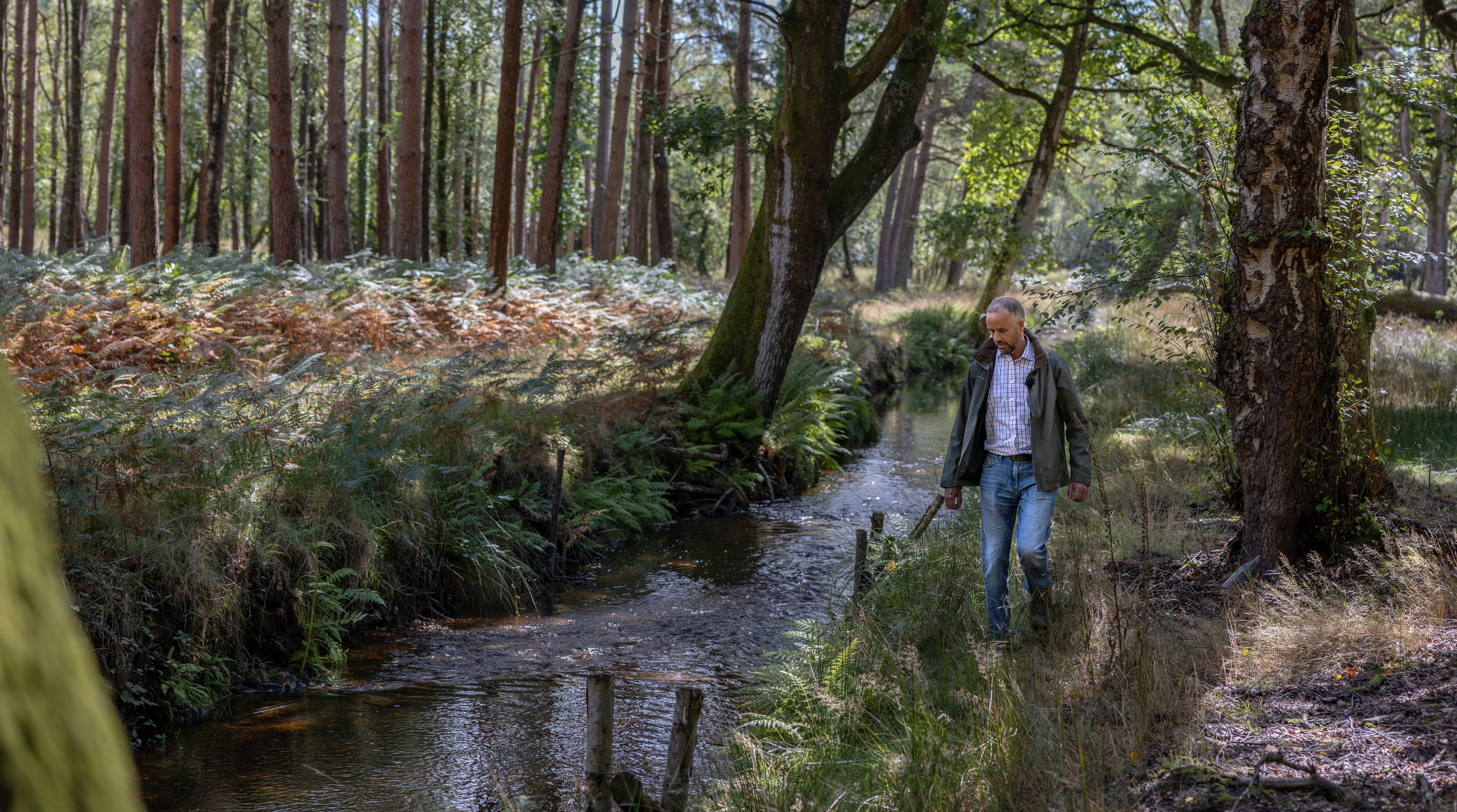
“The fencer’s not going to love me for this,” David muttered, clambering over the deer fence towards Kinloch burn. Along its banks, young alder were taking hold and birch were bushing out into dense thickets. “They’re just at that point,” he said, “ready and bursting to come out of the ground.”
The burn is one of the most important tributaries in the Laxford system, a nursery for the spring salmon. “At the end of the day, salmon need cold, clean water,” David explained. As the trees grow, they will shade the burn, keeping it cool and stable through the summer, while leaf litter and the invertebrates that fall from the vegetation will feed the juveniles.
The same thinking runs the length of the river. On the lower Laxford, a new fence enclosing around 450 hectares will let a birch-dominated woodland diversify and spread, while an estate-wide programme to plant more than a million native trees is focused on the river corridors. It’s restoration rather than invention: the old Gaelic name for one area, David told me, pointing uphill, translates as ‘the large wood’.
Monitoring and data are key. Water temperatures are logged at 30 points across the catchment, and 2,000 juvenile salmon are tagged each year. Patience is essential: “With the five-year lifecycle of a salmon, you soon eat away at a decade,” David said. “The fruits of our labour will be seen in 20 or 30 years’ time, because the trees take so long to establish.”
I asked what a Scotland without healthy salmon numbers would mean to him. “Shame on us,” he said. “If we don’t take the opportunity that’s given to us to try and do the right thing for an iconic species like salmon – what a shame. I think it’s beholden upon us to do the right thing.”
The importance of collaboration in conservation
For all the data and the trees, the conversation kept circling back to people. When David arrived, the stalking team he would head up had around 180 years of experience between them – men who knew the lie of the land, where the deer wanted to be and where the salmon spawned.
“It would have been very easy to fall on my own sword,” he said. “I used the opportunity to learn from the team and find out what challenges they had and what their aspirations were. I’m not saying I always handled it well, but we’ve evolved as a team together.”
Changing course took a great deal of hearts and minds work. “Some of us could see the bigger picture, and some of us took a little bit longer,” he said. “That’s been a challenge for me as a manager, but also a real privilege, when you see the penny drop.”
The reduction in deer numbers is the clearest example. It was designed with the stalkers’ knowledge at its heart – where to focus effort, and how to make the most of the venison – and the team are now among its strongest advocates. As David puts it: “Ecology is easy. Psychology is much harder.”
The same instinct shapes how David works beyond the estate boundary. “No man is an island,” he said. “I can’t imagine achieving what we have here without our partnerships – we just couldn’t. Life’s not a dress rehearsal. We get one go at this, so we’d better try and get it right, and use the best minds that are available.”
Those minds include the Atlantic Salmon Trust, the local fisheries trust, Marine Scotland, NatureScot, ecologists and foresters. But the skill, he insisted, is in listening. “If we’re already thinking of the answer while somebody else is talking, we’re probably not listening well enough. That’s been a great lesson for me.”
A long-term approach in the Highlands
Ask David how far ahead he is planning and he resists a neat answer. “My view is that we’re at the very beginning of something,” he said. “There’ll be two generations of pioneer trees before longer-lived trees will grow here. So it’s a big number – way beyond my pension and my time on this planet.”
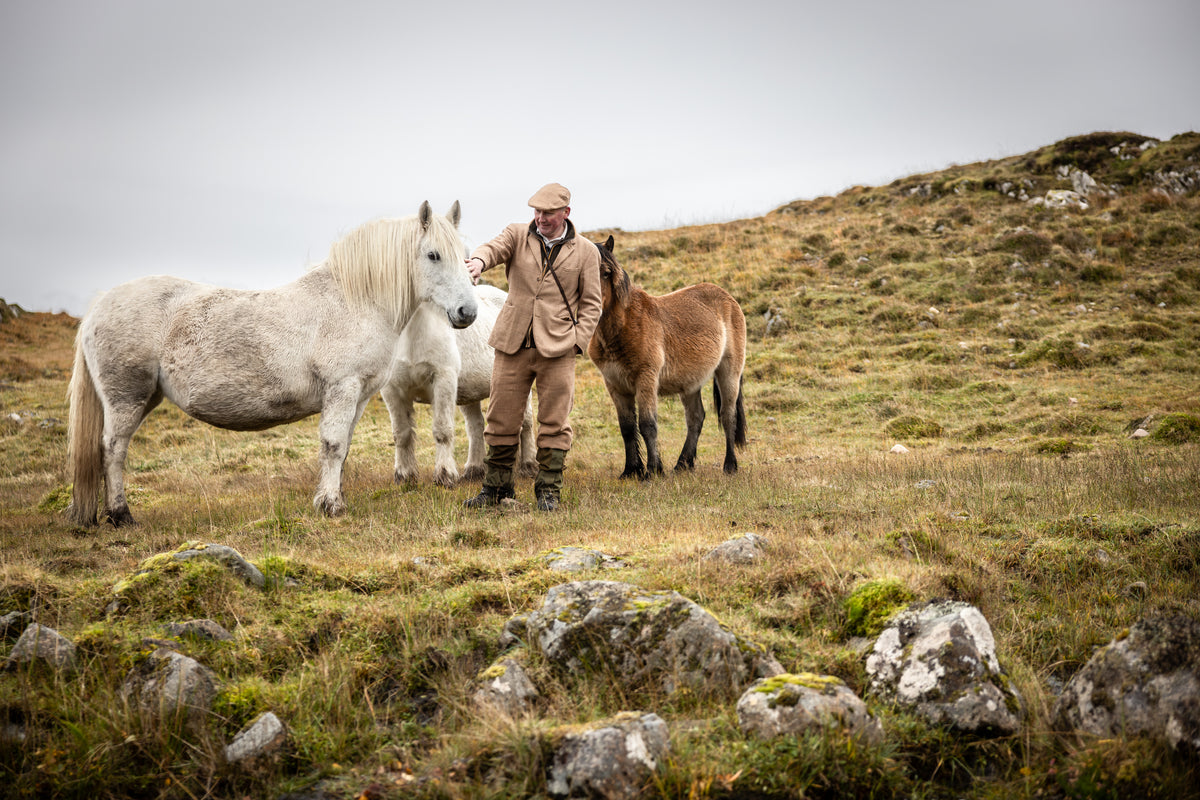
He spends more time behind a desk these days than he’d like, but the hill still gives him what it always has – just differently. “Taking a life is important, and you’ve got to be respectful and do it as well as you possibly can, but pulling the trigger to me now means nothing really,” he said. “Being with people next to the deer, taking them places they’ve not seen before, seeing the pony come in, and the smile on people’s faces on a good day – my goodness, what a blessing that is.”
Life in the Highlands is, as David likes to put it, a journey of discovery – and something that will continue long after he’s laced his boots for the final time. He seems entirely at peace with that. “Who knows if we’re doing the right thing?” he said, looking out across the Laxford. “But we’re going to try.”
The Schöffel Countryside Awards are run in partnership with the Game & Wildlife Conservation Trust (GWCT). The 2026 Working Conservationist category is sponsored by Mea Opus.
Read more about fellow Working Conservationist finalists Graham Denny and James Allsop here.
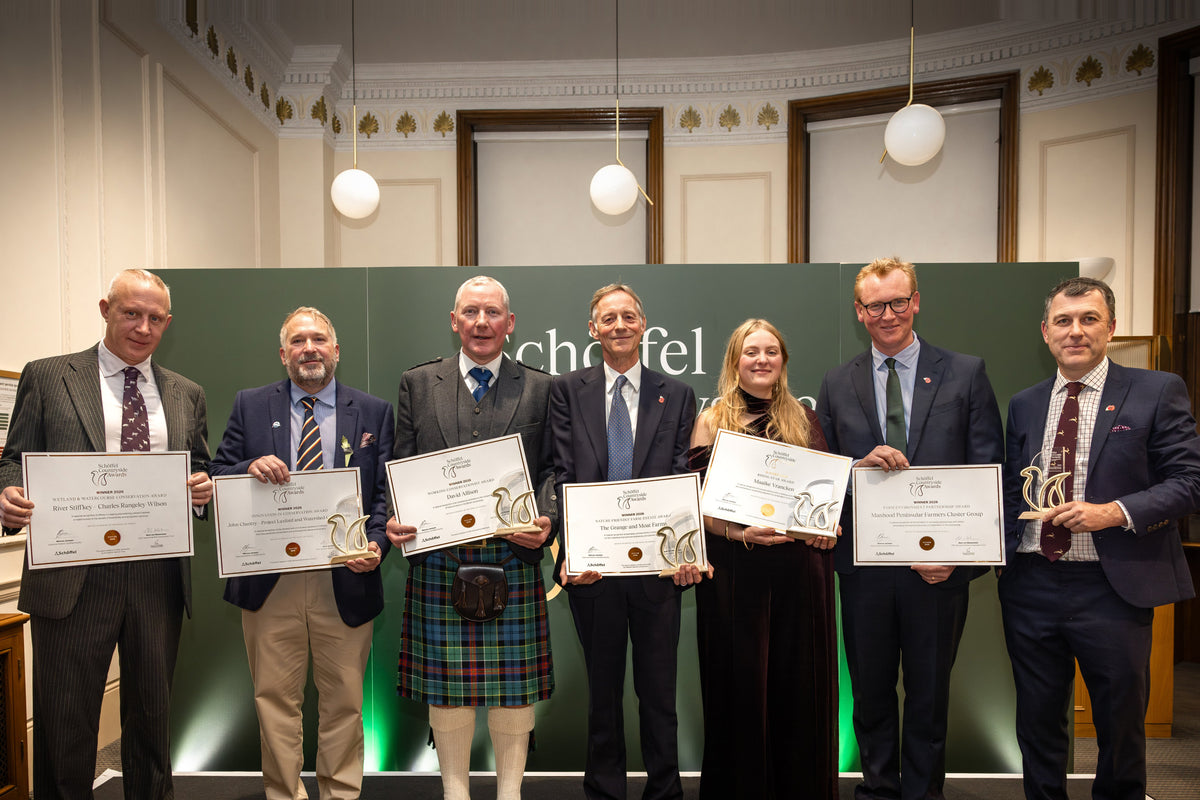 Meet the winners of the 2026 Schöffel Countryside AwardsRead postSchöffel Countryside Awards6 min read
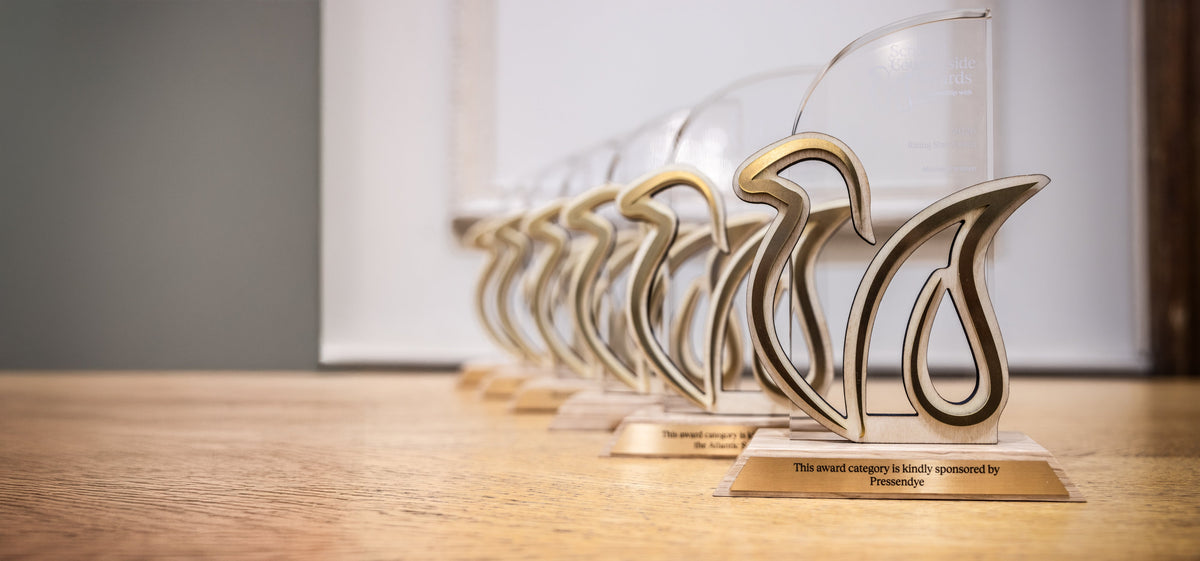 Notes from the judges | 2026 Schöffel Countryside AwardsRead postSchöffel Countryside Awards12 min read
 The unsung heroes of the countryside | Episode 6: Graham DennyRead postSchöffel Countryside Awards8 min read
 The unsung heroes of the countryside | Episode 5: Geoff EyreRead postSchöffel Countryside Awards5 min read
 Nominations open for 2026 Schöffel Countryside AwardsRead postSchöffel Countryside Awards5 min read
 The unsung heroes of the countryside | Episode 4: Hooves and habitatRead postSchöffel Countryside Awards7 min read
 The unsung heroes of the countryside | Episode 3: Rupert BrewerRead postSchöffel Countryside Awards5 min read