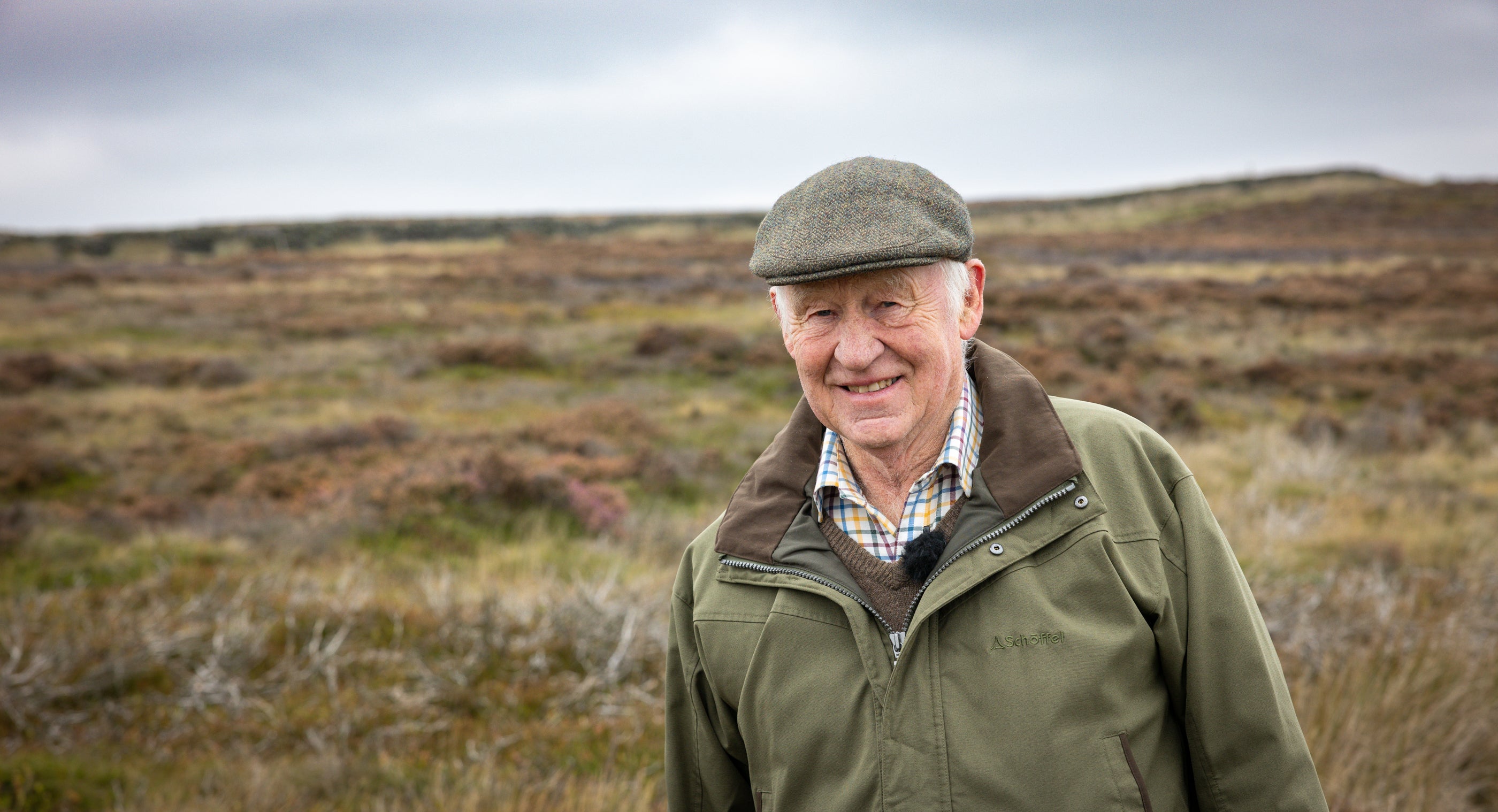

The unsung heroes of the countryside | Episode 5: Geoff Eyre
Through experimentation and a deep understanding of upland ecology, Geoff Eyre – winner of the Innovation in Conservation category in the 2025 Schöffel Countryside Awards – has pioneered some of the most important breakthroughs in UK moorland management.
When Geoff Eyre strides out across Abney Moor in the Peak District, he sees more than undulating terrain – he sees a lifetime’s work in motion. Trained as an agronomist, Geoff has dedicated over three decades to transforming what upland restoration looks like in practice, quietly forging new paths in ecological recovery. Today, the moor he tends, rising up and away from Hope Cement Works in Derbyshire, stands as one of the region’s most biodiverse landscapes – a haven for wildlife. But it wasn’t always this way.
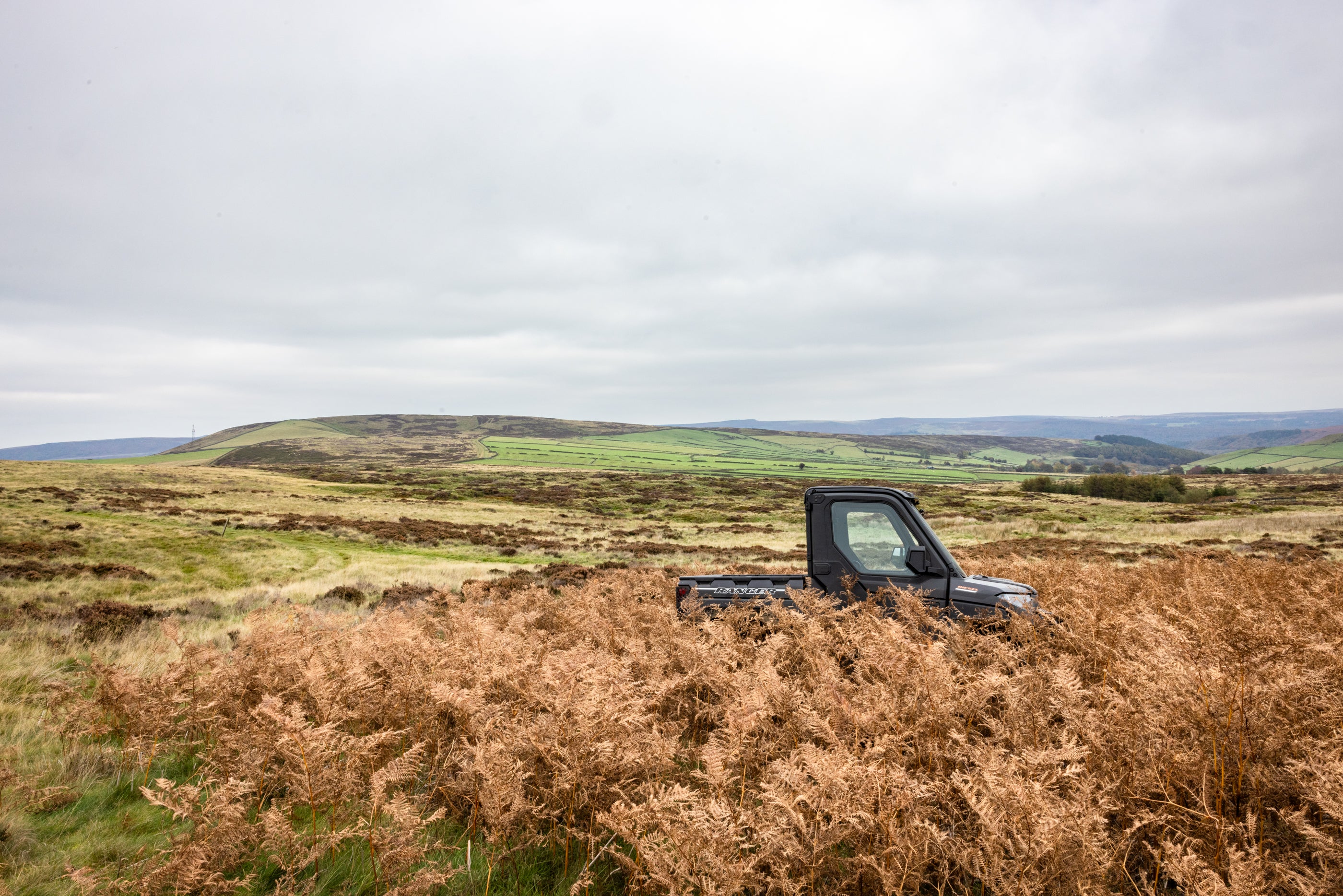
When Geoff first began his work on what is now a 900-acre expanse, nearly half of it lay under a choking jungle of bracken. Its dense growth blocked light and suppressed other species, a dominant presence that stifled the heathland beneath. “It’s actually chemically allelopathic,” explains Geoff, “Bracken releases compounds that inhibit other seeds from germinating.”
In the late 1980s, around 40 per cent of heather in the Peak District had already vanished, much of it lost to wartime ploughing and subsequent land use changes. Geoff’s initial task was straightforward in ambition but complex in execution: restore heather to areas overrun by Molinia grasses. In doing so, he developed a deep reservoir of experience – one that soon shifted focus as the scale of the bracken problem became apparent.
The breakthrough came unpredictably, as so many good ideas do. While spraying bracken on steep banksides with a soft-track vehicle, Geoff happened upon a recently burned patch that was returning with a vengeance. He sprayed it, which proved remarkably effective. When he sowed heather seed on that same ground, the germination rate was strikingly higher than anywhere else. The fire hadn’t just cleared vegetation – it had neutralised the bracken’s suppressive chemistry and unlocked the soil’s potential.
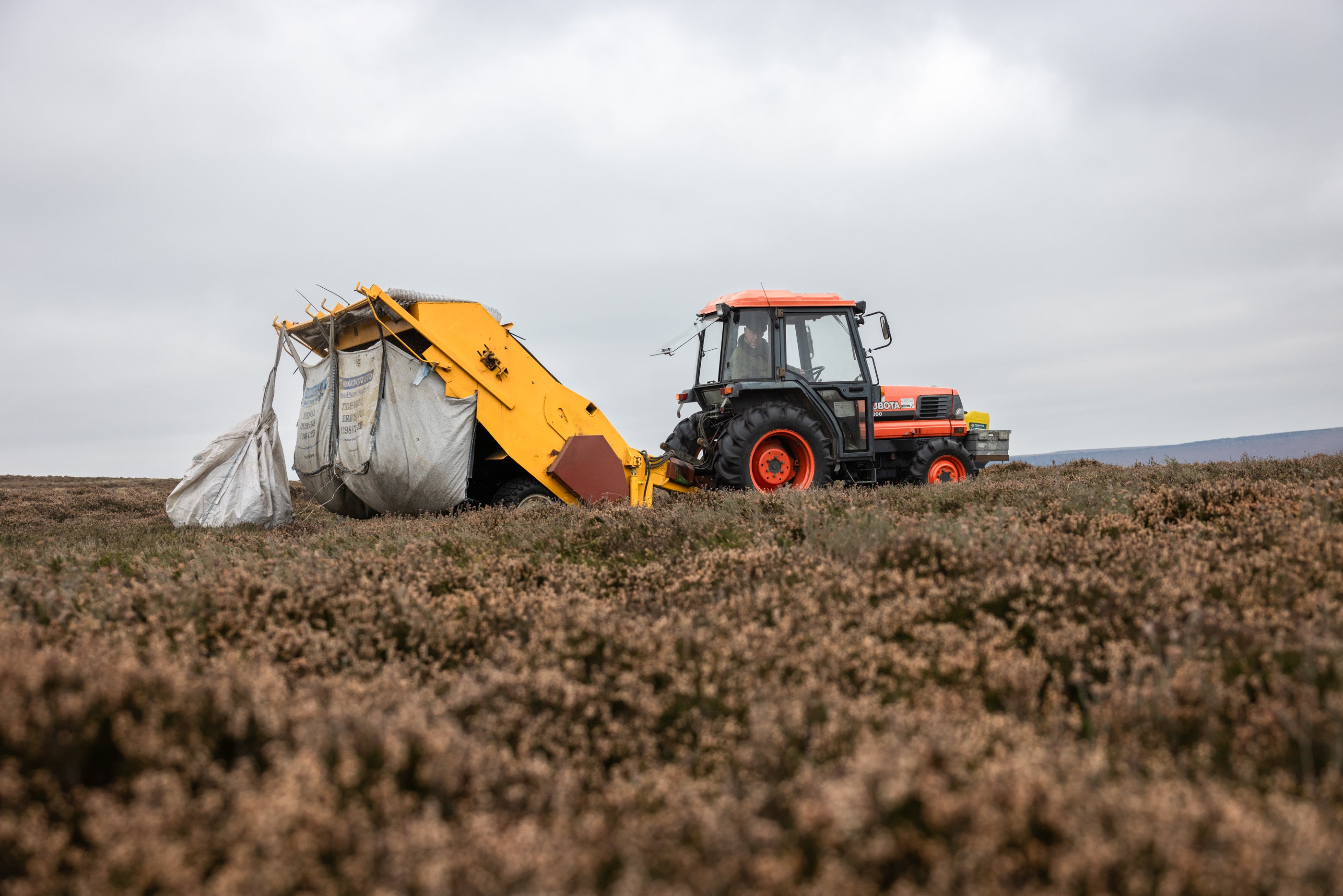
That insight sparked a wider programme of habitat restoration and innovation. With the help of a friend, Geoff engineered a bespoke harvester capable of collecting the seed of heather and other native moorland species at scale. Suddenly, reseeding sites with heather, bilberry, crowberry, tormentil, heath rush, bedstraw and more was possible – a practical game-changer. The result has been richer biodiversity not only on Abney Moor but on thousands of restored acres across the UK where his harvested seed has been used.
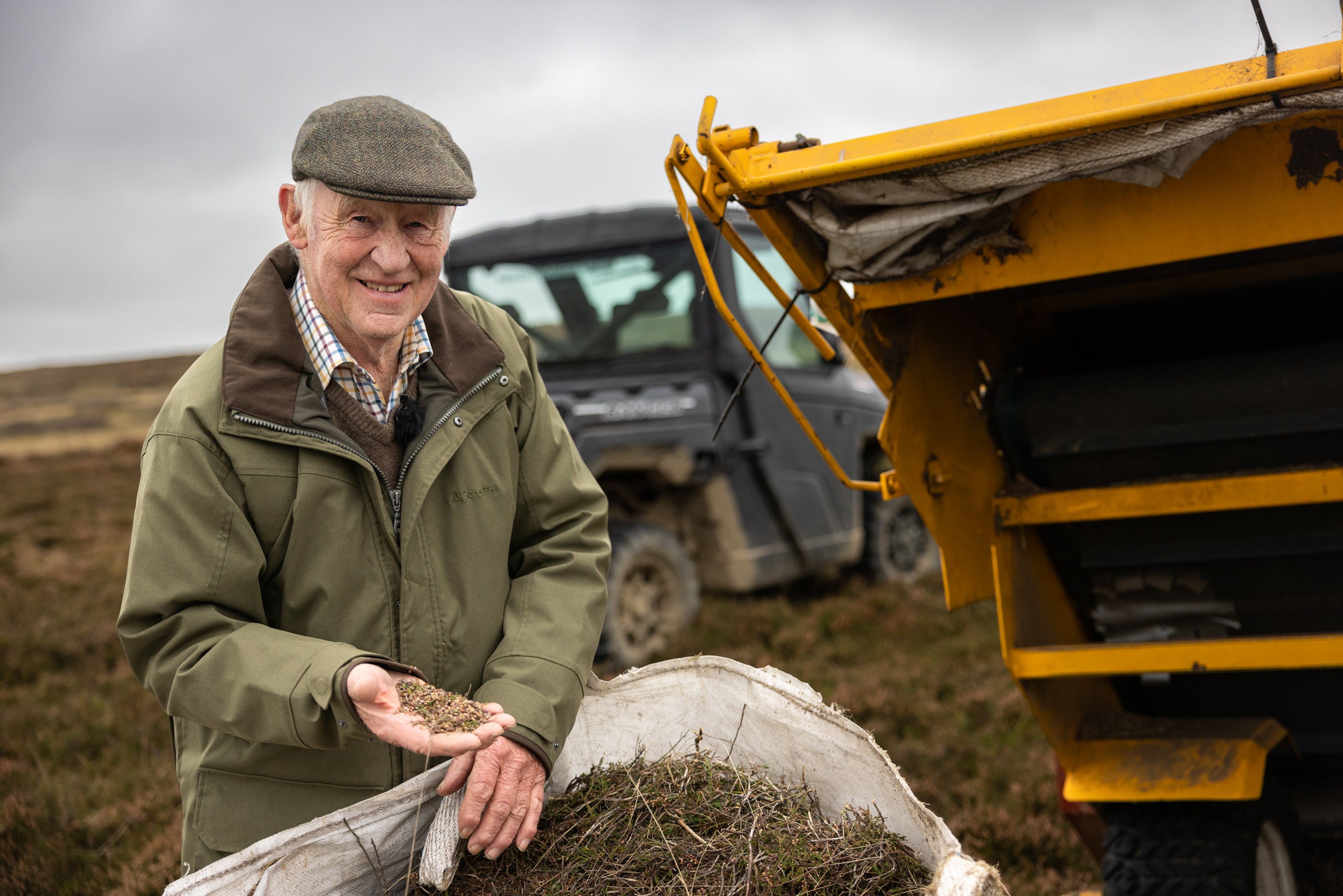
But Geoff’s ingenuity didn’t stop there. Inspired by research from South Africa showing that smoke, rather than heat, triggers germination in some seeds, he built smoke chambers and then a condenser to create a form of ‘liquid smoke’. This allowed him to treat seed more effectively, boosting germination success across a range of species. He also developed a method of controlled ‘cool burning’–a low-intensity fire that moves deliberately across vegetation, leaving carbon-rich char instead of scorched earth. To illustrate the low heat at ground level of these controlled burns, Geoff once famously hid a Mars bar beneath the flame, later retrieving it intact to enjoy with a cup of tea once the last flicker had faded.
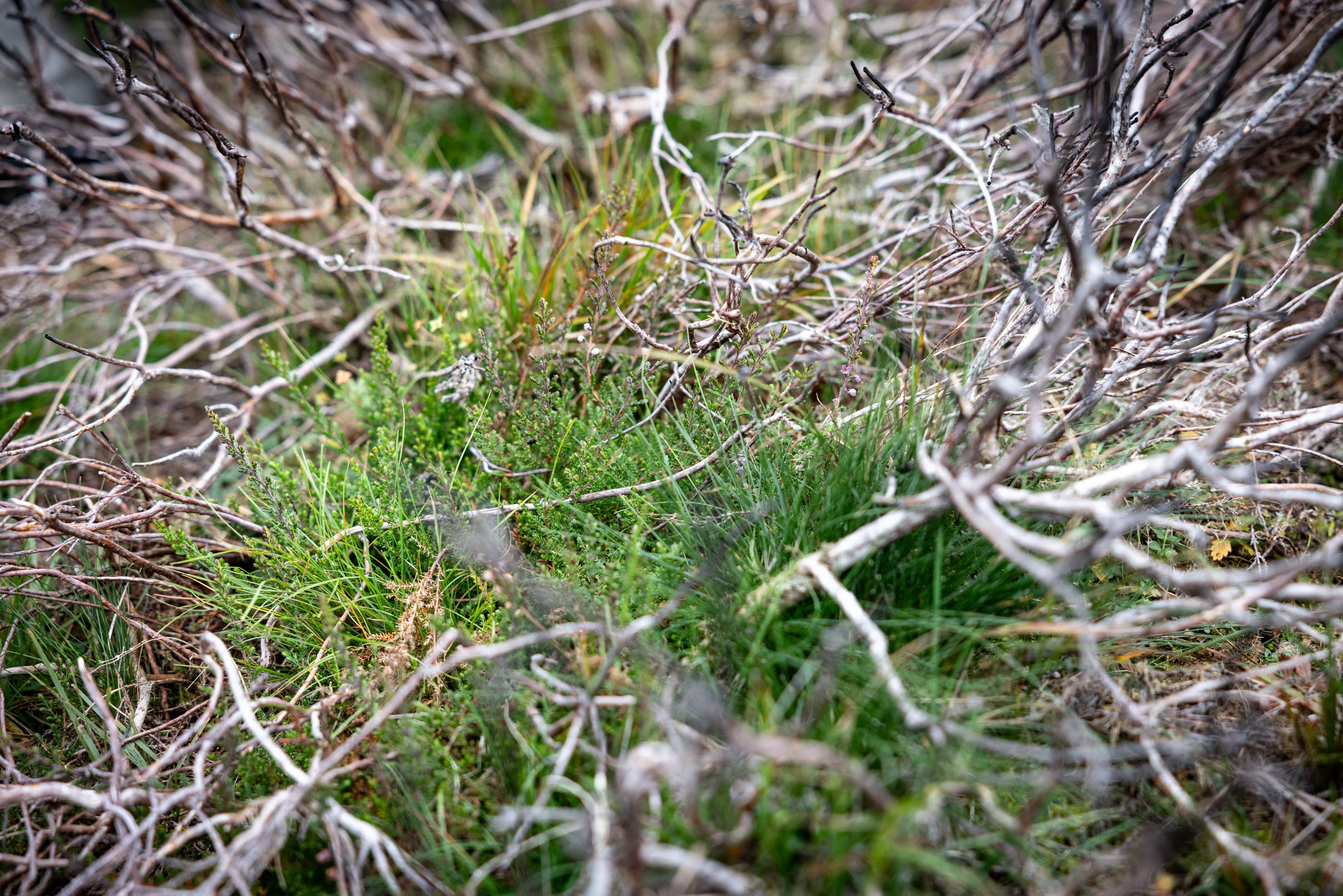
The true measure of Geoff’s work, however, is best seen in the wildlife. Land once dominated by dense bracken or Molinia now rings with skylarks and meadow pipits in numbers placing the site among the top 2% of skylark habitats nationally. Mountain hares have returned, and species such as curlew and lapwing are breeding successfully once again. Abney Moor has become a testament to what considered management and sustained curiosity can achieve.
Yet Geoff is the first to acknowledge that innovation often goes unheralded. Despite the clear successes of his hands-on experimentation, he notes that formal recognition from conservation bodies can be slow coming. “If you’re too afraid to get egg on your face,” he says, “you’ll never learn anything.”
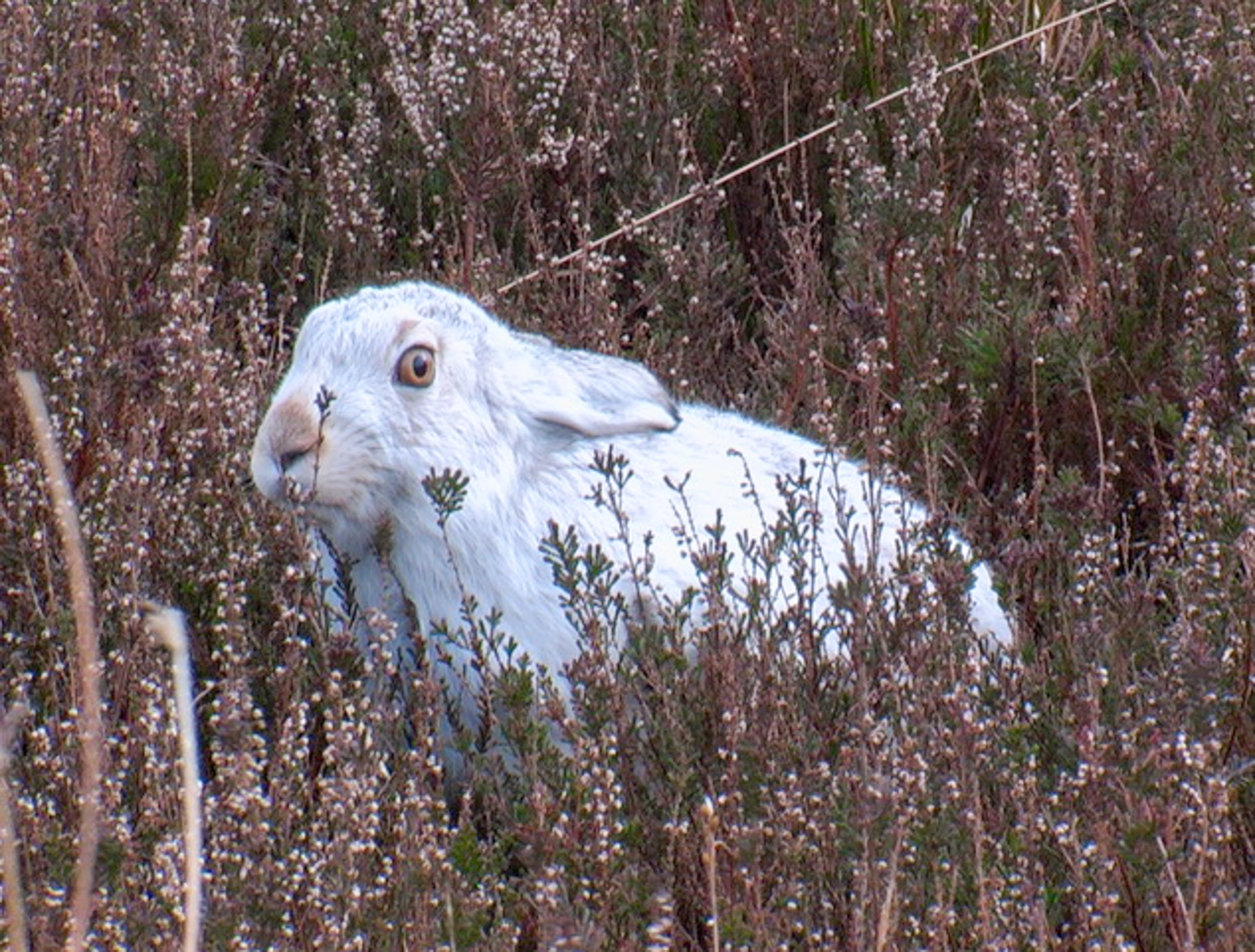
Today, Abney Moor is not merely restored, it is thriving: a living demonstration of how dedication, ingenuity and a willingness to test new ideas can reshape a landscape. Walkers may know it for its purple swathes of blooming heather, blissfully unaware of the decades of careful stewardship beneath their feet. For Geoff, that quiet appreciation is enough. “People love the views,” he says. “They come here for the heather. And I’m glad they can.”
The 2025 Innovation in Conservation category is sponsored by B-hive Innovations