Coastal foraging with Tim Maddams | The cockle hunt
In the first of a two-part foraging series, we follow chef Tim Maddams onto a Scottish beach in search of wild ingredients. From cockles and clams to seaweed and shore crabs, some of the best food you'll eat needs nothing more than a rake, a low tide, a little local knowledge, and some luck.
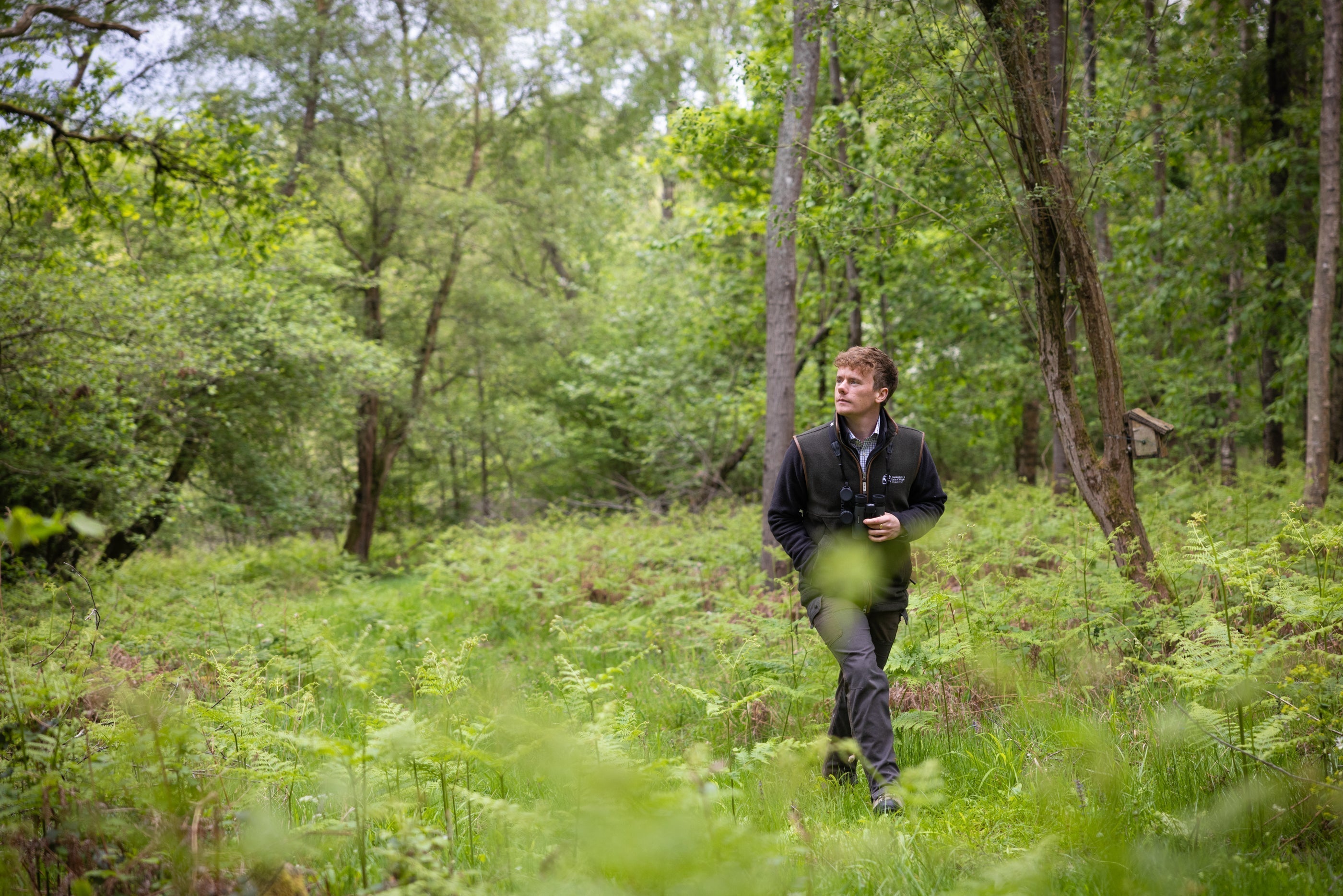
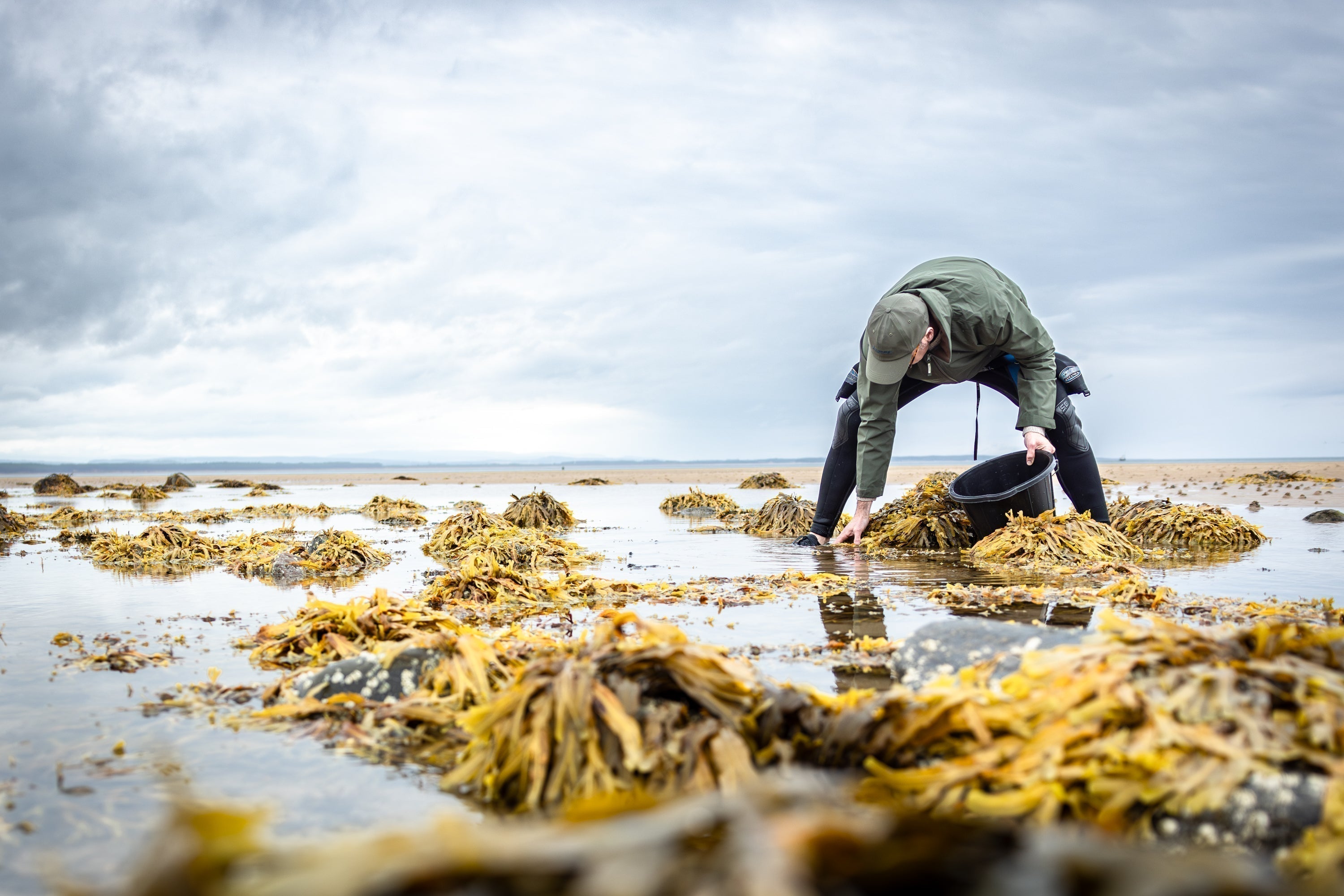
The temperature is 10 degrees cooler than it is back home and there’s a bit of rain, but none of us are bothered. Rake in one hand, bucket in the other, Tim Maddams, our host for the next 36 hours, emerges from the back of his van in a wetsuit tied at the waist, full of optimism. “We're gonna try and get some stuff along the seashore, along the coast,” he says. “Then we’ll hit the woods later – early berries, early mushrooms, bits and pieces – before cooking it up in the kitchen tomorrow.” That's a story for another day, though. For now, coastal foraging is our focus.
Tim is a chef who forages the way many people check their phone – constantly, almost without thinking about it. Coastal foraging, in his world, means reading a beach for signs and subtle hints: shells scattered along the tideline, birds working one particular patch a little too enthusiastically. All of it is information. "I've often seen here these lovely, lovely shells," he says, nodding at a scatter of clam shells near the water. "Hopefully that means that just out there, just beyond the low water mark, there's a clam or cockle bed.”
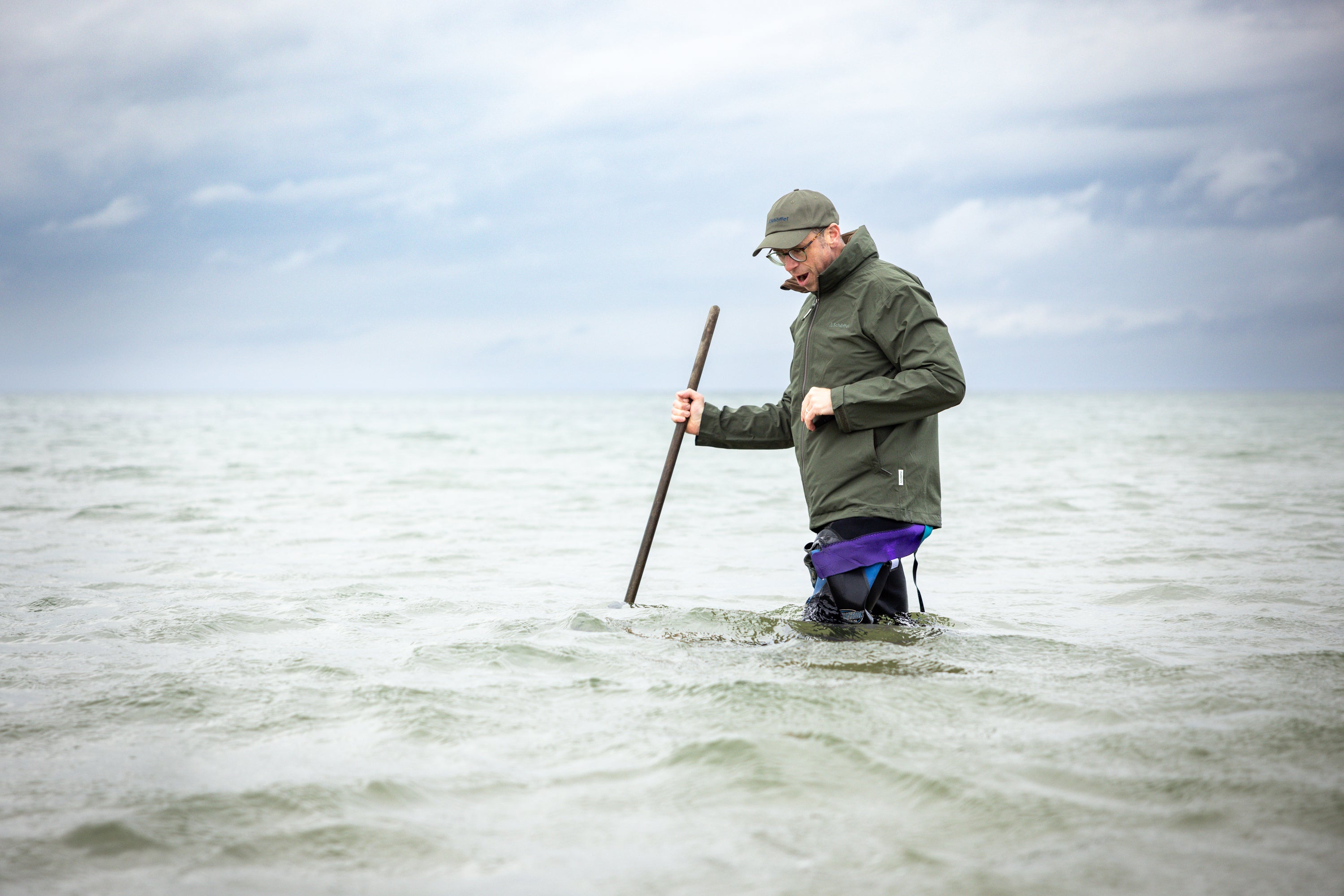
Cockles, unlike a mussel or limpet, don't cling to anything. Instead they sit buried in the sand, filter-feeding, which is exactly why the birds are so interested – and why they're so easy for a person to miss. Finding them is mostly a question of tide: the lower and stiller the water, the more the beach gives up. Tim starts by wading out as high as his wetsuit will allow, working the sand blind with a rake he's had for years. “We won’t do a huge amount of exploratory raking,” he says. “But it’s always worth a look – we may just stumble upon a bed of cockles.”
What Tim actually loves about foraging, he says, isn't the reliable stuff – it's the surprises. Some years that's a patch of wild mushrooms in an unexpected place; this time, before he'd even reached the beach, it was a hedge of wild rose thick with rosehips, spotted from the car park. “No cockles yet,” he laughs, "but we might have some rosehip syrup to make us feel better about life.” A map only gets you close. The rest is luck, patience, and a willingness to be distracted.
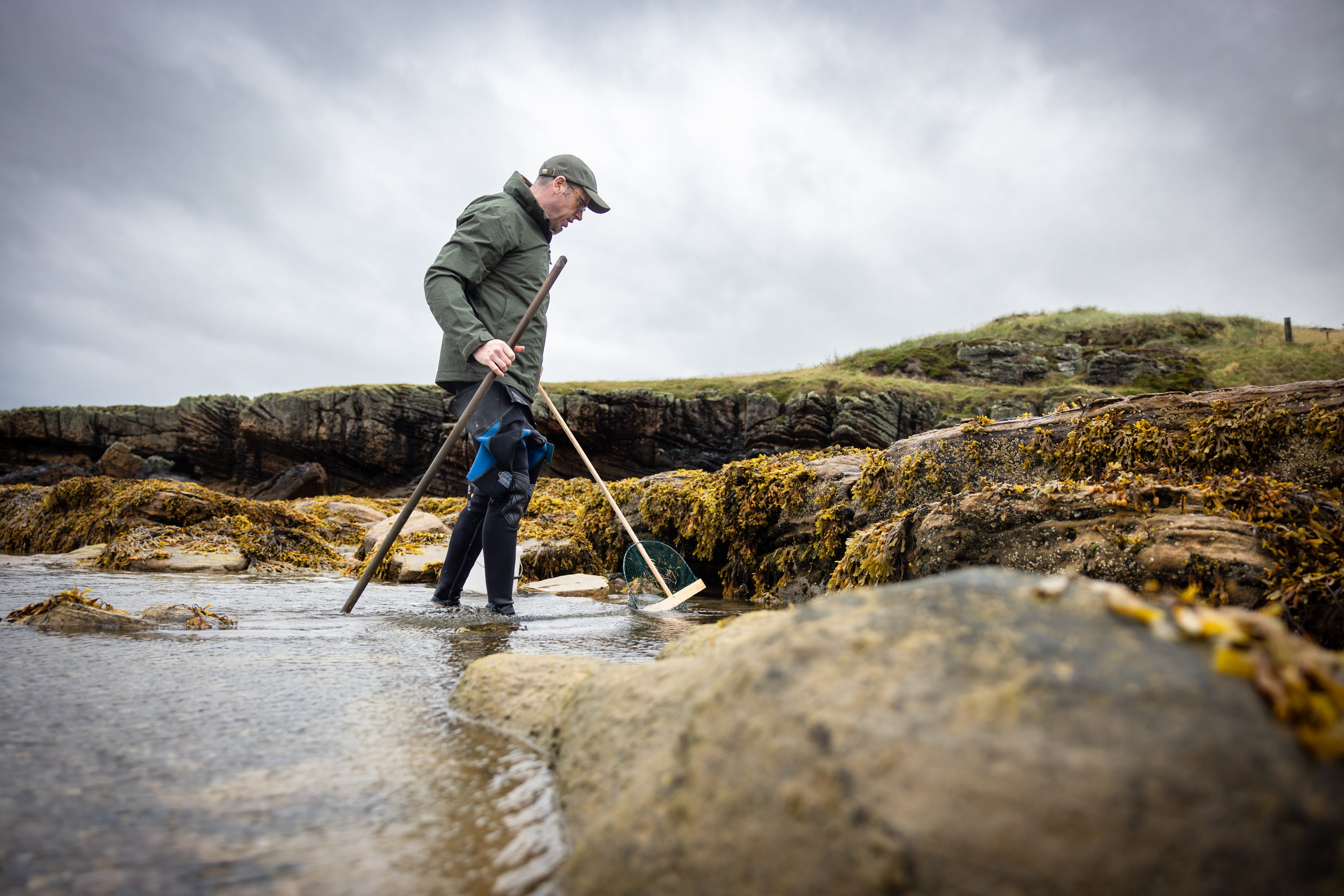
Along the way we gather a few winkles for the pot, and a shore crab that very nearly gets its own back before Tim gets a hand on it – “totally legitimate forage,” he insists. It's unhurried and opportunistic.
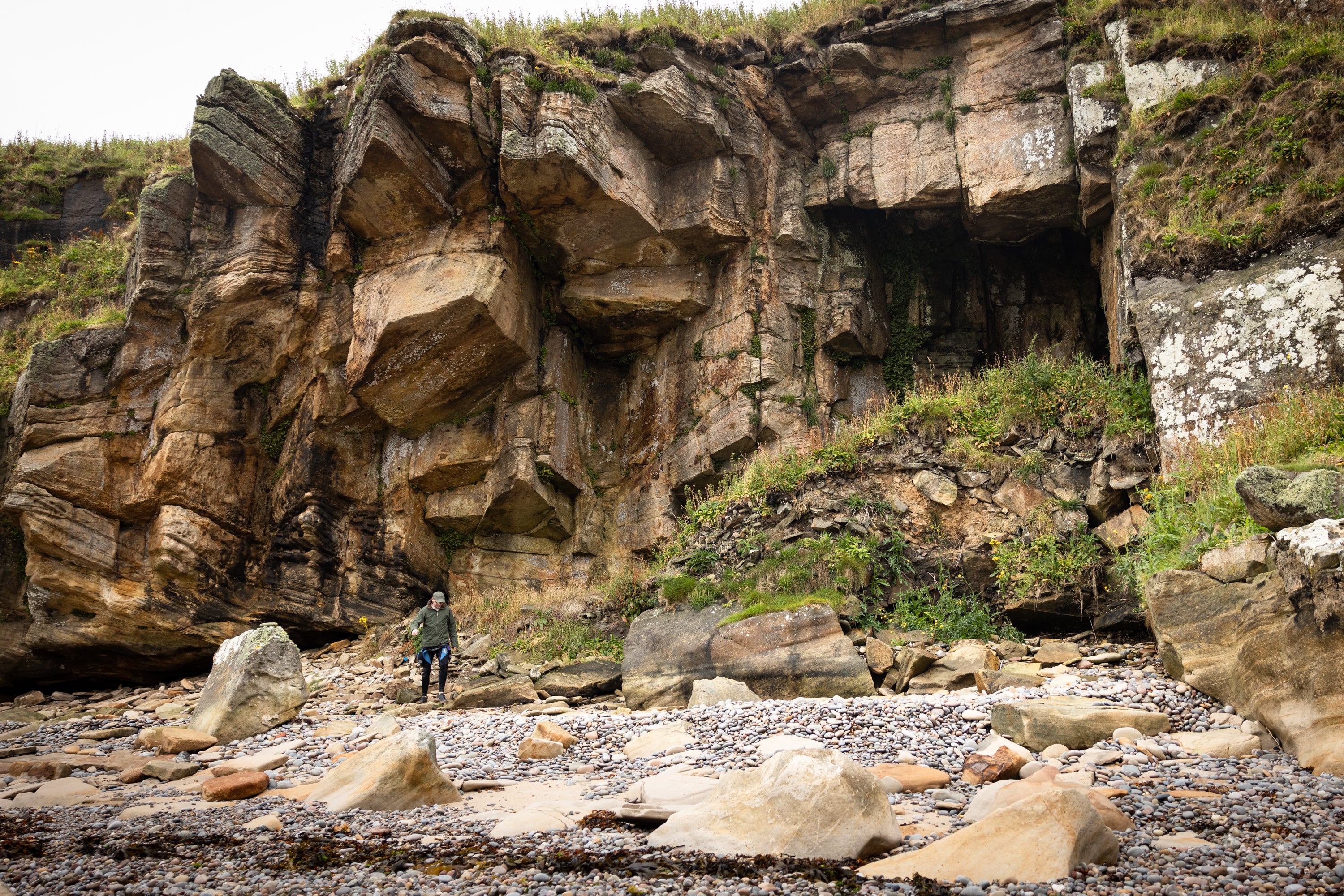
Then, at last, inshore now among the rockpools, while on the hunt for some back-up winkles, the thing he actually came for: a hinge in the sand and the satisfying feeling of a shell catching against the teeth of the trusty rake. “This is what we've actually been looking for here,” he says, scooping up the cockle for a closer look. “And where there is one, surely there will be more...”
And so it proved. Before long, we were feeling them in the sand with our bare feet and with every few pulls of the rake, Tim would deposit another bulbous specimen in the bucket. There's a satisfaction to it that no fishmonger's counter can quite replicate. "You pick them up at the fishmonger, and you still love them," he says, "but there's some kind of sensory joy, some deep satisfaction at having found them."
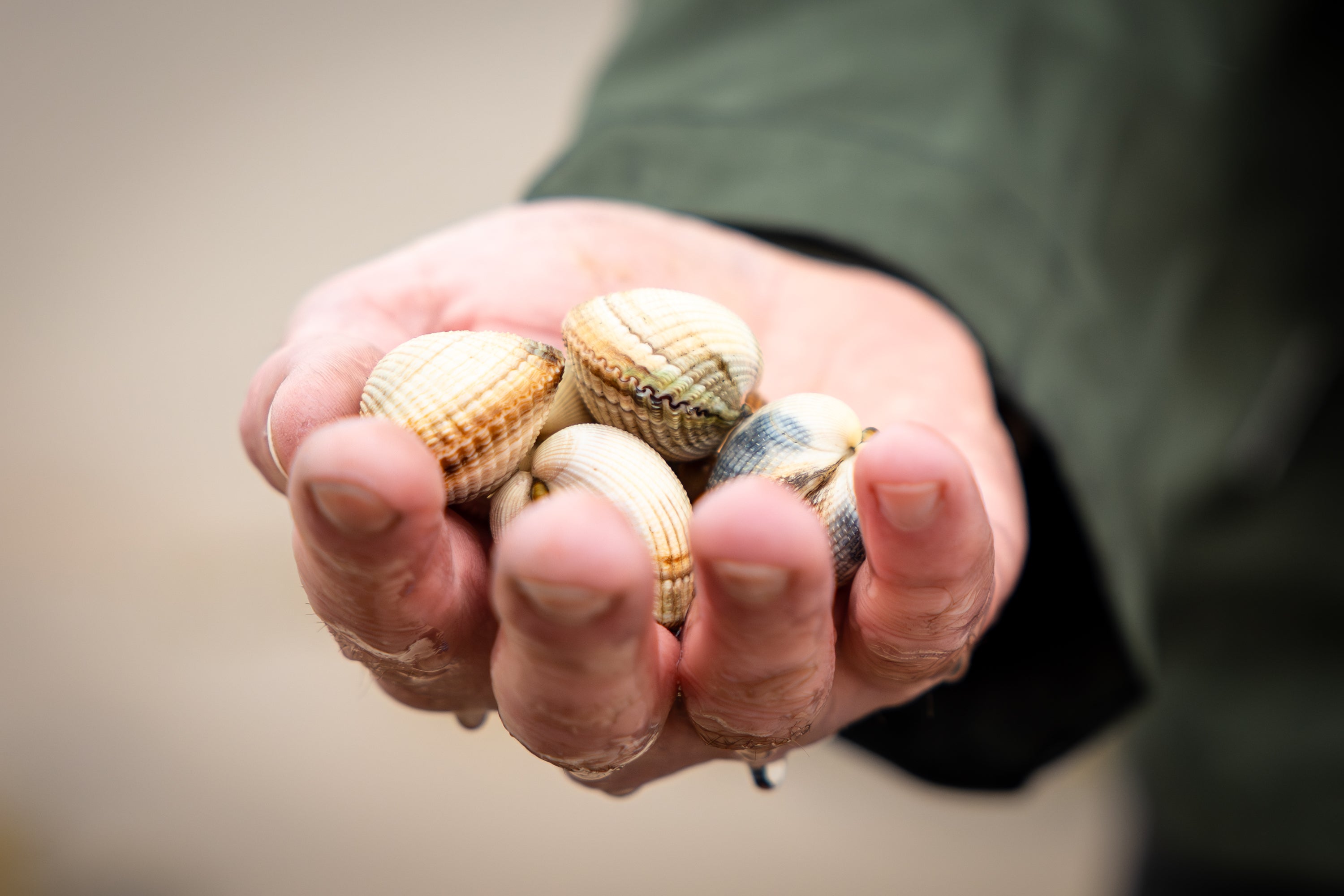
As we go, Tim’s approach to foraging becomes more obvious. He’s careful only to take as many cockles as we need for the pot, returning any that are too small. It's less a code of conduct than an instinct: take a little, leave plenty, and trust the tide to do the rest next time. It feels respectful and right – and present right through to the moment they sit steaming before us on a plate of pasta.
Back at the van, Tim mentions the importance of keeping the cockles alive and cool overnight in a bucket of fresh seawater so they can purge out any grit before cooking.
The next day, in the kitchen, that small haul becomes something very simple: cockles steamed open with garlic, white wine, and dulse– a flat, red seaweed that looks like a hand with fingers – tossed through spaghetti with parsley and whatever juice the shells give up. No recipe card needed – just good ingredients, found rather than bought, cooked with a light hand. You'll have to watch to see exactly how it comes together.
Common questions about coastal foraging
What is coastal foraging?
Coastal foraging means gathering food from the shoreline itself – shellfish like cockles, mussels and winkles, along with crabs and edible seaweed – using only what the tide leaves behind.
What are the basic rules of responsible foraging?
As Tim explains in the film, much of it comes down to an awareness. Be aware of how you interact with other people, and be aware of how you interact with the environment. It's mostly about slowing down – not taking everything you find in the excitement of the moment, not damaging anything that doesn't need damaging, and leaving anything you can't confidently identify exactly where it's growing, since it could be rarer than it looks. There are some useful best practice guides out there, such as those published on the Association of Foragers website. And there are many good identification books that will be valuable additions to your library.
Is it legal to forage on beaches in Scotland?
Scotland's right to roam generally allows foraging for personal use in most places, though – as Tim advises – it's worth checking local guidance and any protected-site restrictions before you go.
When is the best time to forage for cockles?
At a low spring tide, when the water pulls back furthest and exposes the sand they burrow into. A rake and a bit of patience do the rest.
How do you clean cockles before cooking them?
Rinse them well with cold tapwater, then leave them submerged in fresh, cold seawater somewhere cool for a few hours or overnight, which gives wild bivalves time to purge out any sand before they go in the pan.
What else can you find foraging on a beach?
Cockles might be the prize, but a mixed, rocky shoreline turns up all sorts: clams and razor clams buried in the sand, crabs sheltering between the rocks, the odd surprise in a deep rock pool (Tim jokes about the outside chance of a lobster), and seaweed – dulse and laver among the more worthwhile varieties, since, as he puts it, “all seaweeds are edible,” even if not all of them are worth eating.
Are cockles better than other shellfish you might find?
According to Tim, there's a real line between what he calls survival food and proper, delicious wild food – and shellfish sit on either side of it. Winkles, for example, are fine to eat, but a cockle is a gastronomic treat.
Watch Tim's full coastal forage – cockles, crabs, and all – on Schöffel Country's YouTube channel, then see what your own local tide has to offer. And if the coast doesn't appeal, stay tuned: part two takes Tim into the woods, chasing early mushrooms and late-summer berries instead.
 Harvest, drought, and a new venture | Farming the Seasons with Tom YoungsRead postField Notes9 min read