
The start of a new growing year | Farming the Seasons with Tom Youngs: Autumn
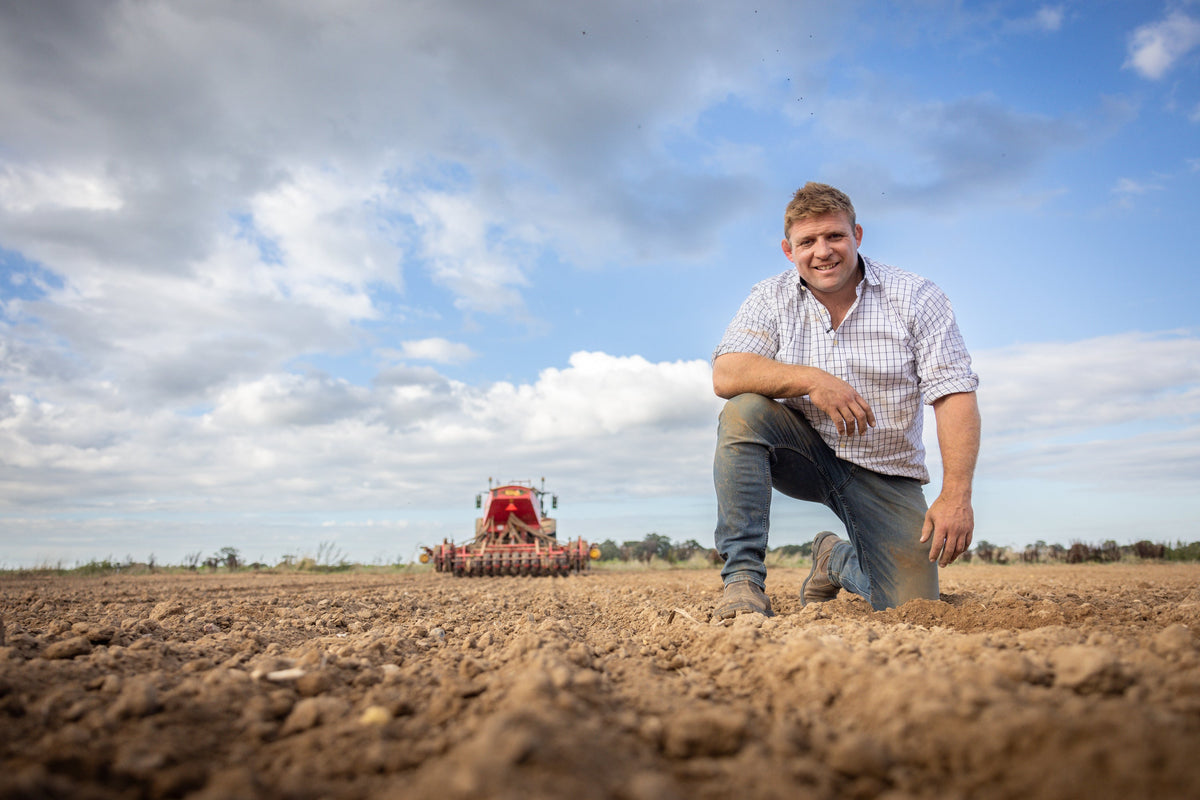
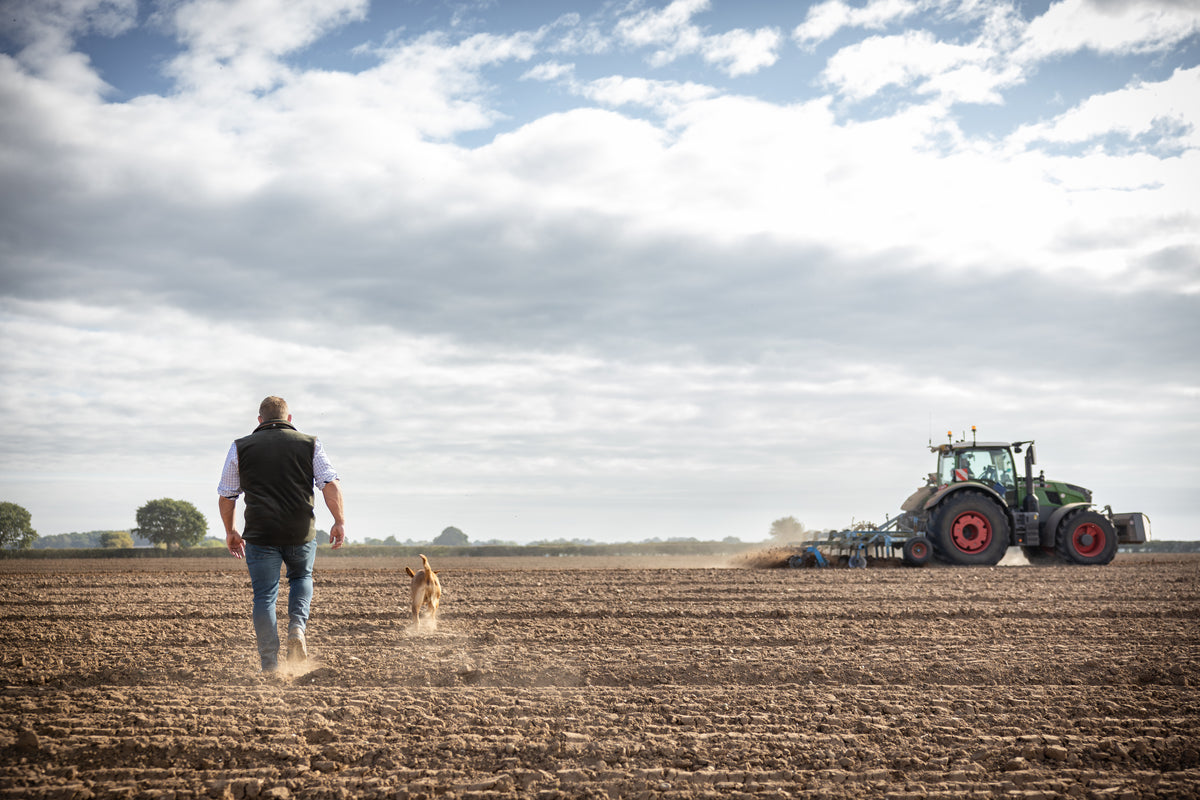
The potatoes are long gone. In the field where the irrigator ran almost round the clock all summer, a tractor moves slowly across the ground, its discs lifting the dry, sandy soil and laying it back down level. “Welcome to autumn, everyone,” says Tom, standing at the headland in the first of the day’s sun.
It's early October, 8°C at first light and nearer 20°C by lunchtime. The drought that defined the summer hasn't fully broken. The harvest it left behind was, in Tom's words, probably 25% down on yield. But autumn on an arable farm doesn't leave much time for looking back.
“You've got to put it to one side and take the learnings from it,” he says. “What can we actually control? What can we do better? We can't control the weather, so you move on. Now it's full focus on next year.”
For the third episode of Farming the Seasons, we spent a day with Tom as he prepared to drill next year's wheat. Not everything went to plan. We learn how he decides what grows where, see how a £300 part can bring a farm to a standstill, and walk an oilseed rape crop that is dying in front of his eyes. Tom also makes a case for farmers being more honest with each other.
The start of a new growing year
Potatoes leave their mark on a field. The ridges, the heavy machinery at lifting and the compaction can leave the ground uneven, which is a problem for the crop that follows. Wheat needs to be sown at an even depth so it all comes up together, and an uneven seedbed makes that impossible.
“We've worked it across at an angle to the way the potatoes were planted,” Tom explains. “Then we come through with the Terradisc to level it off and give it a finer finish. There's an expense to that, but I think it's worth it.”
The extra pass burns about four litres of diesel a hectare, roughly £4 a hectare at today's prices. That's not much on its own, but it adds up. Even so, Tom is clear about where the priority lies after this summer. “You've got to cut costs, but you've got to have the yield. That's one thing I've learnt this year. If you get another tonne a hectare, you make up for it.”

How a crop rotation works on an arable farm
So how does a farmer decide what to grow where? On Tom's farm, the answer starts with potatoes.
“This field won't be potatoes again for another seven to eight years,” he explains. “So when I first sit down to plan the rotation, I start with: where can I get potatoes in, on which fields? Then I work from there."
Wheat always follows potatoes as the ‘first cereal’. After that might come a second cereal – wheat or barley. Sugar beet comes round every three to five years and peas every five. This year, Tom has brought oilseed rape back into the mix.
Why rotate crops at all? It’s about soil health and structure, balancing soil nutrients, and breaking pest and disease cycles. “You can't, for example, grow potatoes on here every year, because the land will get sick and you won't get a yield. It's about keeping the land in good fettle,” Tom put it, simply.
Even a well-planned rotation has a cost. A second cereal always yields less than a first yet costs the same to grow. Markets shape the rotation too. Winter barley used to cover 68 hectares of the farm in 2022. This year it's down to 25. “The maltsters don't need it. People aren't drinking as much beer,” Tom says. That has knock-on effects of its own. The farm also hosts 100 acres of outdoor pigs, and less barley means less straw for them. “The supply chain will react at some point, but it'll be too slow. Once I've decided what's going in now, it's in for the year.”
Counting the cost: when a small part stops a big machine
The plan was to drill straight behind the Terradisc. The drill had other ideas.
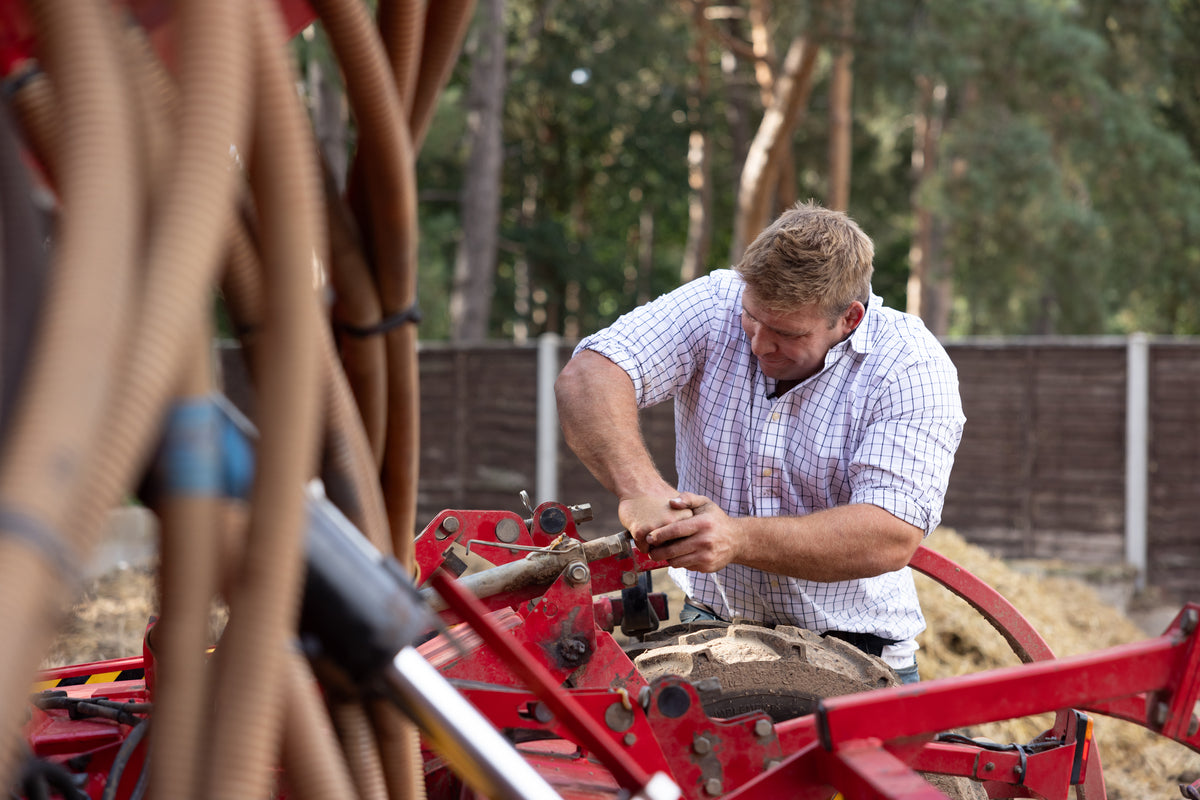
At the back of the 2003 drill are pre-emergence markers. These drop down every 30 metres and score a line in the soil to show where the tramlines will be once the seed is in the ground. They should lift with the drill. Instead, they keep creeping back down. “My worry is they'll start scraping a mark in the ground as I go up the field and pulling the seed out,” Tom explains.
He and Wayne, a colleague on the farm, had already replaced the leaking hydraulic pipes and had the ram resealed. The culprit turned out to be the valve block. The fix was a seal kit and a small hydraulic plug, and the plug alone cost £300. Until it arrived, nothing could move. The drill couldn't even be calibrated without spraying oil everywhere.
It's a small example of a bigger balancing act. Every machine on the farm is a running calculation. The farm budgets £20,000 a year for machinery maintenance. “You could soon spend that,” Tom says. One of the tractors comes out of warranty next year, and replacing it would cost around £100,000. A new gearbox, if one failed, might cost £20,000 to £25,000.
“When we last changed this tractor, it was £50,000 to change,” he says. “Two years ago, when we considered changing it again – for a model of the same age, same hours as when we first got this one – it was £100,000. So you think, right, we'll run it longer. But the longer you run it, the more the value goes down and the bigger the gap gets.”
Diesel prices are also a concern. Last year Tom was paying around 64p a litre. His latest delivery cost £1.03. That's why he wants better data, using the likes of Fendt Connect to track exactly what each tractor burns and what each job costs. “I want to know exactly what it costs us to do things, so I can make better business decisions,” he says.
Then there's the drill itself. A new six-metre drill costs around £120,000, so Tom is weighing up options with second-hand machines and demoing alternatives, including direct and min-till drills that could cut out cultivation passes altogether. “There's an element of cutting costs,” he says. “But you've got to keep trying to do a little bit.”
Flea beetle and the oilseed rape gamble
While we waited for the part, Tom took us to the field that was keeping him up at night.
A few steps in from the headland and upon closer inspection the young plants are riddled with tiny holes. Some are curled, crisped and brown. “See how they've been completely eaten? That's flea beetle,” Tom says, crouching down. “One day you walk it and it's fine. The next day it's got little holes all through it, like it's been shot.”
The cabbage stem flea beetle has become one of the biggest threats to oilseed rape in the UK. Tom says the crop's decline in this country followed the loss of neonicotinoid seed dressings, which used to protect young plants.
High winds over the weekend have made things worse. “I walked these fields on Friday and they were green. A bit damaged, but they were going to pull through. I came back yesterday and rang my agronomist straight away.”
What makes it harder is the timing. For years, the advice has been to drill oilseed rape later, from late August into September, to avoid peak flea beetle pressure. That's exactly what Tom did. This year, neighbours who gambled on drilling early into bone-dry soil have the best crops around. “The previous two years said that was the best time to drill. This year it's the complete opposite,” he says.
Now come the decisions. It's too late to redrill rape, so winter oats or rye are potentials. Tom will work out the margin on each. Meanwhile, nitrogen has already gone on the field, and the seed and drilling costs are already spent.
“I know it's not very upbeat,” he says. "But it's the reality of farming, and the risk of growing a crop.”
The importance of talking to other farmers
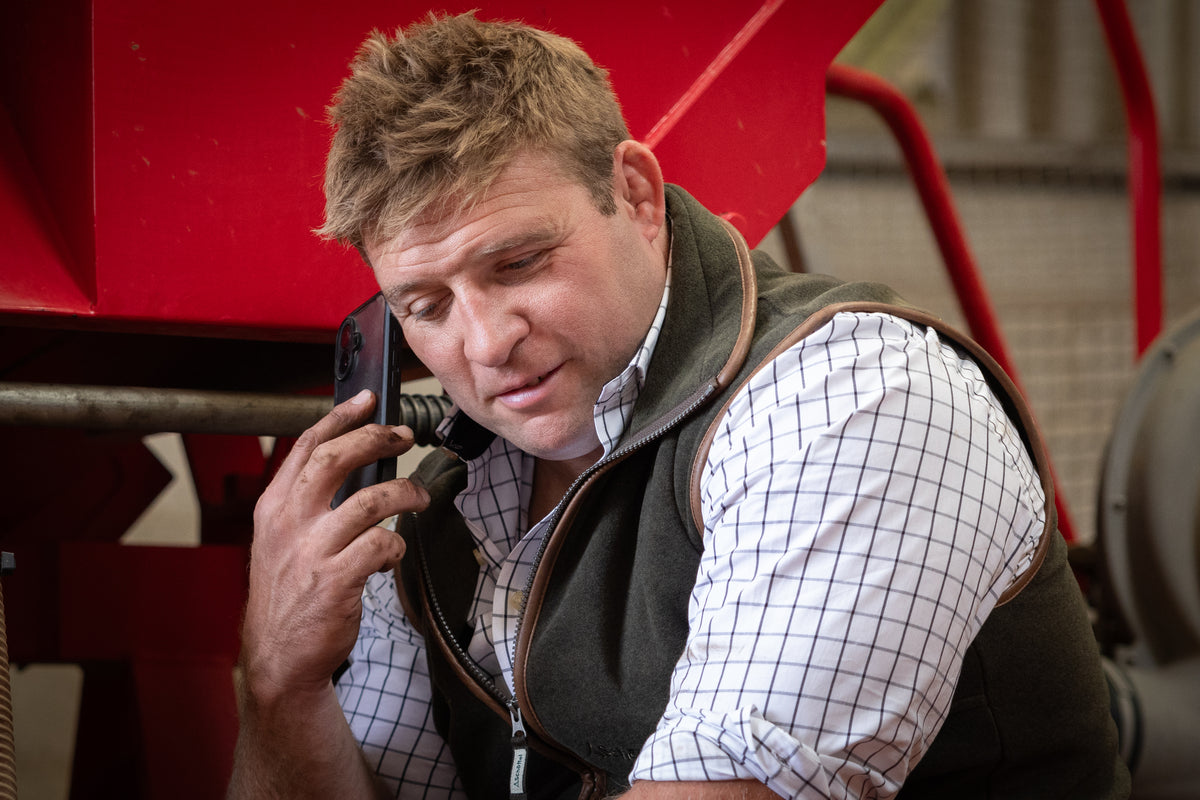
Standing in that field the day before, Tom's phone rang. It was a farmer and friend from down the road, asking how his oilseed rape looked.
“I said it looked absolutely terrible and I was worried I'd have to write it off,” Tom recalls. “He said he'd had to write off 30 hectares of his. I felt very sad for him. But at the same time, it made me feel that it's not just me. Other people in the area have had the same issue.”
It led Tom to something he clearly feels strongly about. “There's an old pub-chat culture in farming, where people say ‘I did this yield, I did that yield’,”he says. “There's a big problem with mental health in farming at the moment because of the pressures. So, one, don't go down the pub and brag. And two, other people might be down about something. If that person is already thinking they're a terrible farmer, you're adding fuel to the fire.
“It's about having good friends who are honest – who you can talk to and relate with. Are you going to redrill? What sprays are you using? What's it costing to produce a tonne of wheat? Chatting to each other is a huge benefit to us all. Check in on each other, because it is tough sometimes.”
If you work in farming and are finding things difficult, rural charities including The Farming Community Network and RABI offer free, confidential support.
Three cows and plenty of room
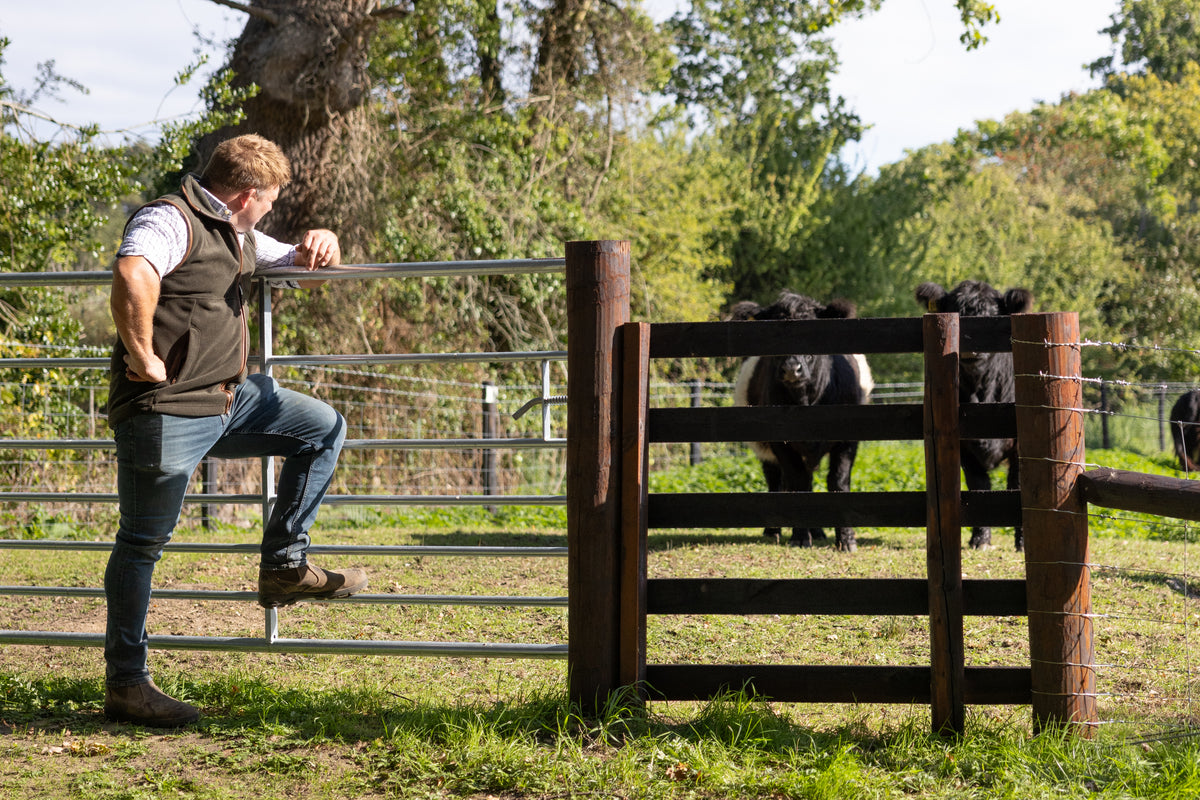
There are brighter corners of the farm too. Down by the river, the Belted Galloways that arrived over the summer have settled into 8 to 10 acres of rough grazing, with natural springs, a stream running through and plenty to eat.
“I can't claim to be a cattle farmer with three cows. It's embarrassing!” Tom laughs. “But it's very nice to have them, and they're loving it down here. We just need another 20.”
The three are pedigree animals. “If you're going to start, start properly,” he says. They're also still a little wild, keeping a wary distance even when there's food in a bucket. In winter they'll move up to higher ground so the wet low-lying field isn't churned up. The plan is to grow the herd and, in time, sell the beef.
He stops for a moment by the gate. “Not a bad life farming, is it, on days like this? Definitely beats working in an office.”
Drilling at last
By mid-afternoon the part has arrived and the drill is fixed. Craig, the engineer from the local dealership, fitted it, and the markers stay up. “Winner, winner, chicken dinner,” grins Tom. "I love drilling. It's my favourite job, along with combining.”
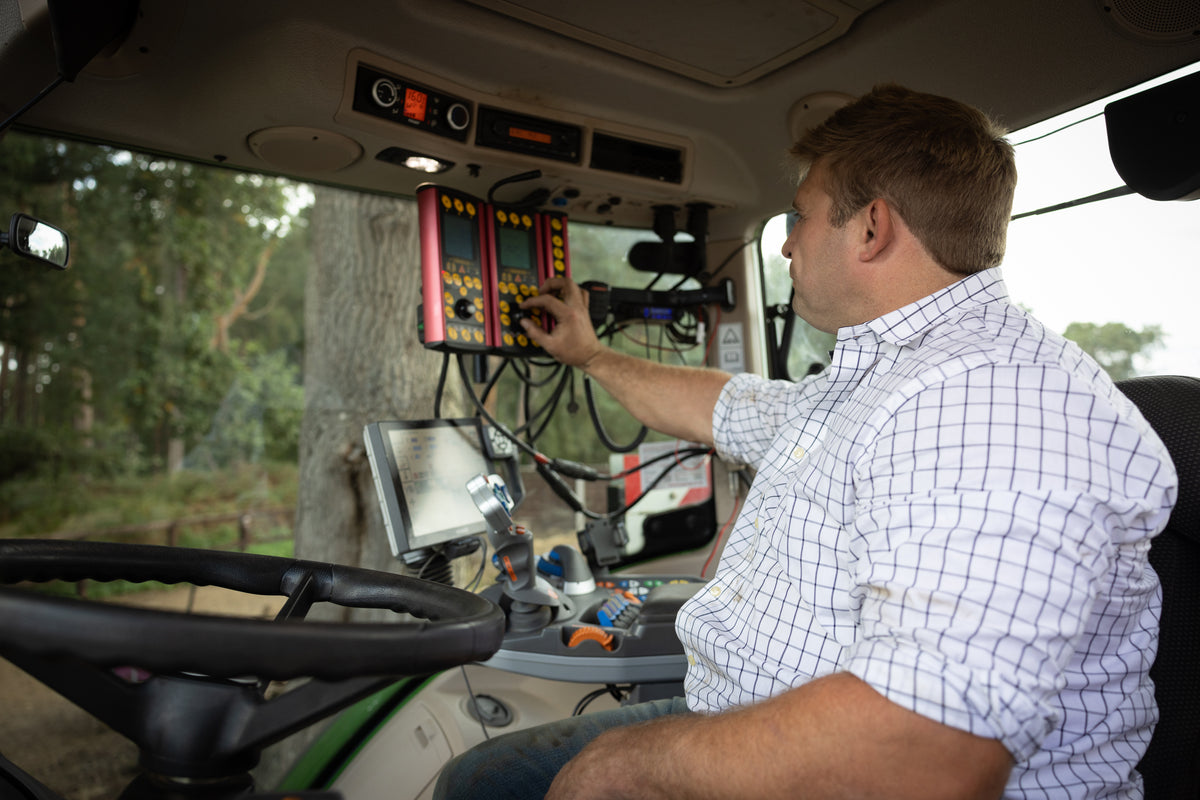
There's still one more job before the seed goes in: calibration. Tom is aiming for about 300 to 350 seeds per square metre, which for this seed works out at roughly 160 to 170 kilos a hectare. He loads a single 500kg bag, runs a sample through the metering roller, weighs it and enters it into the drill's computer. That bag should cover about 3.3 hectares. If it runs out much earlier, the settings are wrong.
“If you're over-seeding, it costs you money. If you're under-seeding, you won't get much of a crop,” he explains. “So you put one bag in, get a feel for it and make adjustments from there.”
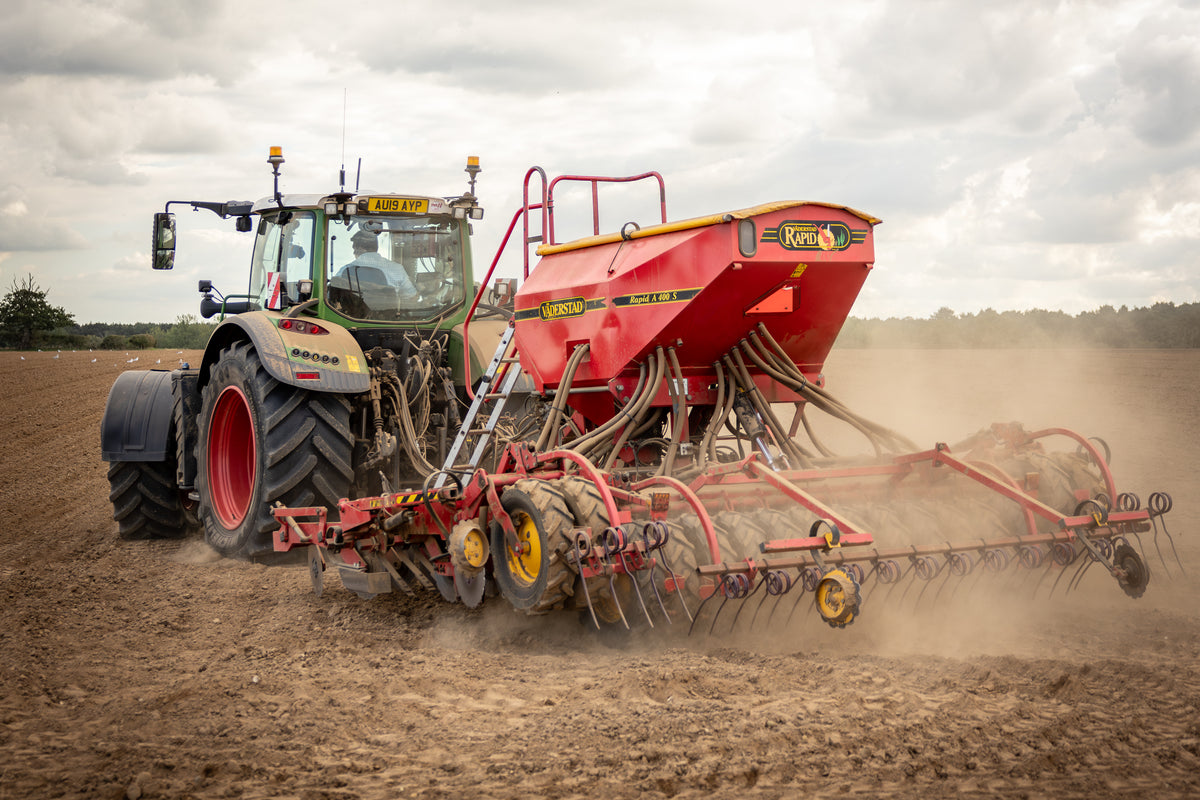
A few passes in, he jumps out and scrapes back the soil with his fingers to find the seed. “You want about 35 to 40mm, in moisture,” he says, holding up a grain. “Feel that soil, it's warm. That'll fly out of the ground.”
After a day of setbacks, it's a small but satisfying win. The rape may still be lost. The rain may or may not come. But the wheat for next year's harvest is finally going in.
Watch episode three: Autumn
The third episode of Farming the Seasons with Tom Youngs is now live on the Schöffel Country YouTube channel.
Watch the full episode now, and look out for the final chapter in winter.
Farming in autumn: your questions answered
Autumn is drilling season. After harvest, farmers cultivate and level the ground and sow winter crops such as wheat, barley and oilseed rape. Sugar beet lifting starts, and the crops for next year's harvest are planned.
Growing the same crop in the same field year after year exhausts the soil and builds up pests and disease, so yields fall. On Tom's sandy soil, potatoes come round only every seven to eight years, sugar beet every three to five, and peas every five, with wheat and barley in between.
The cabbage stem flea beetle is a small, jumping beetle that eats young oilseed rape plants and leaves them riddled with holes. Since the loss of neonicotinoid seed dressings, it has become one of the main reasons UK farmers grow less oilseed rape. This autumn, Tom and several of his neighbours faced writing off crops.
Tom drills his wheat at about 35 to 40mm, deep enough to reach moisture and warm soil and to be protected from pre-emergence herbicide. His seed rate is around 160 to 170kg per hectare, aiming for 300 to 350 seeds per square metre.
 Harvest, drought, and a new venture | Farming the Seasons with Tom YoungsRead postField Notes9 min read