Harvest, drought, and a new venture | Farming the Seasons with Tom Youngs
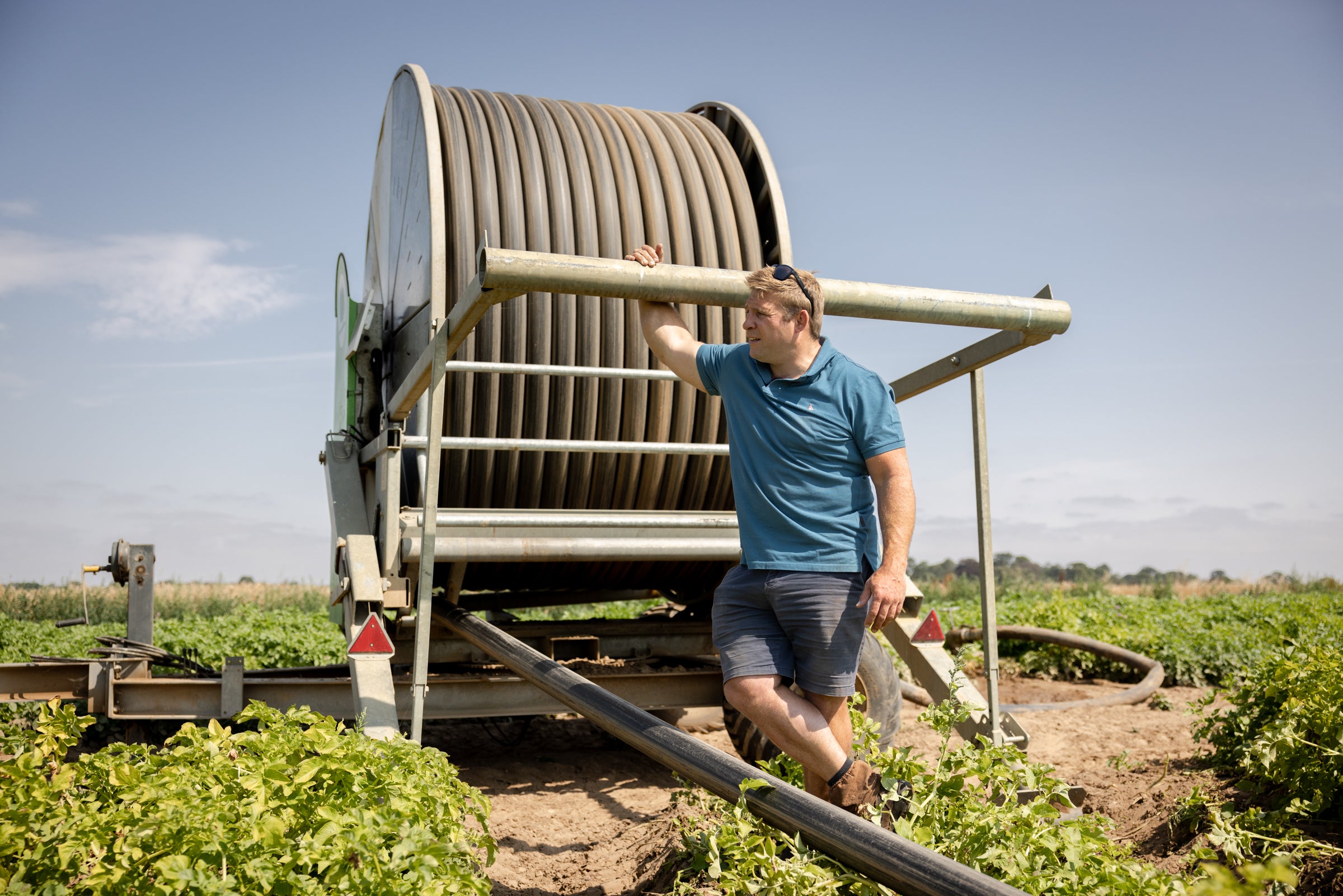
The ground here is parched and desert-like. A heat haze wobbles over the potato field as Tom walks the length of an irrigator line that hasn't been switched off in weeks. "It's crippled the farm," he says of the weather this summer. "Usually you'd get a week or a weekend off the irrigator. This year it's just constant – up the field, do the headland run, start down the bottom again, come all the way back. The amount of water we're pumping is unbelievable."
Harvest is here, and for once the challenge isn't rain – it's the total absence of it. Crops are ripening early, yields are patchy, and almost every conversation on the farm circles back to the same thing: the weather.
For the second episode of Farming the Seasons, we returned to Tom Youngs' family farm in North Norfolk as harvest got underway during one of the driest, hottest summers in living memory. We see how irrigation has become a round-the-clock job, hear how this year's drought compares to droughts past, and get an update on the farm's diversification projects – including a brand-new venture into cattle, and how the Scrum and Bun burger van has fared since it launched back in late spring.
Harvest under a relentless sun
After a dry spring (you can watch episode one of Farming Seasons here) summer has brought no relief. For arable farmers across Norfolk and East Anglia, this is normally the season when the previous months' work either pays off or doesn't – when crops that were drilled, fed and nursed through spring finally reveal what they're worth. This year, the reveal has been a difficult one.
"I cut some winter barley – the earliest I've ever combined it," Tom explains. "I tried on the third of July, but it wasn't quite ready, so I took heed of the old saying: ‘if you think it's fit, go on holiday for a week’. I came back and cut it the Monday after. It hasn't yielded well at all."
It isn't just yield that's suffered, though. The farm also grows malting barley, and this year's crop hasn't hit the spec needed to earn the premium price. "There's a cost there of probably £50 a tonne," Tom says. "A lot of people have struggled to hit malting spec this year, with screenings and everything – and it's all down to the weather."
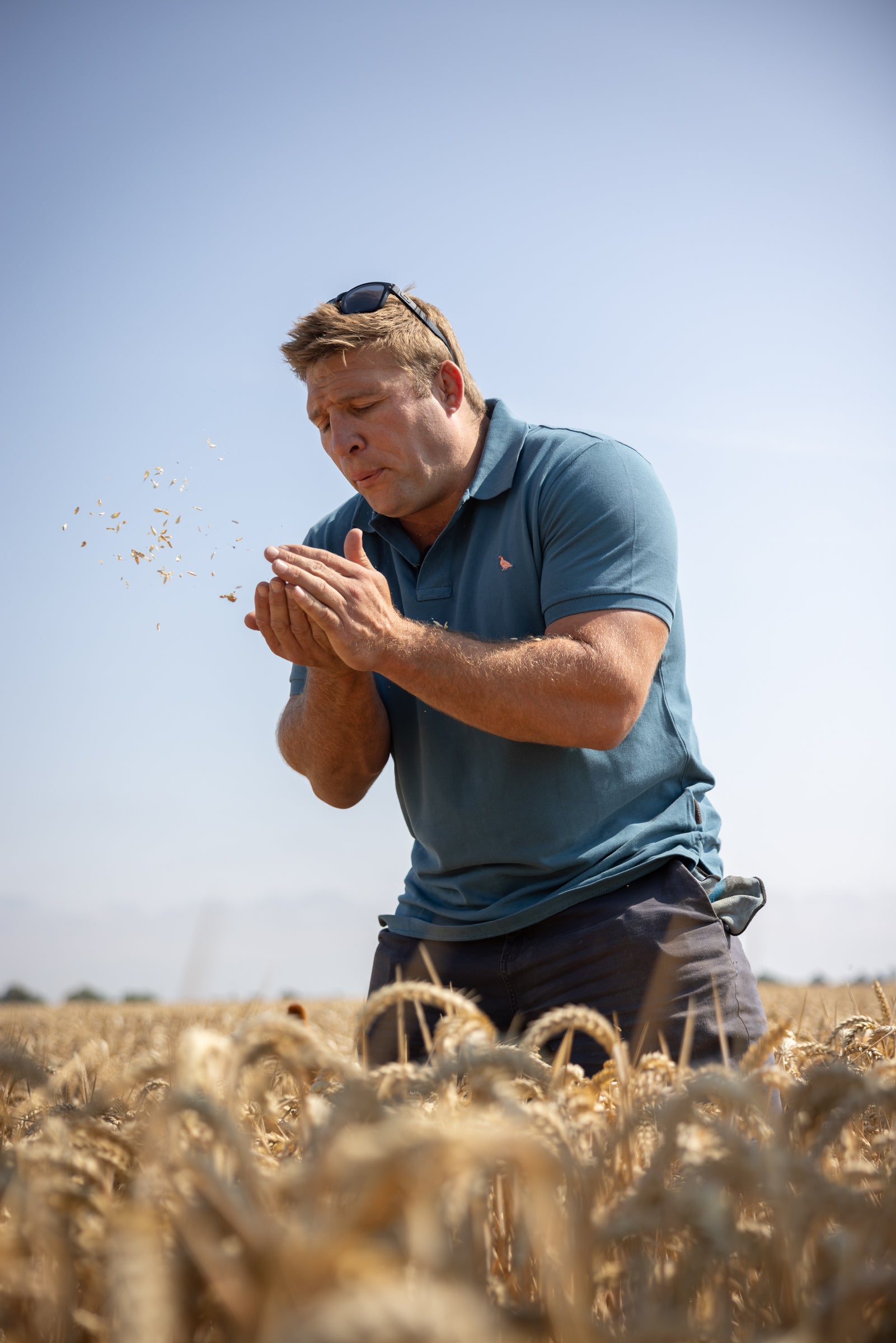
For Tom, it's a stark reminder of how little control a farmer really has over the outcome of a season. "That's the biggest thing I find with farming," he says. "I can drill it right, prepare the ground right, do it at the right time, get the nitrogen right – but the weather is what really finishes it off – for good or for bad."
It leaves him bracing for what's still to come. "I think we're facing another bad harvest, which – like I said the last time you visited – is going to be catastrophic. I'm genuinely worried about where we go with farming if this going to become the norm.”
Irrigation: the difference between a crop and a write-off
If there's one job that has defined this summer on the farm, it's irrigation. The farm runs three hydrants connected to underground pipework, feeding overland pipes that link up to a mobile irrigator – a system that, in a normal year, might run for a week or a weekend at a time. This year, it hasn't stopped.
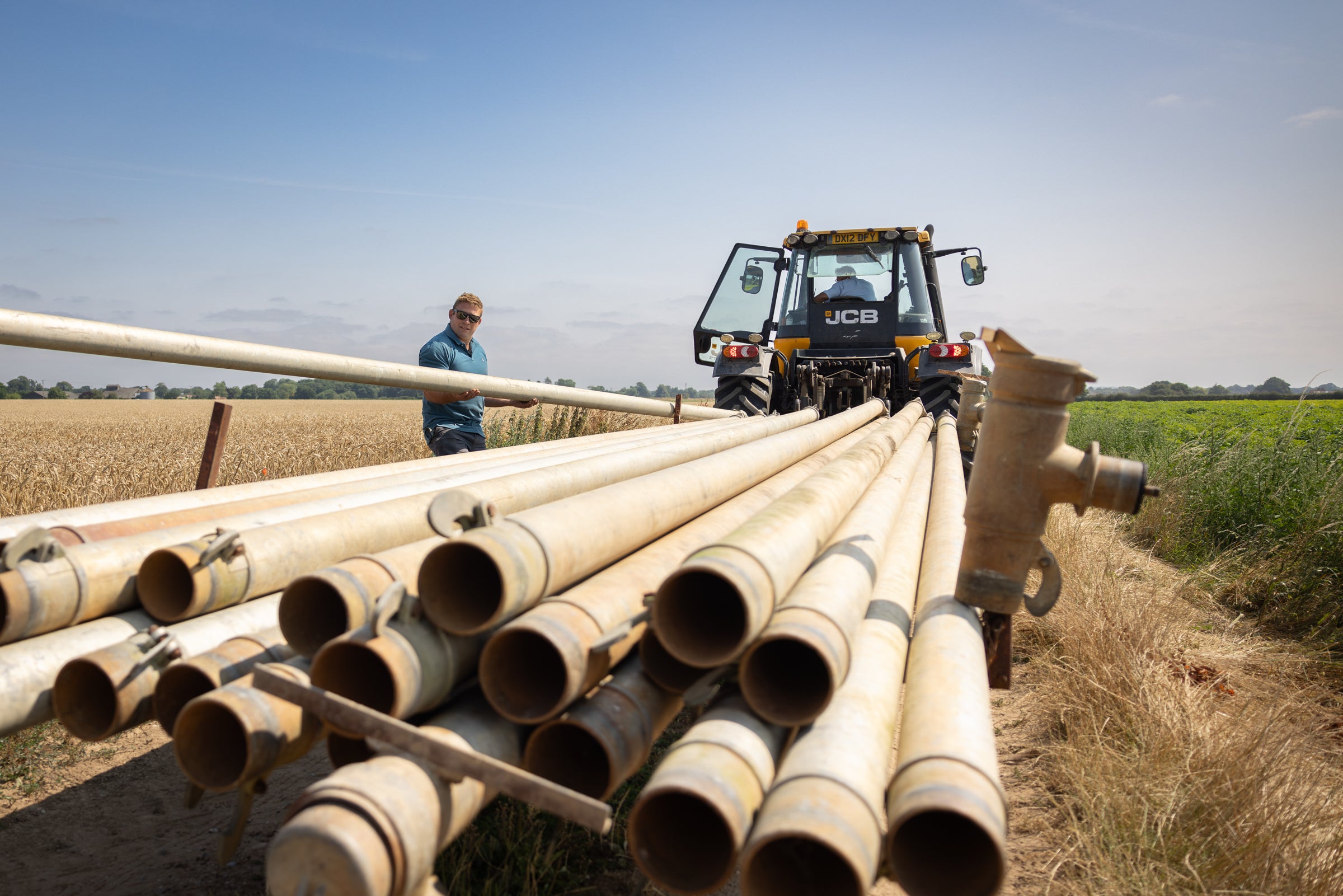
"You clip a tap onto the hydrant, then link up the overland pipes and run them out to the irrigator," Tom explains, walking the line of pipe. "You set how much water you want to put on and it pulls itself back in at a set speed to cover the ground. When it reaches the end, a bit of metal on the gun carriage trips the brake and it cuts itself off, so you don't need to be stood there switching it off. Pull it out, hook it up, move it on to the next run, and away you go."
It sounds simple enough, but a lot can go wrong. "You can come here at five in the morning hoping it's all set up properly, and find it's not all the way in, or halfway out," he says. "The pump's linked to my mobile now, so I can start it remotely and it'll tell me if it's stopped – but you've still got to work out what's actually gone wrong."
New season, new kit
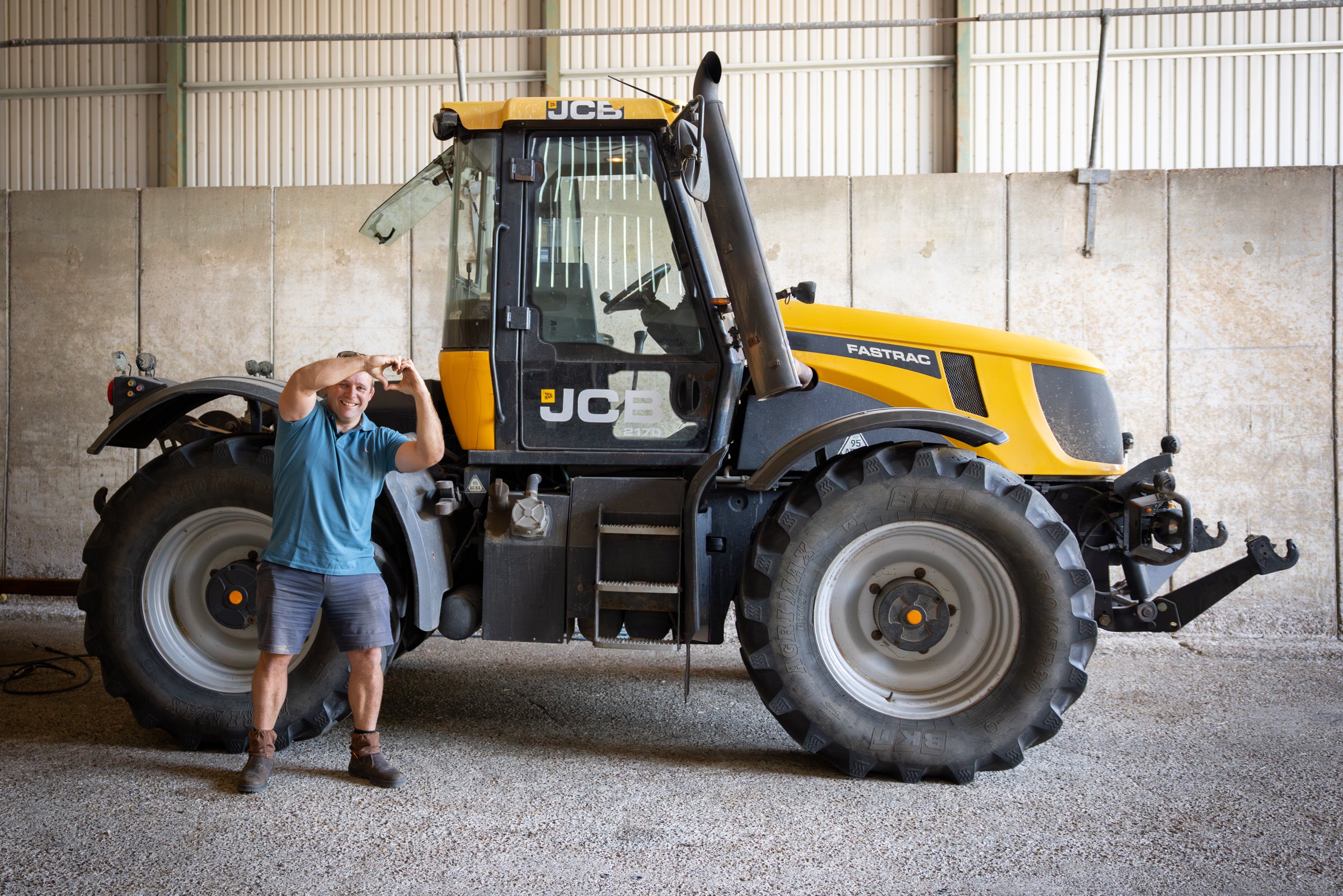
The only real change on the farm, machinery-wise, since our last visit is the new JCB Fastrac. "Who doesn't love British-built stuff,” smiled Tom, determined not to let the visit be all doom and gloom. "I'm a child at heart, really – I've always wanted one. I used to live near a farm in Leicester that had two of them, and I'd follow them round, which is a bit stalky, but I loved listening to them, with their Cummins engines, going up the hills. So I finally got one, and I love it."
Back to a mixed farm
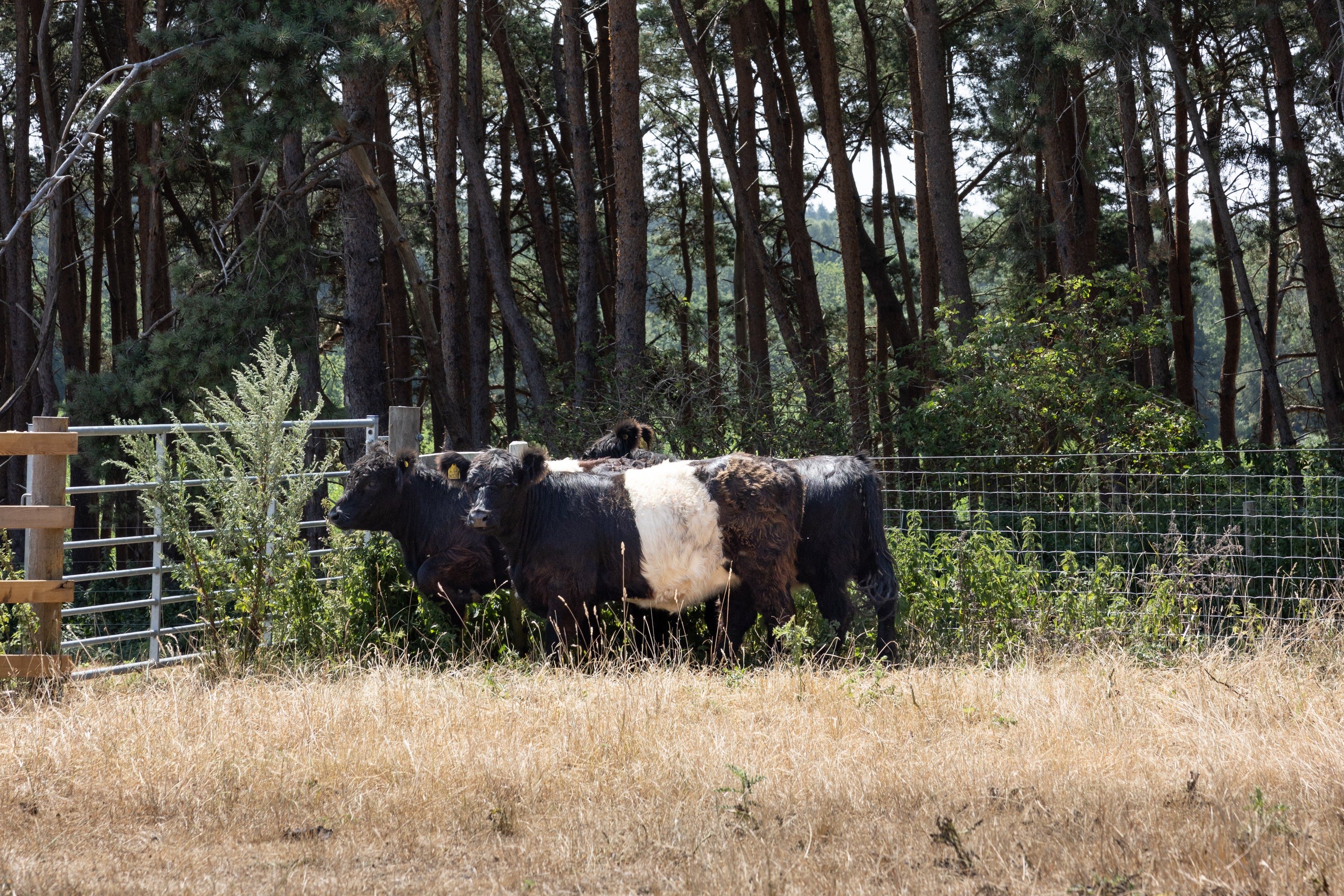
Amid the pressure of a difficult harvest, Tom has also started a new little venture, welcoming three Belted Galloway steers to Sankence Farm. "We've gone into cows in a big way, people. A big way," he jokes. "They're a hardy, native breed. We've got some rough land down the bottom we're going to get fenced and put them on. They don't need much room, they don't get very big-framed, and they can be a bit wild – but we like a few wild animals, don't we."
The timing hasn't been straightforward. "Finance probably determined how many we bought this time round, with the harvest we're having," Tom admits. "We originally wanted eight, and we've had to cut back. We'll start with what we've got and build up, depending on how the wheat harvest goes."
For Tom, the cattle are part of a bigger shift in how he sees the farm's future – one that looks a lot like its past. "Back in my grandfather's day, and in my dad's early days of farming, a mixed farm was the way to be, and I can see that coming back," he says. "We grow a lot of cover crops now, which we could graze with our own flock of sheep, fatten up and sell. And the cattle will feed into Scrum and Bun eventually.”
Scrum and Bun is go-go
Diversification isn't a new theme for Tom – container storage, a livery yard, a holiday cottage and, since our last visit, the Scrum and Bun burger van have all become part of how the farm spreads its risk. But this year, that strategy feels less like an option and more like a necessity.
"Fifteen years ago, I don't think I'd have seen any of this," Tom reflects. "You'd just think farming is farming, and you'd get through fine. But the tables have turned a lot, and the risk in farming is so much higher now, because of input costs. They've gone up 27% since 2022, and prices have gone the other way. That shows you where things are, in some regards. So we're trying to eliminate that risk – trying to cover our fixed costs – through diversification."
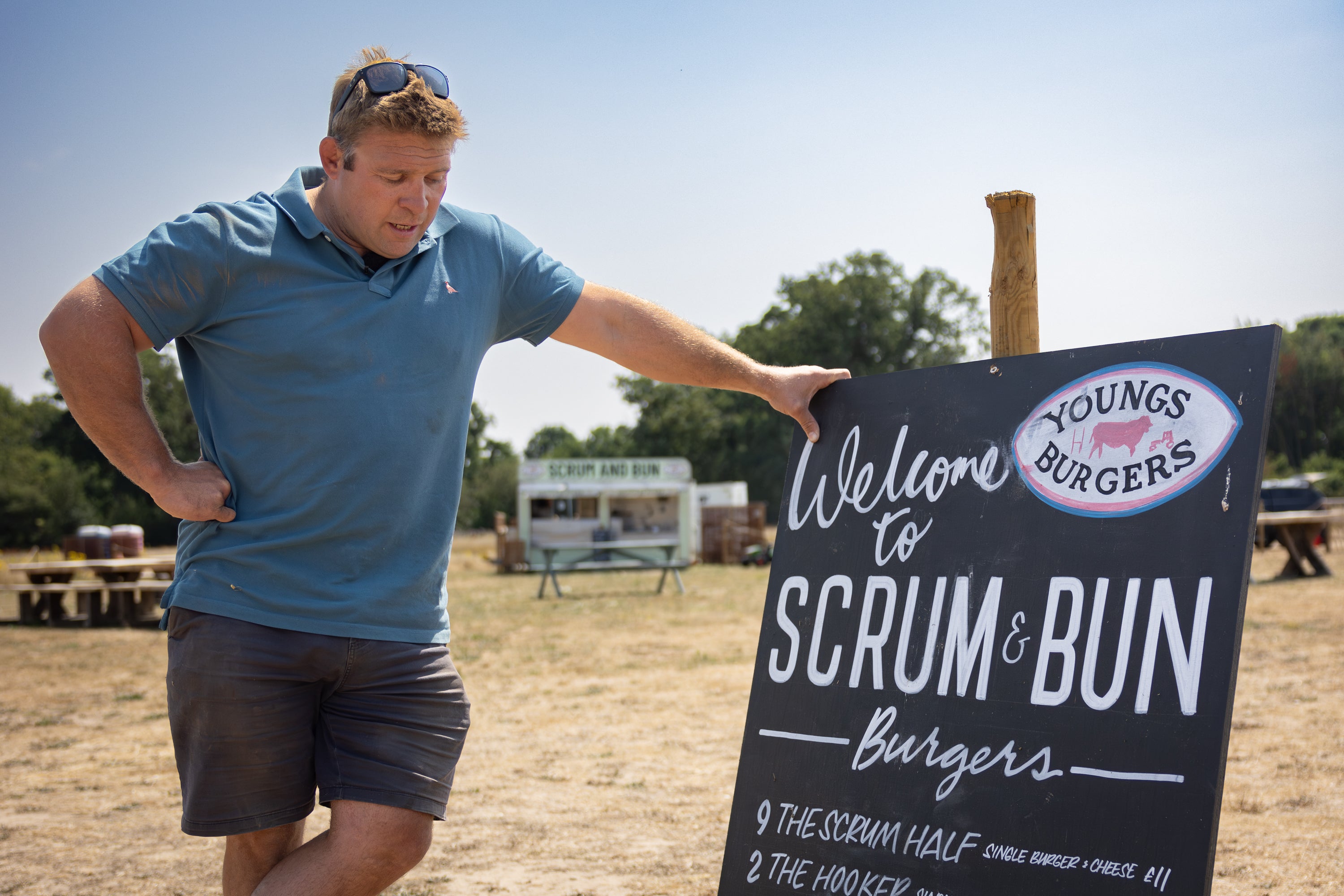
Scrum and Bun has been open every weekend since launching in spring, and the learning curve has been steep. "It's amazing – you close on a Sunday and think, we'll be alright, and then you realise something needs sorting for next week," Tom says. "It's hard to sort things in three days sometimes. You're relying on people turning up, whatever the weather. Going from farming into the catering business is a different world, that's for sure."
What's kept it worthwhile is what it's brought the family together to do. "In modern farming, with the big tractors and machinery, it's hard to make it a proper family thing, because of the safety side of it," Tom explains. "But this – this you can make a proper family adventure. Kids can help clear rubbish or wipe the tables down, wives and girlfriends work the till, we work the bar. Mum and Dad are down here, my uncle's cutting the grass. It brings everyone together. On the farm you can do that to a degree, but not quite like this."
Harvest: hard yet special
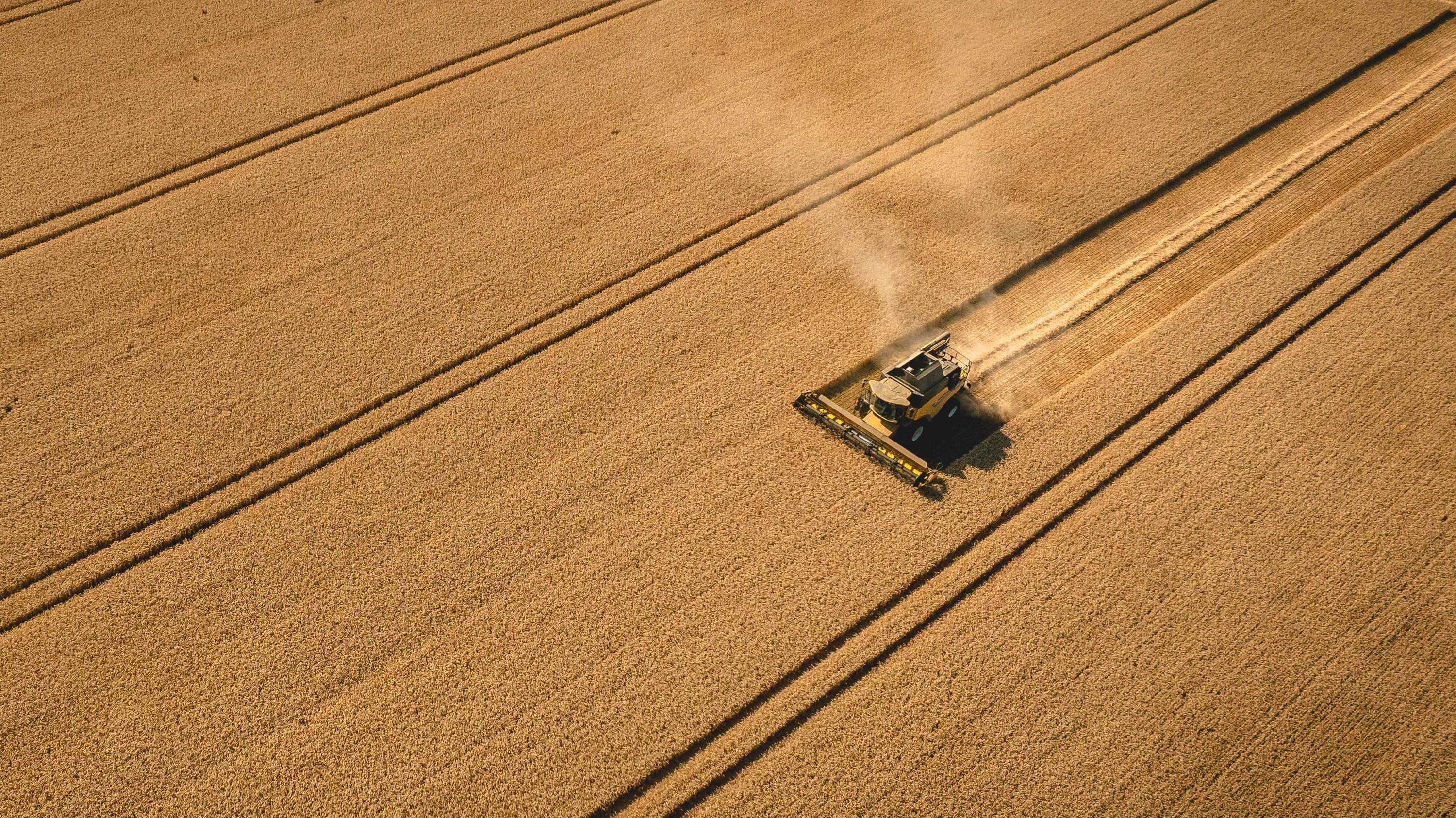
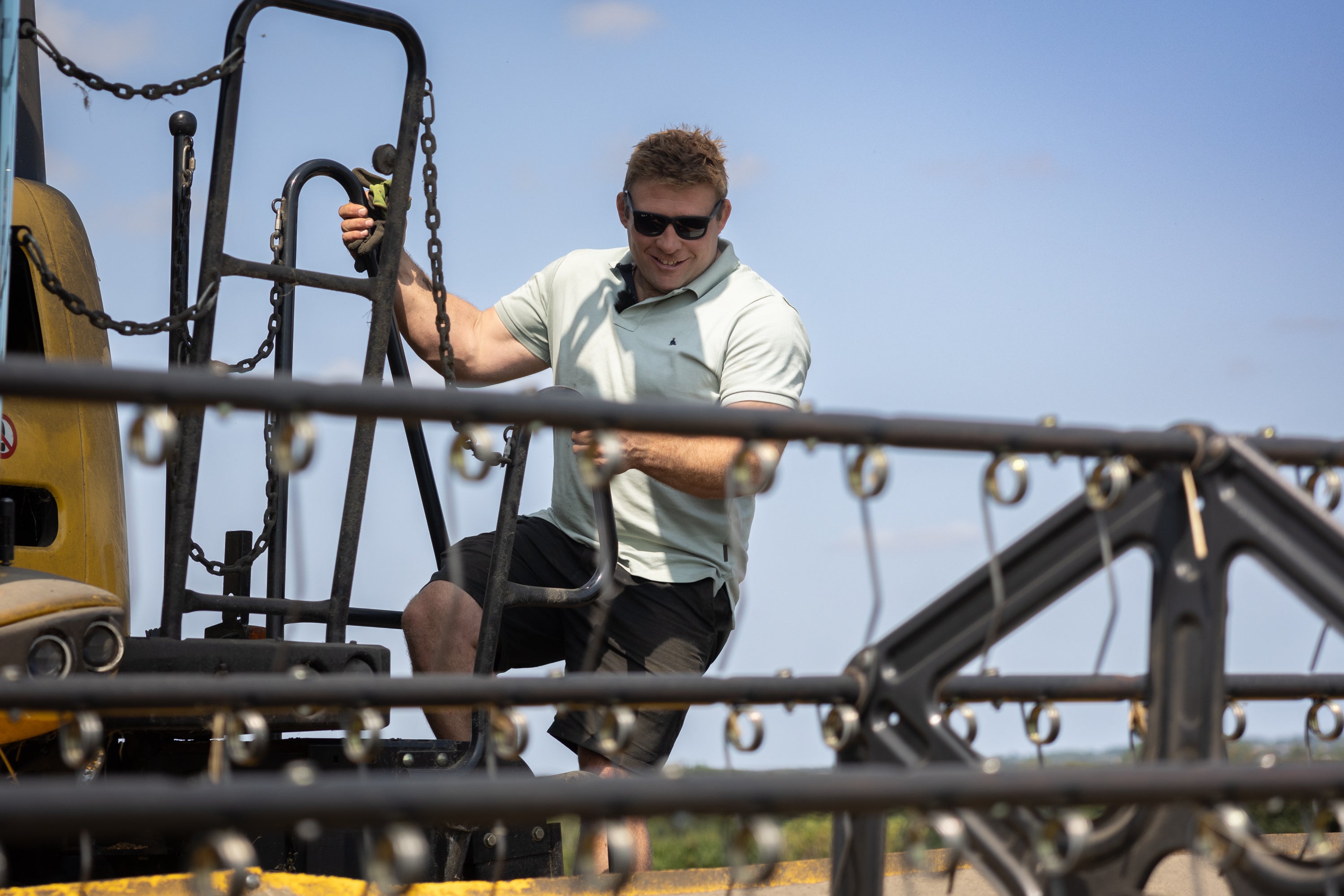
Back in the combine, the picture remains mixed. "We've had a really good week, actually," Tom says, "but the dry weather has definitely caused plenty of issues – wheat's down, winter barley was down too. The best field I've cut so far did 9.5 tonnes a hectare; the worst was down to about 6.3. We usually average around 9 tonnes a hectare here, and I'm slightly worried we won't get there this year."
Even so, with the wheat nearly finished and only the spring barley left to bring in when we were there filming, there's no mistaking what harvest means to Tom, whatever the circumstances. "I think it is a very special time," he reflects. "We all work long hours, so we're not at home much – but the kids come out to see us and have a picnic while we go up and down the field. It's been a tough one for yields, but it's still special. You get nights like this, with the sun going down, and really, where else would you want to be?"
Watch episode two: Summer
The second episode of Farming the Seasons with Tom Youngs is now live on the Schöffel Country YouTube channel.
Watch the full episode now, and keep an eye out for the next chapter in autumn.