The Big Farmland Bird Count 2026
From 6–22 February, farmers and land managers are encouraged to spend half an hour recording bird numbers on their patch as part of a valuable nationwide survey organised by the Game & Wildlife Conservation Trust.
Whichever way you look at it, the past half century hasn’t been kind to our farmland birds. According to the British Trust for Ornithology (BTO), the number of wild birds in Britain has fallen by 73 million since 1970. And a staggering 63% of farmland bird species have shown a decrease in that time, with the likes of the turtle dove, grey partridge, tree sparrow and corn bunting being hit particularly hard.
The annual Big Farmland Bird Count, launched in 2014 and organised by the Game & Wildlife Conservation Trust (GWCT) ever since, provides a snapshot of bird populations on British farmland during a specific period. Think of it as a large monitoring programme that helps to measure the value and raise awareness of conservation work carried out by landowners and their tenants to reverse the trend of the last five decades.
Past results and data from 2025
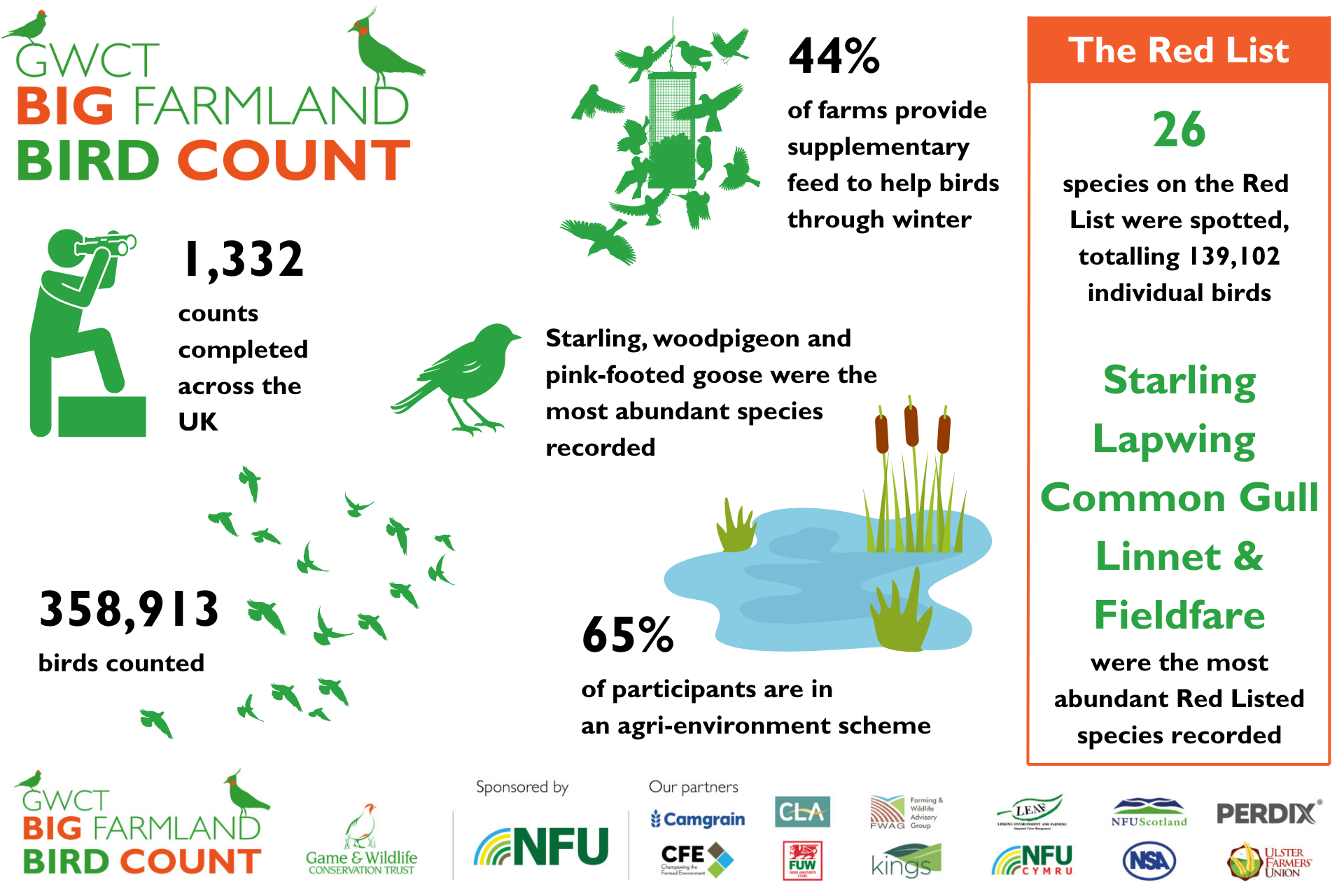
Crucially, the Big Farmland Bird Count relies on the input of as many people as possible. Since its inception 12 years ago, results from more than 17,000 surveys have been submitted to the GWCT. Last year, 125 species were recorded by 1,369 farmers, land managers or their helpers. Twenty-six of those species feature on the Red List for Birds of Conservation Concern – the most abundant of which included starling, linnet, fieldfare, common gull and lapwing. There were notable decreases in sightings of some species, including red-listed fieldfares which were down 52%, long-tailed tits which were down 27%, and curlew with a 25% drop, year-on-year.
When is the GWCT Big Farmland Bird Count, and how does it work?
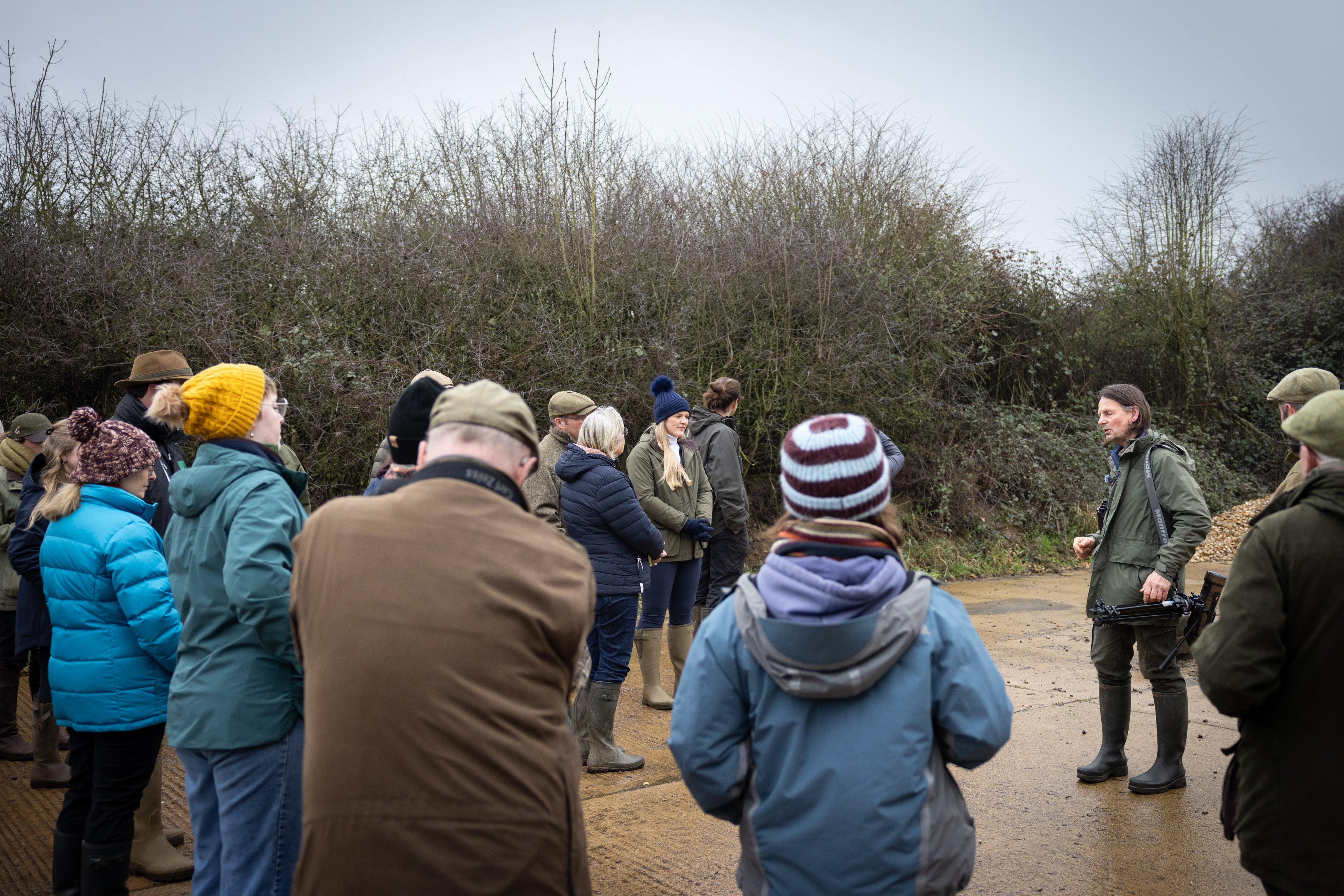
This year, the Big Farmland Bird Count runs from 6-22 February. It’s simple to take part in, requiring little more than 30 minutes and a pair of binoculars, but there are a few things to bear in mind if you want to optimise results. Where you choose to carry out the survey can make all the difference. A sheltered and relatively undisturbed area close to where birds feed is ideal. If possible, opt for a spot from which you can see at least a couple of hectares. If you have time to visit several locations across the farm or estate, even if that’s on different days, all the better. Timing is also key. Birds are particularly active at first light, so aim to put aside half an hour one morning. Calm, dry conditions are best.
Once in position, make a simple record of every species seen and the numbers of each. Note down the surrounding and adjacent habitats and cropping, too. There is a printable count sheet available to download online – or, this year, you can download the PERDIXPro Fieldbook app – learn more at www.bfbc.org.uk.
How can we help farmland birds?
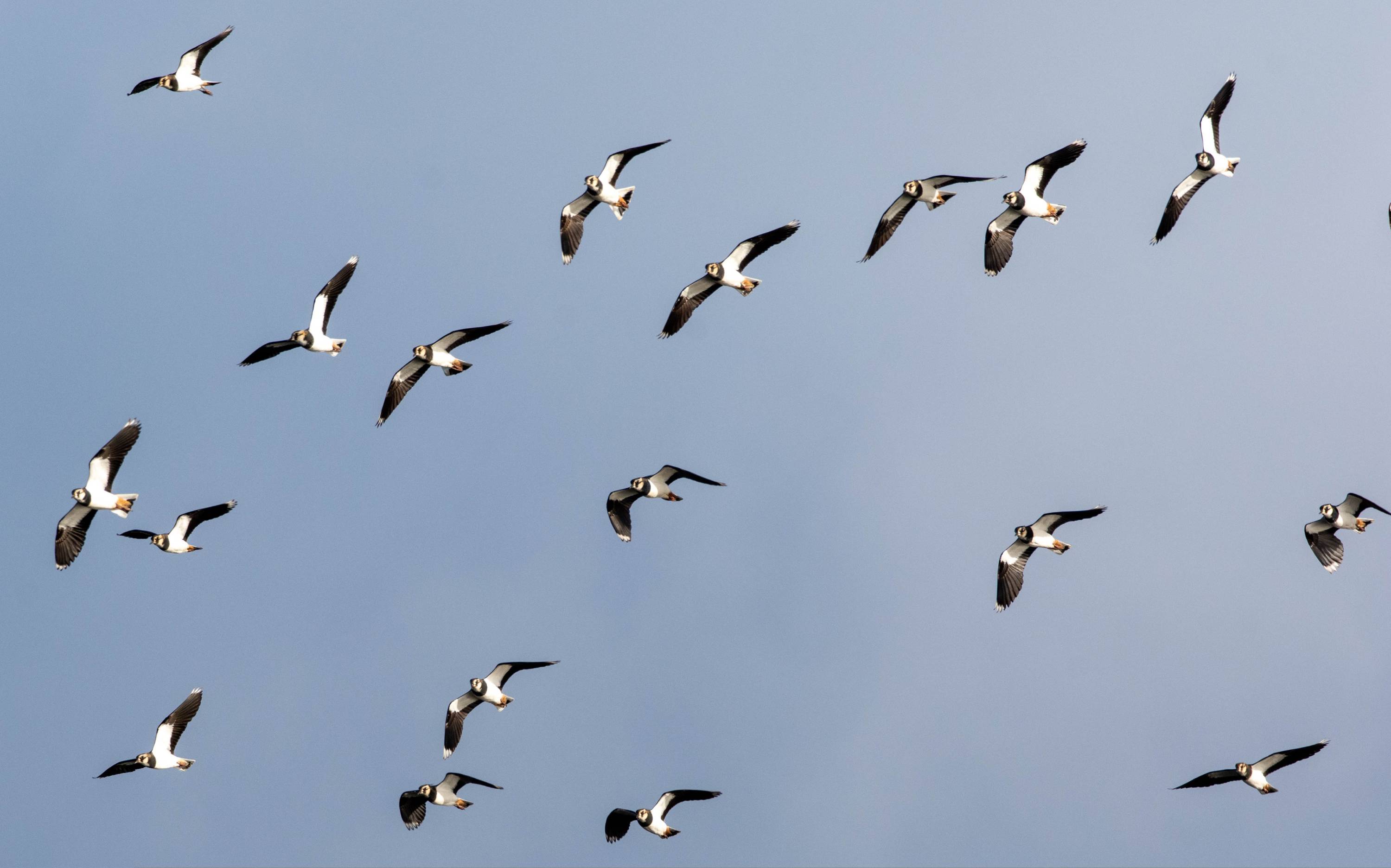
For a long time, the GWCT has championed the ‘three-legged stool’ approach to conservation, emphasising the importance of habitat management, supplementary feeding and predator control. The science has proven that, providing these three fundamental ingredients are present, a real difference can be made to reversing biodiversity decline.
It’s no secret that many farmers and shoots invest in the establishment and management of woodlands, hedgerows and cover crops that provide food and shelter for farmland birds. They also employ some 6,000 gamekeepers, who manage predators and provide gamebirds and songbirds with food when they need it most. Surveys like the BFBC help to recognise and celebrate this valuable contribution to wildlife conservation, and further bolster citizen science efforts going forwards.
How to identify farmland birds
If you need some help separating your cirl buntings from your twites, take a look at the GWCT’s online resources. Or why not enlist the help of a friend in the know? As a separate exercise, you might like to experiment with an app like Merlin Bird ID by Cornell Lab, a tool that allows you to identify birds in several different ways, including photo uploads and an audio recognition tool. Many of these apps are free and easy to use.
When are the results of the GWCT Big Farmland Bird Count released?
The data and feedback are as interesting as they are valuable; 65% of participants in 2025, for example, were shown to be involved in an agri-environment scheme, while 44% provided supplementary feed to help birds through the winter. The starling, woodpigeon and rook were the species spotted most often. The 2026 results are expected to be published in spring.
The Schöffel Countryside Awards
Do you know an individual, project or farm that deserves to be recognised and celebrated for their contribution to the British countryside?
The Schöffel Countryside Awards, in partnership with the Game & Wildlife Conservation Trust, are now open for entries until the end of March and aim to shine a light on working conservationists who are doing great things – whether that be on a small patch of a few acres or across several farms and estates.
There are six award categories: Nature-friendly Farm/Estate; Innovation in Conservation; Farm-Environment Partnership; Wetland & Watercourse; Rising Star; and Working Conservationist.
Entries are encouraged from those who would like to nominate another and those who would like to enter themselves. To learn more or submit an entry, please click here.