Notes from the judges | 2026 Schöffel Countryside Awards
What follows comes from their judging reports, together with the winners' own thoughts, recorded before the ceremony, on why awards like these matter.
Rising Star Award | Winner: Maaike Vrancken, Atlantic Salmon Trust, Edinburgh
Category sponsored by Pressendye
Maaike Vrancken chose to build her conservation career in Scotland, on its rivers and its salmon. In little more than a year as a research assistant at the Atlantic Salmon Trust, she has worked across fieldwork, data analysis and reporting.
She co-ordinates large-scale PIT-tagging of juvenile salmon, which involves thousands of fish and builds a picture of how many survive and how many reach the sea. Her analysis has supported funding bids for better monitoring infrastructure. She has also helped develop and validate AI-assisted sonar for counting fish, and contributed to eDNA work on what predators are eating.
Judge Ross Ewing, who visited with Dylan Williams, was struck by how broad her skills already are, and by how well she communicates science to fisheries trusts, estates and government bodies. In his report he noted that she is driven by restoring healthy rivers for future generations, “fully aware that the benefits of her work may not be fully realised within her own lifetime”.
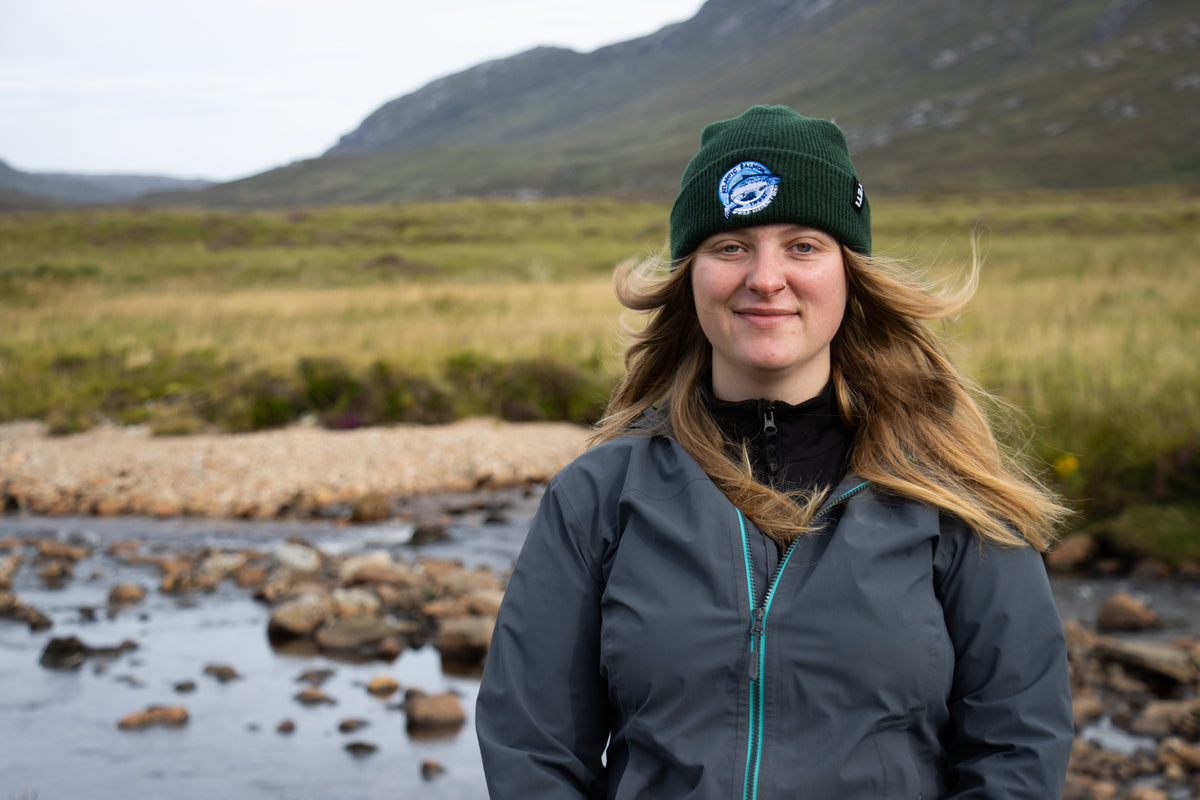
Maaike's ambitions include a PhD and contributing to the State of Salmon Report. “She is already demonstrating the qualities of a future leader in conservation,” Ross wrote, “with the potential to influence both scientific understanding and practical delivery.”
For Maaike, awards like this are about encouragement. “They shine a light on the people, projects and initiatives working hard to make a positive difference to our countryside,” she says. “Sometimes, seeing what others are achieving is all the encouragement someone needs to make a small change of their own and those small changes can collectively make a huge difference.
“In today's climate, it's important to highlight the positive things happening around us and remind people that there is so much we can do to protect, restore and build resilience within our natural environment for future generations.”
Working Conservationist Award | Winner: David Allison, Grosvenor Reay Forest Estate, Sutherland
Category sponsored by Mea Opus
David Allison grew up on a croft in Sutherland and learned his trade from the local stalkers. He has worked as head stalker on the Grosvenor Reay Forest Estate for the last 19 years. To judge Marcus Janssen, he is “in every sense, the heart and soul of the conservation effort” there.
The estate is run around three ‘key characters’: people, deer and wild Atlantic salmon. Put very simply: Get the deer right and the trees can grow back; get the trees growing and the rivers are shaded and kept cool; get the rivers right and the salmon have a chance.
The work is ambitious. The estate set out to reduce red deer numbers to carrying capacities that varied across different habitat types. Trees are now regenerating where they haven't grown for generations, and blaeberries and crowberries are returning. The deer themselves are in better condition, too, with higher weights recorded in the larder. More than a million native trees are being planted, many of them along river corridors.
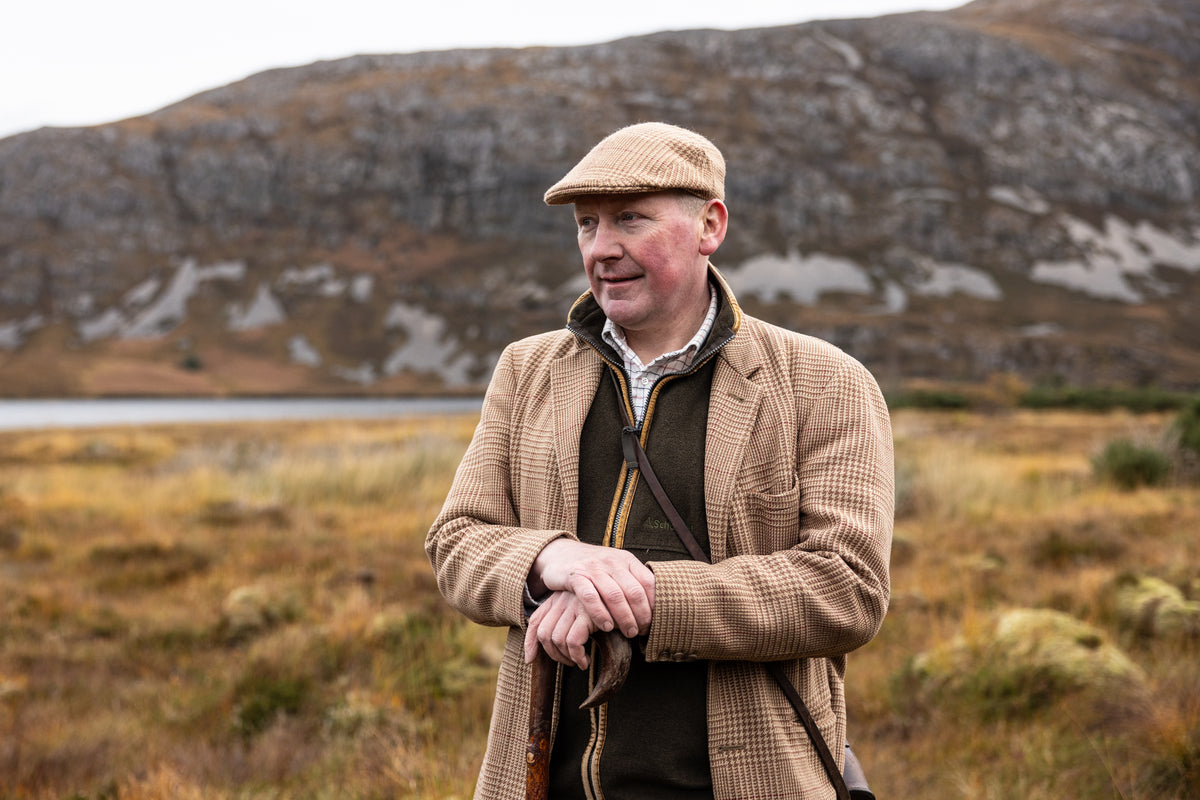
All of this feeds into Project Laxford, the ten-year 'source-to-sea' partnership with the Atlantic Salmon Trust. The estate has suspended salmon fishing lets for the duration. Water temperatures are monitored at 30 points across the catchment, and around 2,000 juvenile salmon are tagged every year. The estate also holds a record-breaking gold accreditation from Wildlife Estates Scotland.
What struck Marcus most, though, was the culture David has built. He has brought a stalking team that was initially sceptical round to become, in his words, “huge advocates”. He is also central to Common Ground, a forum for young stalkers, ghillies and keepers. “Project Laxford has been a great catalyst for change – it has galvanised the whole estate team and given them a united purpose,” David says. “Ecology is easy, psychology is much harder.”
Asked why awards like this matter, he points to the people around him. “I think it's great to celebrate unseen work, and to recognise the people that lie behind that. Very often – certainly in my own case here – I've been given the opportunity to work with some exceptional people…”
The judges’ verdict: “He is, to borrow a phrase from his own vocabulary, trying to change not just how people act, but how they think.”
Nature-Friendly Farm/Estate Award | Winner: The Grange and Moat Farms, Northamptonshire
Category sponsored by Oakbank Game & Conservation
It was a hot, sunny July day when judges Joe Stanley and Jim Egan toured The Grange and Moat Farms with Andrew Pitts. Joe described it in his report as “a landscape vibrating with life”.
Andrew and his brother William farm around 600 hectares of mostly heavy clay, growing premium seed crops. They moved from a plough-based system to min-till in 2002, and to direct drilling by 2015. They take the least productive land, about 15% of the farm, out of cropping and turn it into high-quality habitat. Andrew has kept yield maps since the 1990s. He knows his costs of production down to the hectare, and his wildlife too.
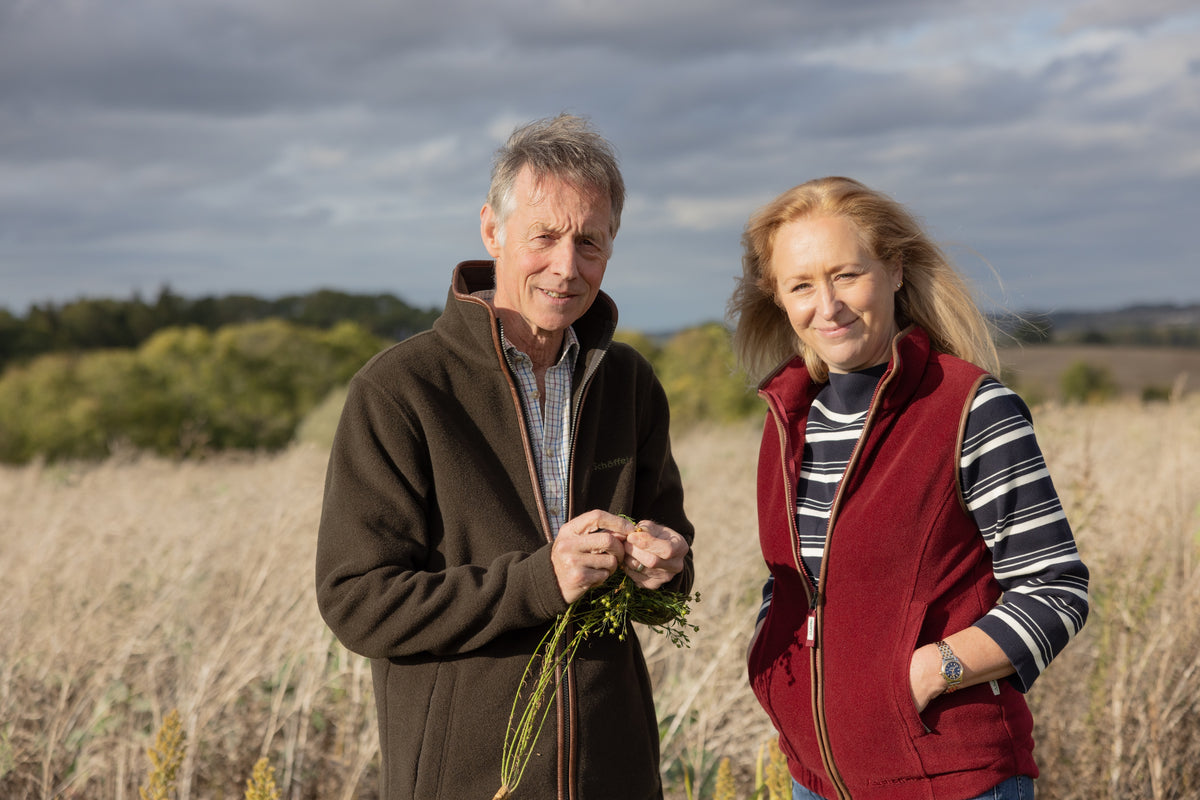
The grey partridge has been central from the start. Andrew is a vocal advocate of what he calls a ‘four-legged stool’ approach to conservation: the GWCT's three legs of habitat, food, and predator control, plus a fourth: insect-rich chick-rearing habitat. He believes the keepering on both farms is essential to the recovery they've seen. Grey partridges are now thriving. Within six years of adopting the approach, Andrew had measured more than a doubling of breeding birds across Moat Farm. Winter bird seed plots are staggered so there is food all year round, and linked habitat corridors run throughout.
The brothers are generous with what they've learned. Their ‘Farm in a Field’ puts a whole farm's worth of cropping and environmental management into a single field so visitors can see it all at once. Joe called it “a fantastic concept”. At The Grange Farm, a long-term research project called ‘Project Fortress’ is testing a regenerative rotation, with some of the data collected by the GWCT. Andrew has also spent years talking to policymakers, supply chains and the public.
For Andrew, awards like this matter beyond the farm gate. “Farmers are forever being put down, but this gives us an opportunity to show how good we are at something,” he says. “They give us credibility when we're talking to government, to NGOs, to help them understand how they can make different rules that are more effective, so we can manage the environment more effectively and still produce food. They change the narrative.”
The judges’ conclusion was simple: “Could Andrew and William be doing more? It is hard to see how.”
Innovation in Conservation Award | Winner: John Chantry, Atlantic Salmon Trust, Sutherland
Category sponsored by B-hive Innovations
John Chantry didn't take the usual route into river conservation. He served 23 years with the Royal Scots Dragoon Guards and spent eight in the City of London before meeting the chief executive of the Atlantic Salmon Trust at a veterans' event.
His breakthrough came on a marshy, overgrown river in Wales that was proving almost impossible to survey on foot. On impulse, he put his own drone up and mapped the whole river in 40 minutes. That moment set him on a path to the multi-sensor survey method now used on some of Scotland's most important salmon rivers.
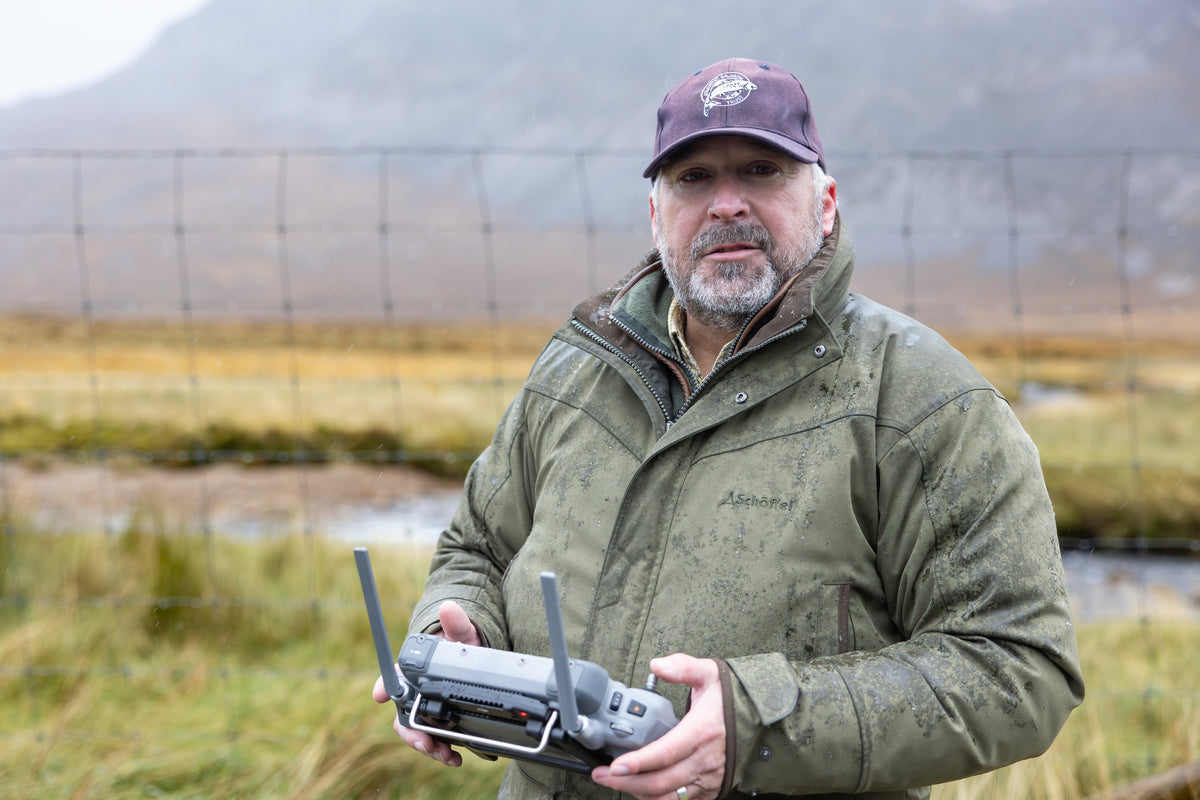
The drones carry LiDAR, which sees through vegetation to map the ground beneath, along with high-resolution cameras and thermal imaging. Thermal imaging matters more every summer, because it finds the cold-water refuges salmon depend on when rivers warm. On the Laxford, one survey picked up a pocket of water at 7.8°C against surrounding temperatures of 6.0–6.6°C, a difference that standard methods would have missed entirely. John has built a 3D model of the entire 170km² Laxford catchment, from source to sea. The same approach is in use on 'Linking the Lochs' on Lewis and 'Save the Spring' on the upper Dee. This baseline data shows whether interventions have or have not worked.
Our judges were struck by how John makes the data usable for everyone, “from PhD ecologists to estate stalkers and crofters”. The surveys are around 80% faster and 60% cheaper than conventional methods. For many river trusts, judge Marcus Janssen noted, that could be the difference between affording a proper catchment survey and not.
“John brings an outsider's clarity to a field that has been slow to embrace new technology,” Marcus wrote in his report. “He is not a fish biologist, and does not pretend to be.” He called the work “a step change in how river catchments are understood and managed”.
For John, recognition helps bring work that happens far from public view into the open. “It's not public-facing, so people don't see it every day,” he says. “Awards like this really help show people what is happening beyond the visual, beyond where they live, out in remote places, and that it is making a difference.”
Farm-Environment Partnership Award | Winner: Manhood Peninsula Farmers Cluster Group, West Sussex
On the Manhood Peninsula, the grey partridge had all but gone. There were only anecdotal sightings, and none were recorded in the official survey. In 2022, that shared concern brought six family farms together.
Led by Tom Monnington and Andrew Gentle, the cluster now covers just under 2,000 hectares between RSPB Medmerry, Pagham Harbour and the Chichester Harbour National Landscape. Its members run very different businesses, including dairy, arable, extensive beef, vegetables and organic, but they share a common ethos: producing food while giving nature a helping hand.
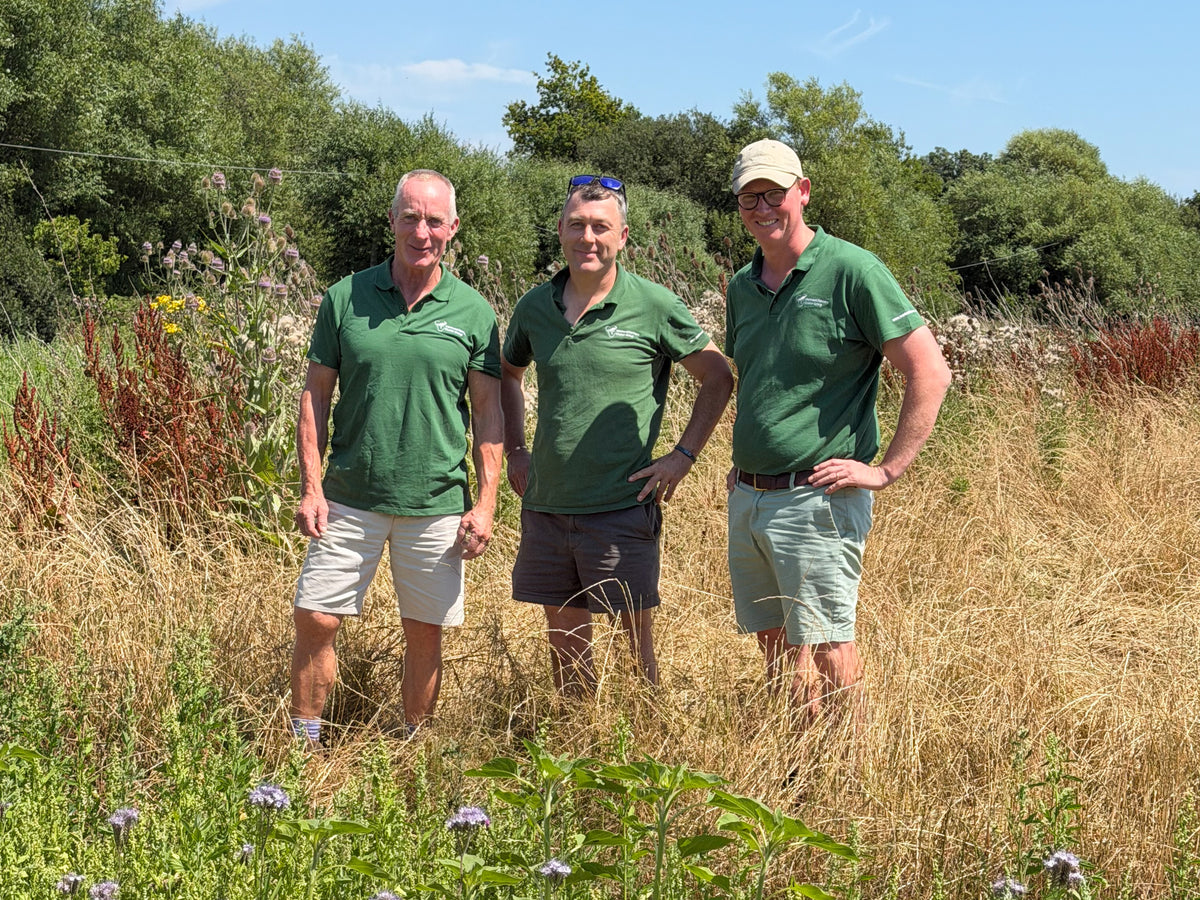
Since forming, the group has planted several kilometres of new hedges, laid existing ones and restored ponds. It has established more than 150 hectares of GWCT partridge mix, some of it on grade 1–2 land. It feeds farmland birds through the hungry gap and has put up nearly 30 boxes for barn owls and kestrels. The partridge pens were built by the local Men's Shed. The group has also taken on land previously farmed by large corporate operations, restoring margins and hedgerows to join up habitat between holdings.
The results speak for themselves. Grey partridges reared under broody bantam hens and released have gone on to breed in the wild, increasing the estimated local population roughly tenfold, according to the judges. The group follows GWCT guidelines for re-establishing the species and is now looking to scale up.
Judge Megan Lock, who visited with Tom Hilder, was impressed by how much a small group is achieving. “It was inspiring to see how so few are trying to do so much in a fragmented landscape,” she wrote.
The cluster's outreach is remarkable too. Members visit schools and host them on the farms, speak at parish council meetings, take part in Open Farm Sunday and have put QR codes on footpaths to explain what they're doing. As Megan put it, “their mission is to talk to anyone who will listen!” They have also helped other clusters outside the peninsula get started.
“They have formed a strong and determined group and have worked very hard to be accountable and forward facing to the general public,” she added.
Wetland & Watercourse Conservation Award | Winner: River Stiffkey – Charles Rangeley-Wilson, Norfolk
Category sponsored by the Atlantic Salmon Trust
English rivers don't come much rarer than chalk streams: some 85% of the world's chalk streams are in England. And when it comes to chalk streams, few people know more than Charles Rangeley-Wilson. He founded what became the Wild Trout Trust, co-founded the Norfolk Rivers Trust and chaired the group behind the national Chalk Stream Restoration Strategy. He describes the River Stiffkey as the most ambitious project of his career.
For centuries, this 2.5km stretch between Warham and Wighton had been straightened and dug deep to power mills, which turned it into what our judges’ report called “little more than a disconnected ditch”. Pollen in the floodplain sediment told the story: plant diversity had fallen from 0.90 in the early Mesolithic to just 0.31 by 2022.
To find the river's original course, Charles and his team studied Faden's 1797 map of Norfolk, aerial imagery and LiDAR of the valley floor, looking for the faint scars of old meanders. During the dig they found proof they had the line right: an ancient fish trap several thousand years old, and the remains of a ford leading to the Iron Age hill fort at Warham Camp.

The new meandering channel was dug in 2023 with Norfolk Rivers Trust and the Holkham Estate, which owns most of the land. Nature responded quickly. Water crowfoot and starwort are back, along with brown trout, eels and flounder. On the floodplain, little egrets, great white egrets, curlews, kingfishers and otters have all been recorded, along with water voles and orchids. Charles's longer-term hope is to bring a salmon run back to East Anglia.
Our judges left impressed. “There is arguably no one in the country who knows more about chalk stream restoration, and the Stiffkey project is the fullest expression of that knowledge to date,” they wrote. “It would be an extremely hard entry to beat.”
For Charles, awards are about lifting everyone's game. “They spread information and education, so that we can swap ideas and see what other people are doing and lift the game,” he says. “As an encouragement for others to get out there and do exciting things, for landowners to be brave about what they can imagine for their landscapes, I think awards play a really key role.
“A lot of the time you're working in this space and it's enormously good fun, but the idea of getting an award for your work – it's a huge uplift.”
To read about the awards ceremony, please click here
The Schöffel Countryside Awards, in partnership with the GWCT, return in 2027, with nominations opening in January.
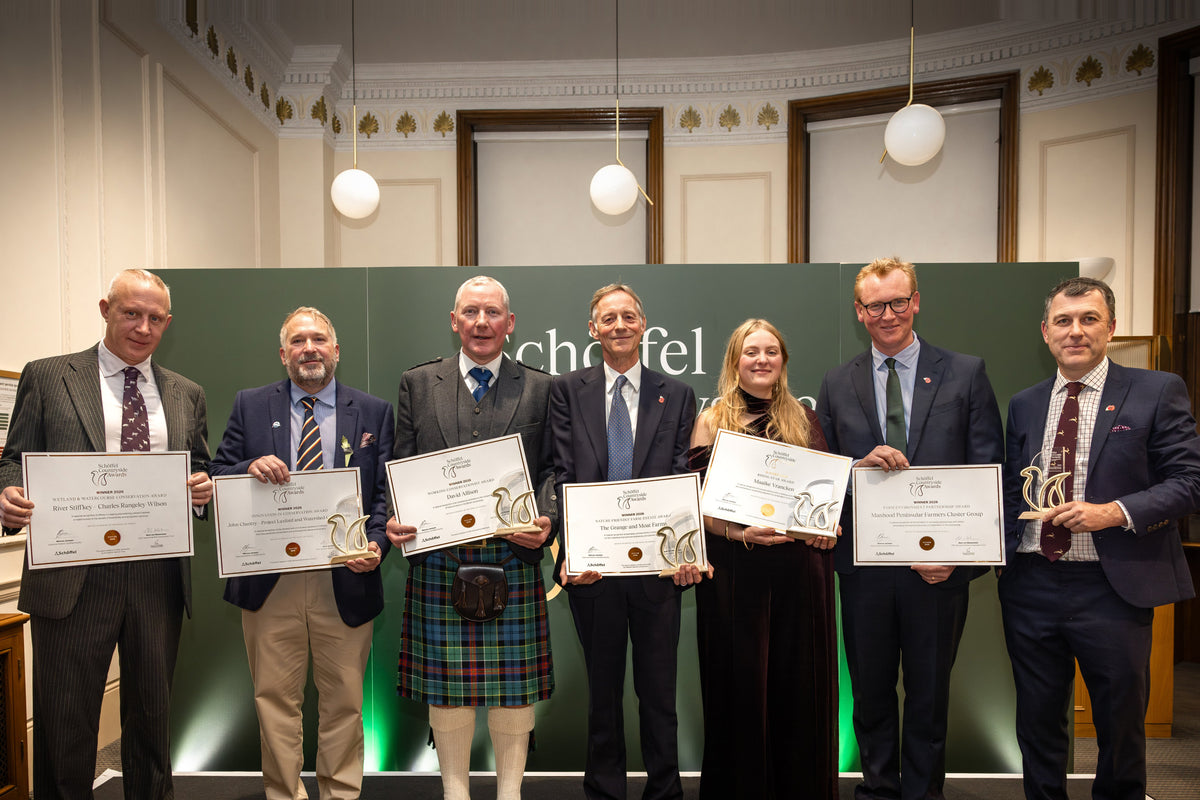 Meet the winners of the 2026 Schöffel Countryside AwardsRead postSchöffel Countryside Awards6 min read
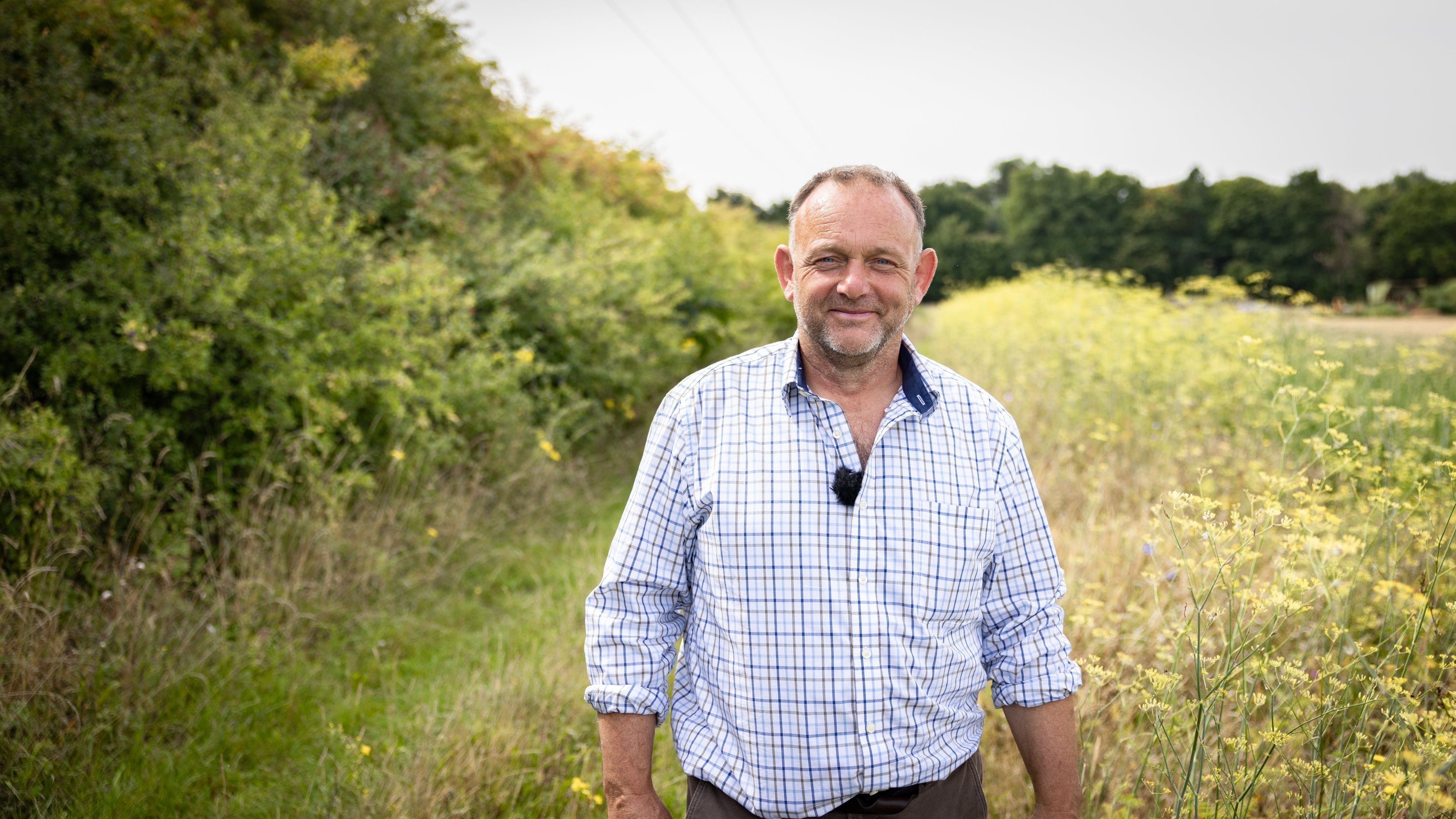 The unsung heroes of the countryside | Episode 6: Graham DennyRead postSchöffel Countryside Awards8 min read
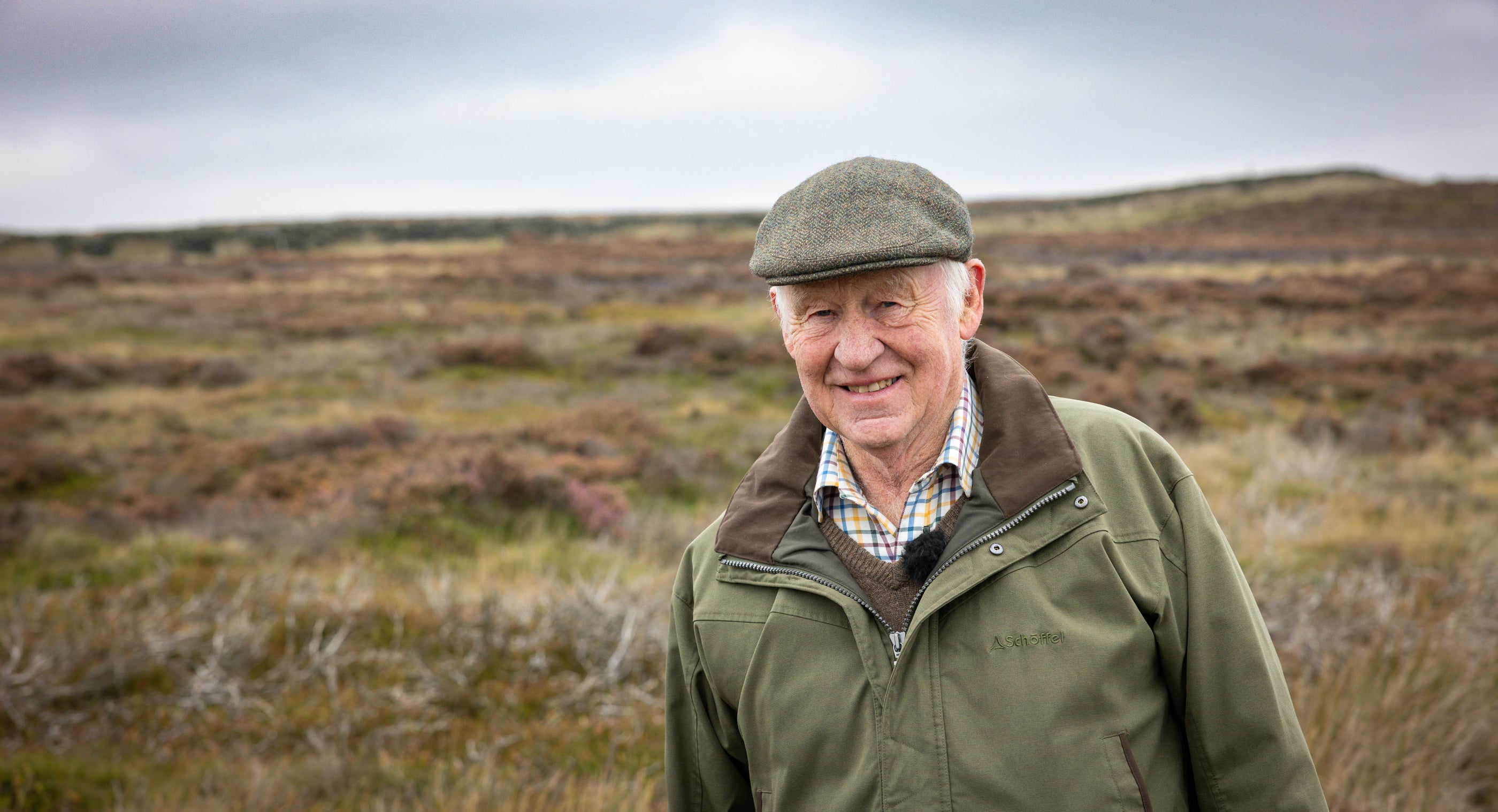 The unsung heroes of the countryside | Episode 5: Geoff EyreRead postSchöffel Countryside Awards5 min read
 Nominations open for 2026 Schöffel Countryside AwardsRead postSchöffel Countryside Awards5 min read
 The unsung heroes of the countryside | Episode 4: Hooves and habitatRead postSchöffel Countryside Awards7 min read
 The unsung heroes of the countryside | Episode 3: Rupert BrewerRead postSchöffel Countryside Awards5 min read