Food Origins | Episode 3: Honey – what's really in the jar?
In the third episode of our Food Origins series, we meet bee farmers Luke and Suzie Hutchinson of Northumberland Honey Company – and find out what really goes into a jar of proper British honey.
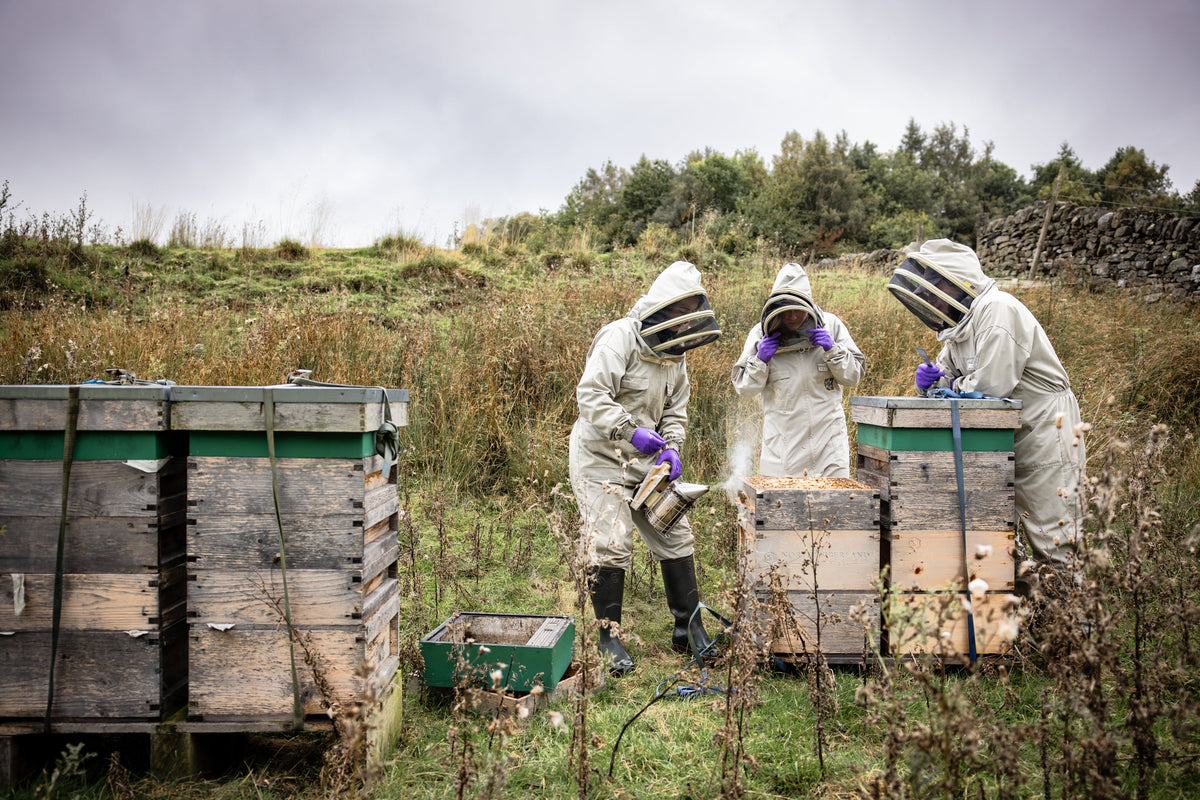
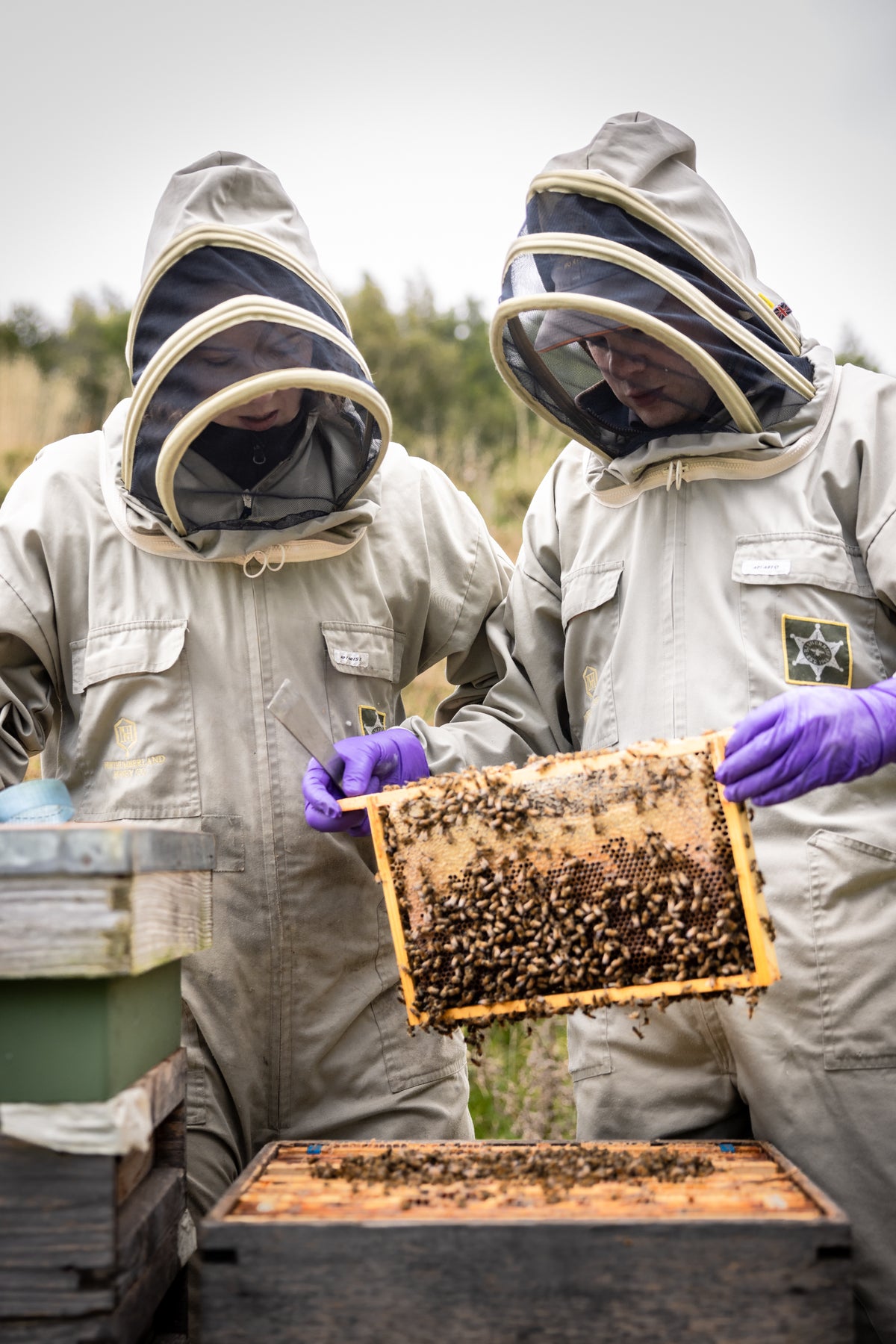
It looks like any ordinary field corner. But the hives lined up here in Northumberland have spent the summer months working the heather moors on the fells above – and today, we find out whether it's paid off.
At Schöffel Country, storytelling sits at the heart of what we do. Food Origins is our series reconnecting people with where everyday food comes from, visiting the producers behind it and asking the questions most of us never think to ask.
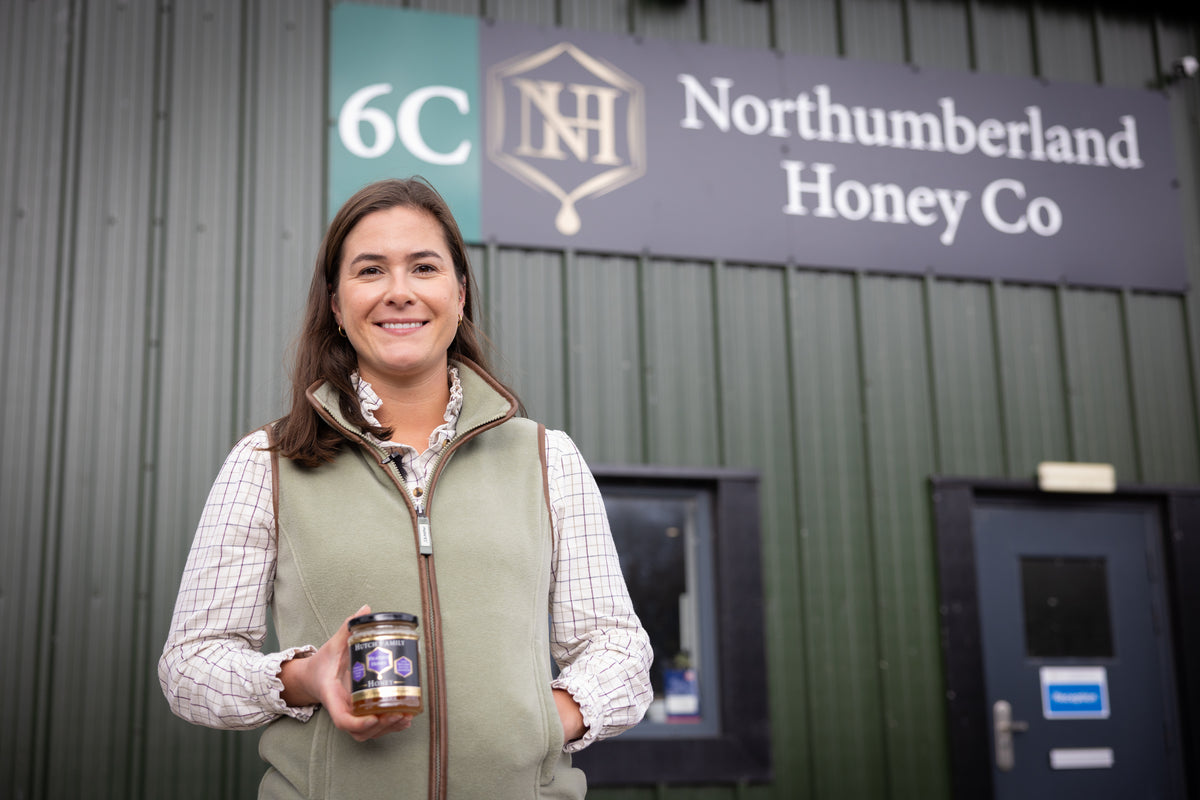
In Episode 1 we went behind the scenes on a Cumbrian dairy farm; in Episode 2 we asked what 'organic' really means at Daylesford. This time, presenter Rebecca Wilson joins Luke and Suzie Hutchinson of Northumberland Honey Company on a harvest day. “We've moved the bees in to gather honey, specifically off the heather flowers,” Luke explains. Whether that means a bumper crop is another matter entirely.
What is a bee farmer?
A bee farmer is a professional beekeeper who keeps enough hives to make a living from them, rather than keeping bees as a hobby. As Luke puts it: “The bees are effectively keeping us.”
There's no single qualification. Most bee farmers learn alongside an experienced hand, and the Bee Farmers' Association now runs an apprenticeship scheme to bring young people into the industry. It's a craft that rewards patience. “They reckon it's the only thing that would keep Sherlock Holmes interested,” Luke laughs. “Bees don't read books, but there are many, many books written on bees.”
How many bee farmers are there in the UK?
Very few. Luke estimates the Bee Farmers' Association has around 400–500 members, from the largest operations running 4,500 hives down to bee farms of around 80. Compare that with an estimated 40,000 hobby beekeepers, most with one or two hives.
Northumberland Honey Company sits towards the larger end, with around 420 production colonies and a further 800 nucleus colonies raising the next generation of queens – some of which are sold on to other beekeepers.
What does a bee farmer do through the year?
“95% of success in bee farming is husbandry, and the bees always have to come first,” says Luke. "If we look after the bees, the bees will look after us.”
In spring, emphasis is on making sure colonies are strong, the queens healthy, and hives placed near good forage. Each hive needs roughly an acre of flowers to thrive.
In summer, foraging and honey production is in full flow, though it’s weather dependent.
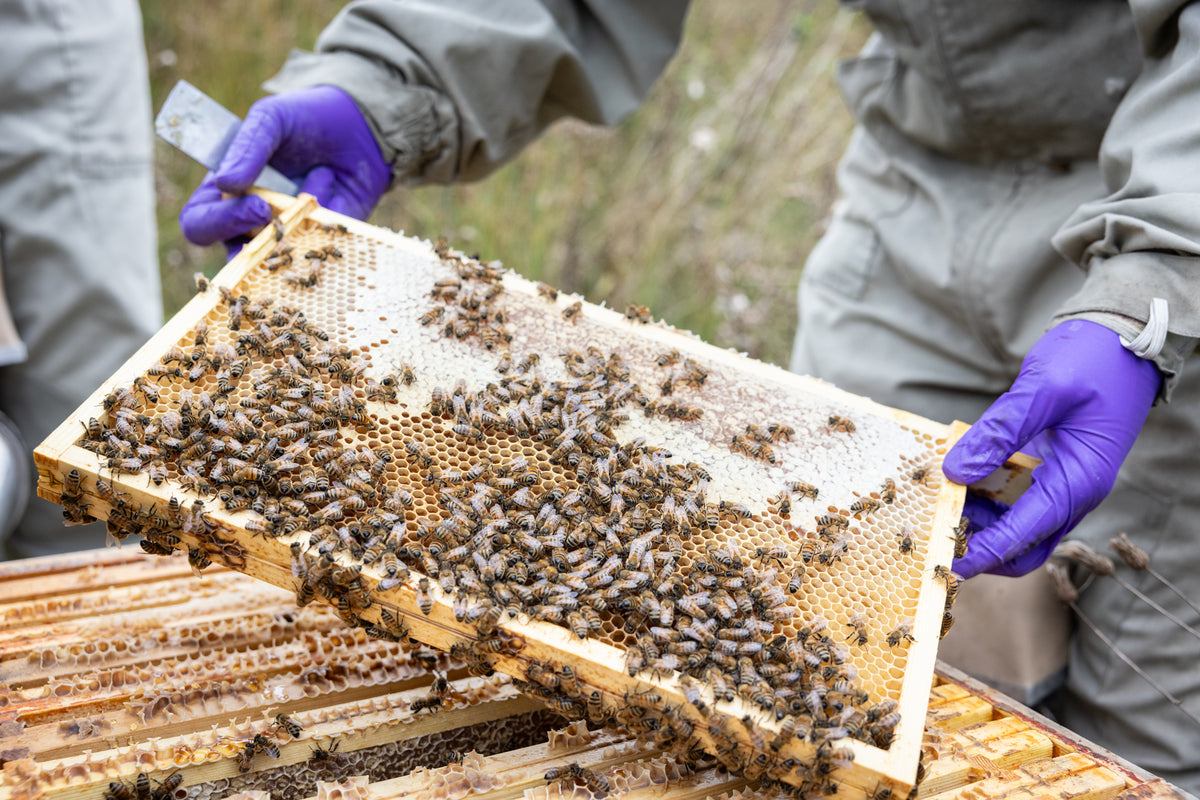
Come autumn, the honey harvest and extraction take centre stage, and hives are moved to more sheltered sites, with the focus on healthy queens and disease-free bees, setting up the bees for winter.
Location matters as much as forage. Bees will fly up to three miles, but only in warm, sheltered sunshine – “somewhere you could sit out quite comfortably,” says Luke. These hives sit half a mile below the heather, so the bees fly up empty and come back downhill fully loaded.
It also explains the Unimog. Luke's all-terrain truck carries a loader, a four-metre bed of palletised kit and a feed tank, so the team can spend a full day with the bees without running back to base. “It's not just a big boy's toy,” he says. It saves backs, time and carbon.
What happens inside a beehive?
It’s truly fascinating. A hive holds three kinds of bee:
The queen lays every egg and can live for four or five years.
Drones are the males. Their only job is to mate – and never with their own hive's queen.
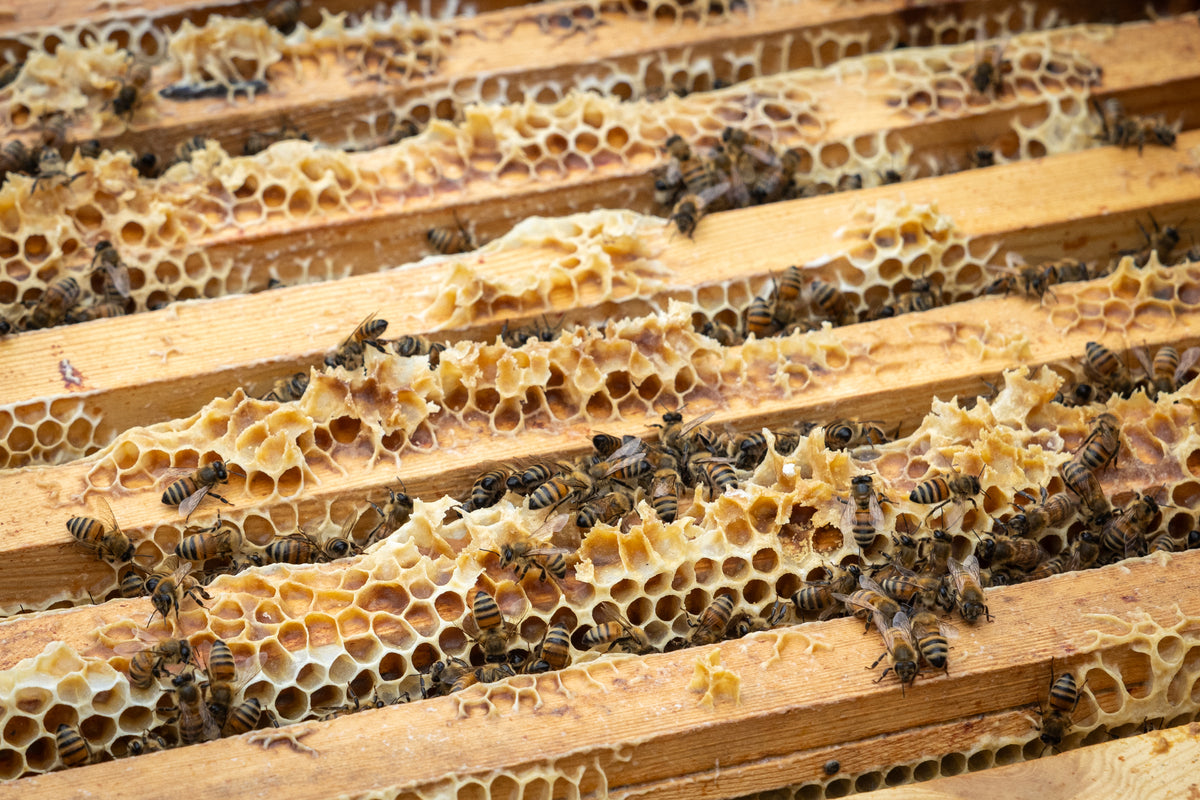
Workers do everything else. They start as nurse bees, cleaning and tending the hive, before becoming foragers who tell the colony where the nectar is. They live around six weeks in summer, but up to six months in winter.
Together they hold the hive at 34.5°C, vibrating, fanning their wings to control airflow and humidity, and eating honey for fuel. In hot weather, they will use water to cool the hive down. “You'll be able to feel the heat that's been generated, just with your hands,” Luke tells Rebecca.
How much honey does one hive produce?
A well-managed hive can produce 50–100kg of honey in a good year, against a national average of around 12kg. The difference is husbandry, breeding and, above all, weather. The scale of the effort is striking. A colony can grow from around 20,000 bees in spring to 80,000 or more at its peak, yet a single bee gathers just a twelfth of a teaspoon of honey in its lifetime.
And the bees need their share. A colony eats around 20kg of honey between September and May, and a big colony can get through 10kg in a few weeks of summer. Honeybees are unique in making a surplus – which is what bee farmers harvest – but two months of rain changes everything. “No matter what you do, that colony would die if it wasn't supported by a bee farmer,” says Luke.
What makes heather honey special?
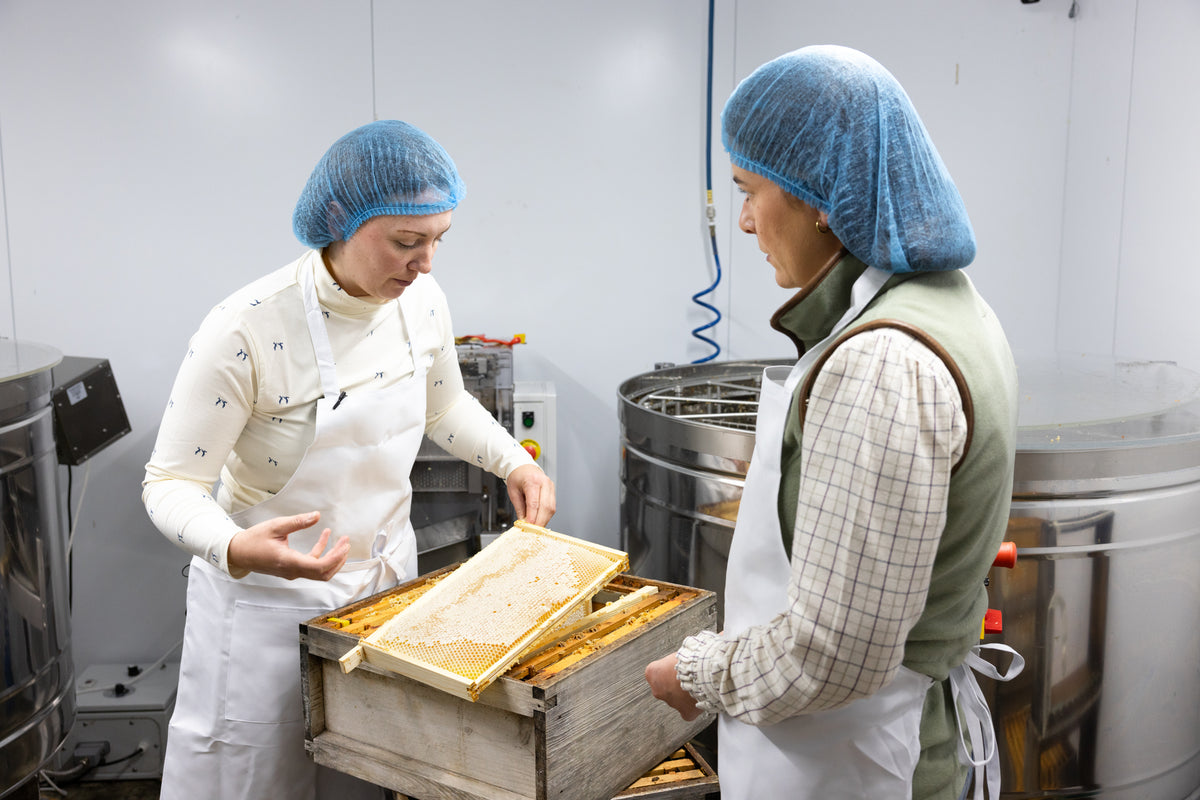
Heather honey is one of the hardest honeys to produce, and one of the most prized. The moors are high, exposed and rarely kind with the weather, so the bees work hard for every drop.
What they bring back is unusual too. Heather honey is thixotropic – thick and jelly-like in the comb – with a rich, distinctive aroma. “It tastes really good,” says Luke. "It's just got an absolutely fantastic aroma that you can immediately associate with heather honey.”
That texture means it can't simply be spun out like other honeys. Each comb is first agitated with a needling system to loosen the honey before it goes through special extractors. Add moving hives to the moors and back again, and it's an labour-intensive process from flower to jar.
Is British honey better than cheap supermarket honey?
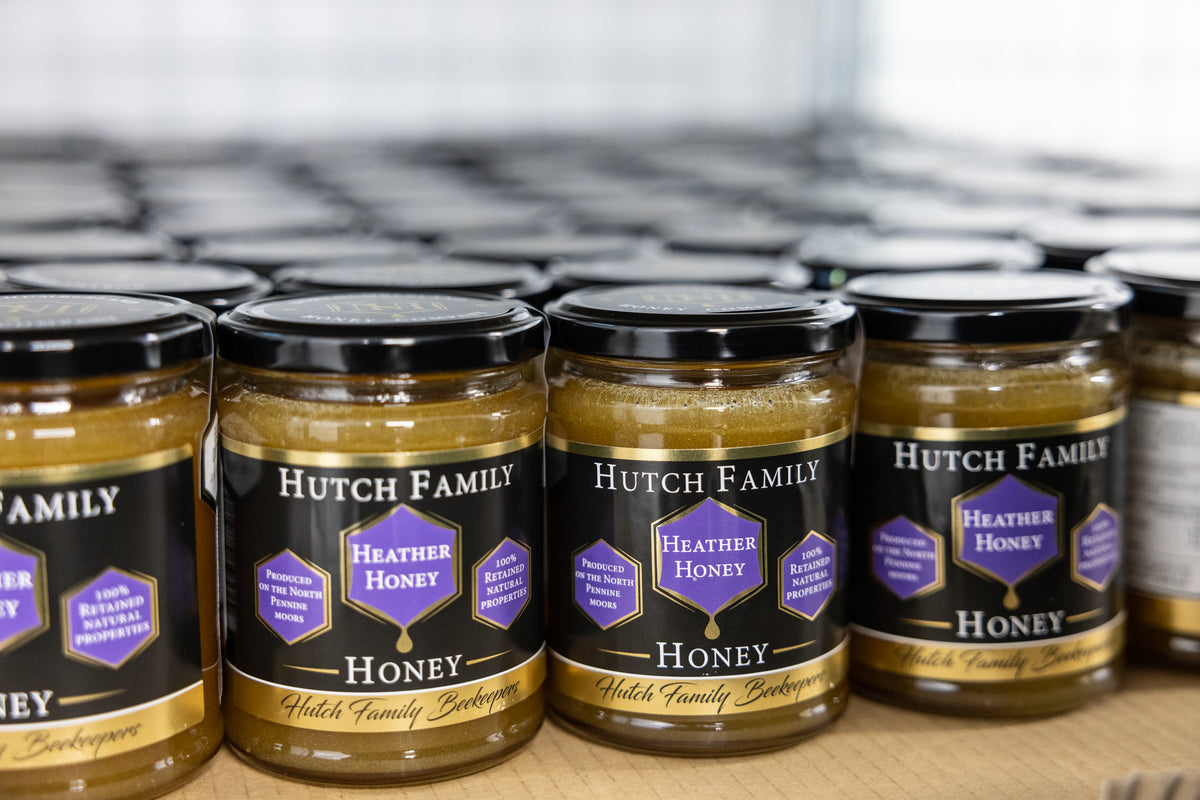
The key difference is often provenance. Luke's honey goes straight from the comb into the jar, from a known location, with nothing blended in. “We're not mixing it with any other honeys at all,” he says.
Turn over a cheaper jar and you'll often see a 'blend' of honeys from several countries. At supermarket volumes, honey often has to be batched together from many sources – and Luke says around 95% of the honey bought in UK supermarkets is imported.
Why is British honey so expensive?
If anything, it's undervalued. Luke points out that around the Second World War era, a jar of honey was reckoned to be worth an average hourly wage. On that measure, a jar today would cost around £14. His sells for £9.
“Honey is one of those products that hasn't kept up with inflation," he says. "It's seen very much as a commodity.”
What is honey fraud?
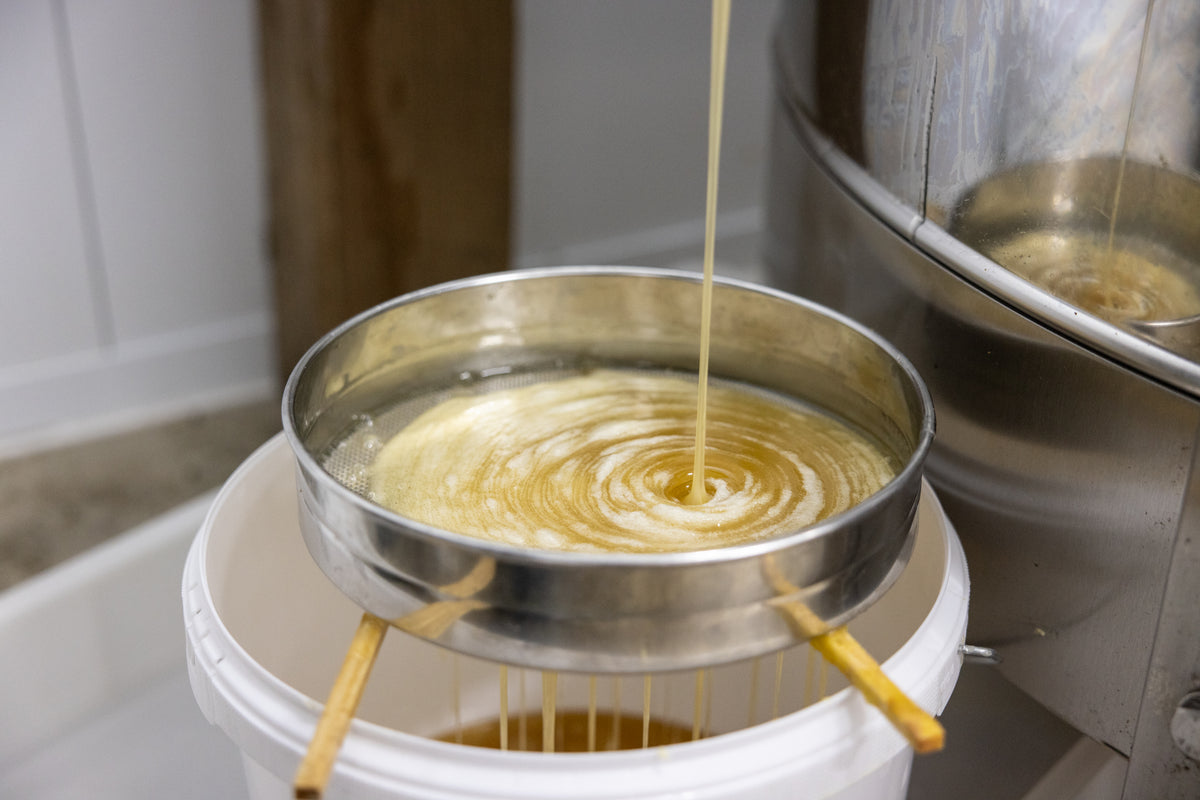
Honey fraud is the adulteration of honey to make it cheaper to produce, most often by bulking it out with sugar syrup. More broadly, it covers any tampering that makes honey more profitable for someone along the supply chain. (We dug into this in more depth in Honey fraud: have you been a victim?)
Testing of high-volume honey has increased, but it still has gaps. “There isn't one test that will pick up absolutely every trace of honey adulteration," Luke explains. He has tested this himself. Luke asked one of the UK's leading laboratories whether NMR, the most advanced test available, could confirm his heather honey came from Northumberland. The answer, for now, was no.
Why does it matter if honey is pure?
People buy honey for all sorts of reasons, and many see it as a natural, wholesome food. “If that is cut with sugar syrup, it's not going to do you any good versus golden syrup,” says Luke. In other words, if you don't know what's in the jar, you may not be getting what you think you're paying for.
How can you tell if honey is real?
The most reliable safeguard is the producer, not the label. Luke's advice is simple: “Seek out a good producer that you can trust, that you can rely on, and where you can actually see where your honey is coming from.”
When you're next choosing a jar:
- Check the label for origin. A single named source is a better sign than a blend of honeys from several countries.
- Buy from a British bee farmer or a trusted brand that can tell you where its hives are.
- Expect to pay £8–£10 a jar. “The difference is huge in terms of what that £8 or £10 does,” Luke says, compared with a £1–2 jar. “You're supporting the British bee farming industry, homegrown pollination and sustainability.”
Do honeybees harm wild bees and other pollinators?
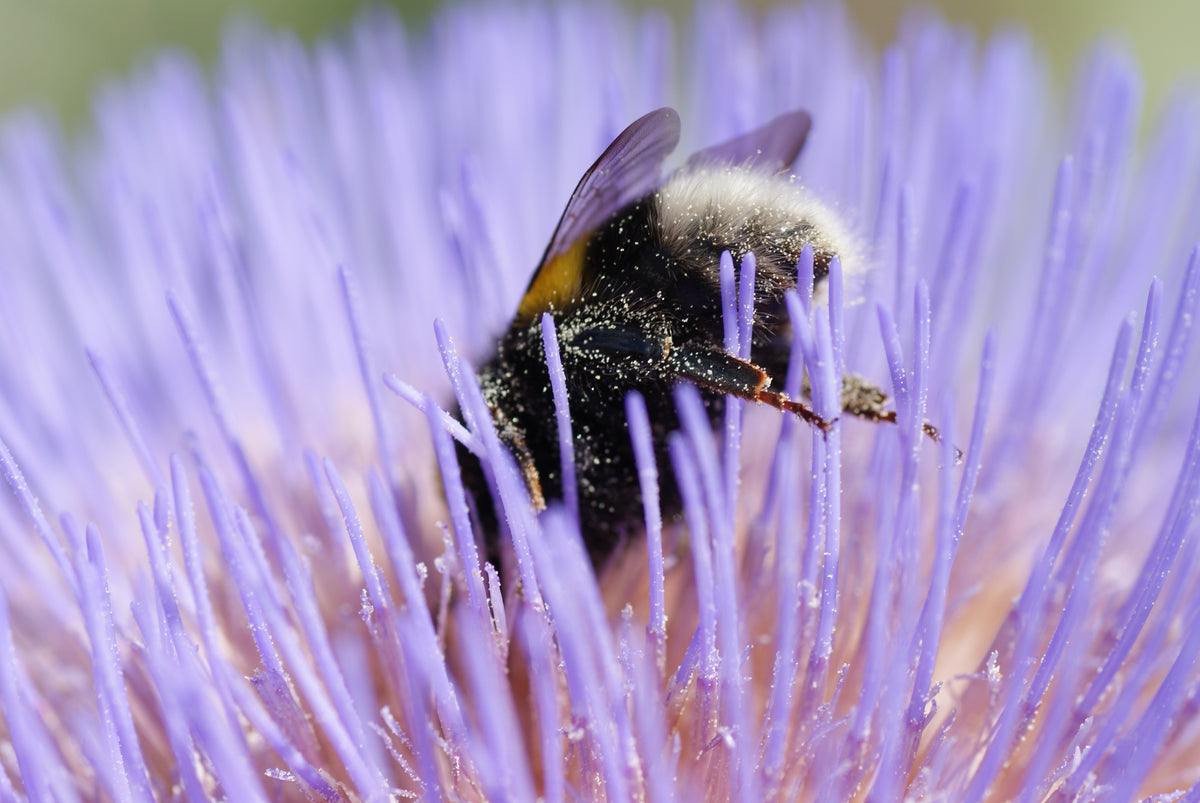
Not when hives are placed responsibly, Luke argues. The first question a bee farmer asks is whether there are enough flowers for the wildlife already there as well as the hives. In the case of the location we visit while with Luke and Suzie, there are 4,000 acres of heather moorland nearby, which could support thousands of hives in theory. Luke has placed around 16.
He believes some studies on managed honeybees and wild pollinators have been set up in areas with few flowers to begin with. Newer research, he says, is looking at how honeybees can help by pollinating flowers that then set seed and spread. It’s about considering both positive and negative impacts.
Has this been a good year for honey?
It depends where you are. This year's heat and drought hit arable yields hard, and in the south, plants under stress stopped producing nectar altogether. “A number of bee farmers on the south coast have had difficulties with yields,” says Luke.
Northumberland has been luckier – “just on the edge of that severe drought versus just having enough water.” Even so, nothing is guaranteed until the honey harvest begins. As Luke puts it before opening the first hive: “We'll have a look in there and see whether it's going to be baked beans for Christmas or caviar.”
Watch the full episode
Watch Rebecca, Luke and Suzie open the hives, extract the heather honey and fill the first jars in the full film below. And if you missed them, catch up on Episode 1: Milk and Episode 2: Eggs.
Up to three miles, though they prefer the nearest good forage.
Worker bees live around six weeks in summer and up to six months in winter. A queen can live four or five years.
Very little. Luke Hutchinson estimates around 5%, with roughly 95% imported.
A honey made from heather moorland flowers in late summer and autumn. It's thick, jelly-like and strongly aromatic.
Adulterating honey, usually with sugar syrup, to bulk it out and cut costs.