


The unsung heroes of the countryside | Episode 6: Graham Denny
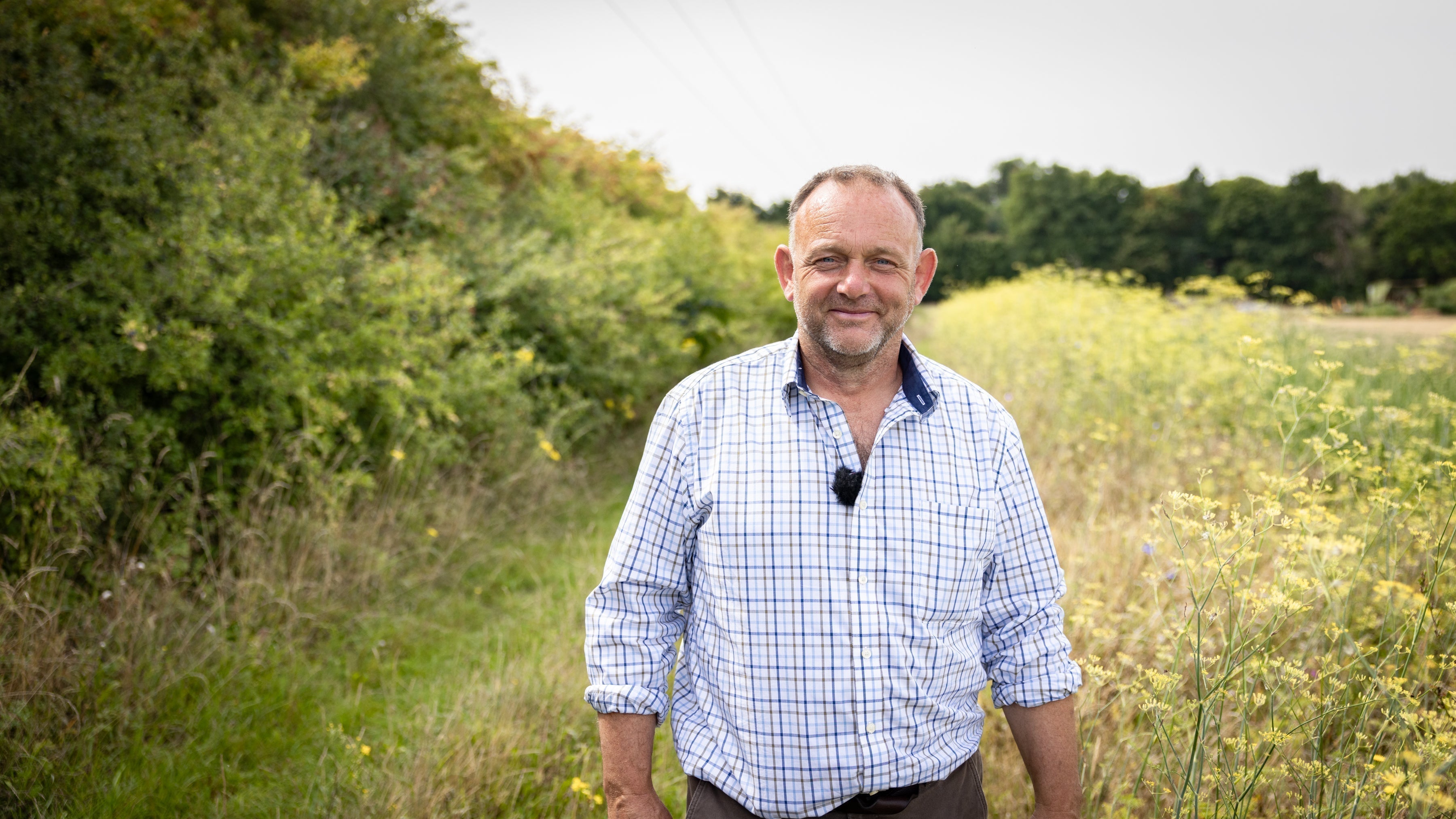
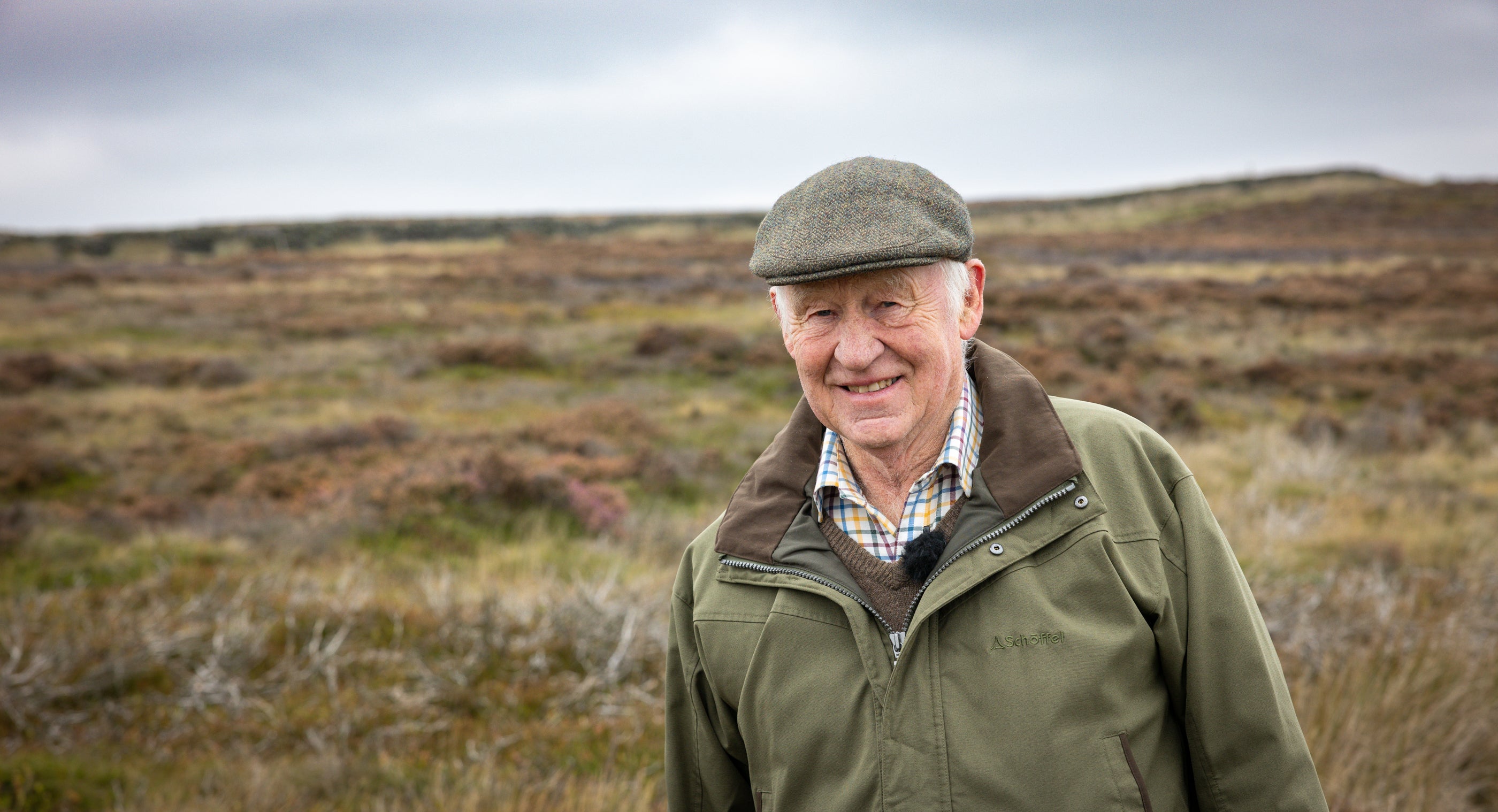
Graham Denny’s Brewery Farm bucks the trend: with more than 82,000 birds ringed, hand-feeding, thoughtful habitat management and targeted predator control, the way he approaches wildlife-friendly farming across his 200 acres in Suffolk is truly commendable.
Turtle doves are the poster bird of British wildlife decline, often in the news as the UK’s most rapidly declining migrant species. Their numbers have fallen by 96% since 1970, yet they breed on Graham’s small farm every year and his success is not limited to these beautiful summer visitors.
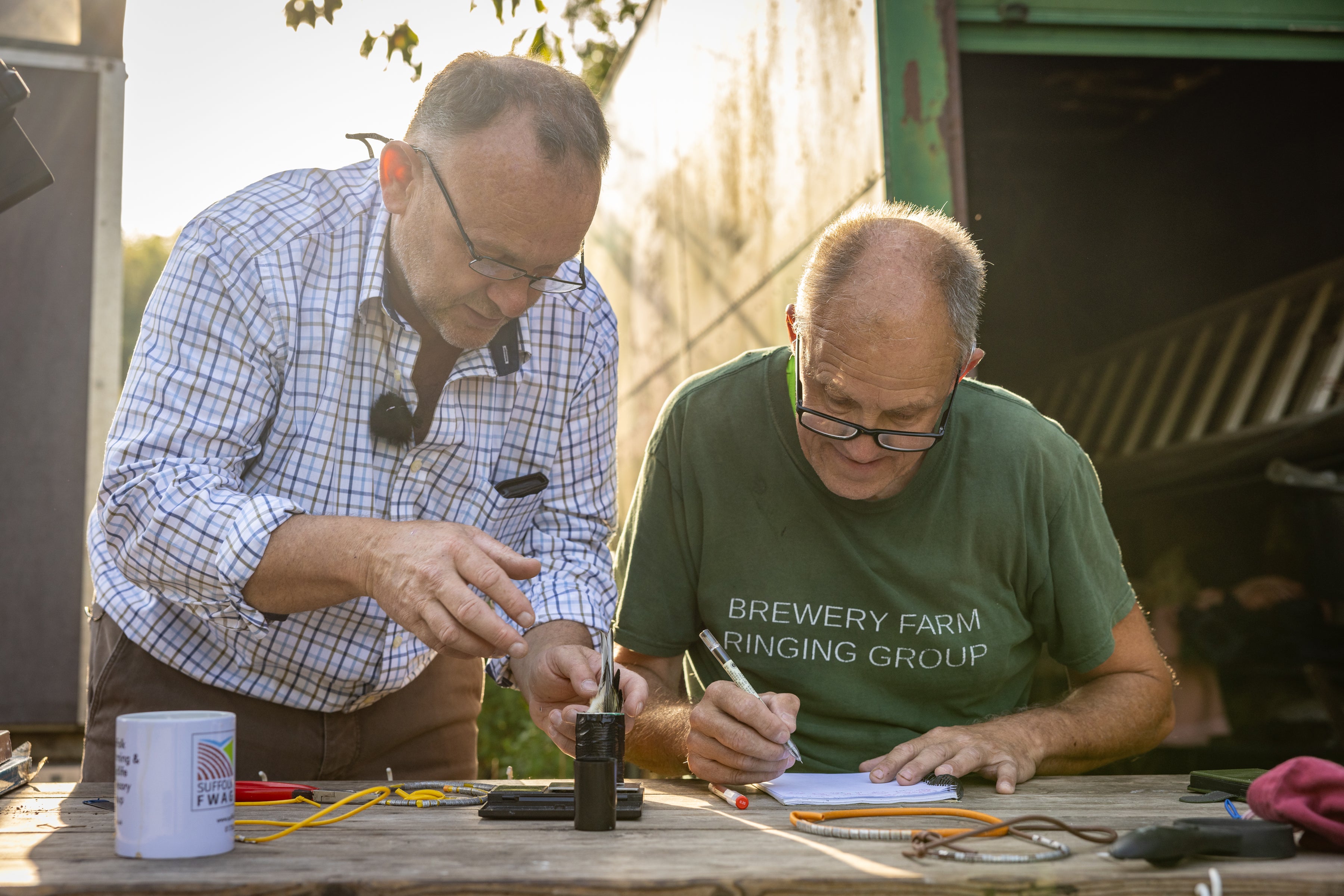
Graham is an accredited British Trust for Ornithology (BTO) bird ringer and since 2006 he and other ringers, have caught and ringed an incredible 82,032 birds on the farm including 10,684 yellowhammers, 3,563 linnets and 8,841 greenfinches. Meticulous records indicate a rise in numbers of red-listed species, for example song thrushes go from zero in 2007 to 28 in 2016 and lesser redpoll from zero to 53 in the same period.
So how has this miracle been achieved? Brewery Farm has been in the family since 1902 and was always rich in biodiversity, engendering a love of nature in the Denny genes. Graham said: “My interest in conservation came from my father Henry and my grandfather Victor who used to feed turtle doves and other songbirds in the yard with rolled barley and wheat. The birds became quite tame and were very much part of the farm. It is hard to believe not long ago there were so many starlings and sparrows they were considered pests.”
The benefits of supplementary feeding for farmland birds
This tradition of feeding wild birds is key to their success. There is never a day when there isn’t food on the ground. As well as 15 tonnes of hand-fed wheat for his shoot’s pheasants and partridges, Graham has the supplementary feeding option developed by the GWCT as part of his Countryside Stewardship (CS) agreement, which pays for two tonnes of grain. On top of that he provides three tonnes of mixed seed and 10-15 tonnes of rape dressings for the songbirds.
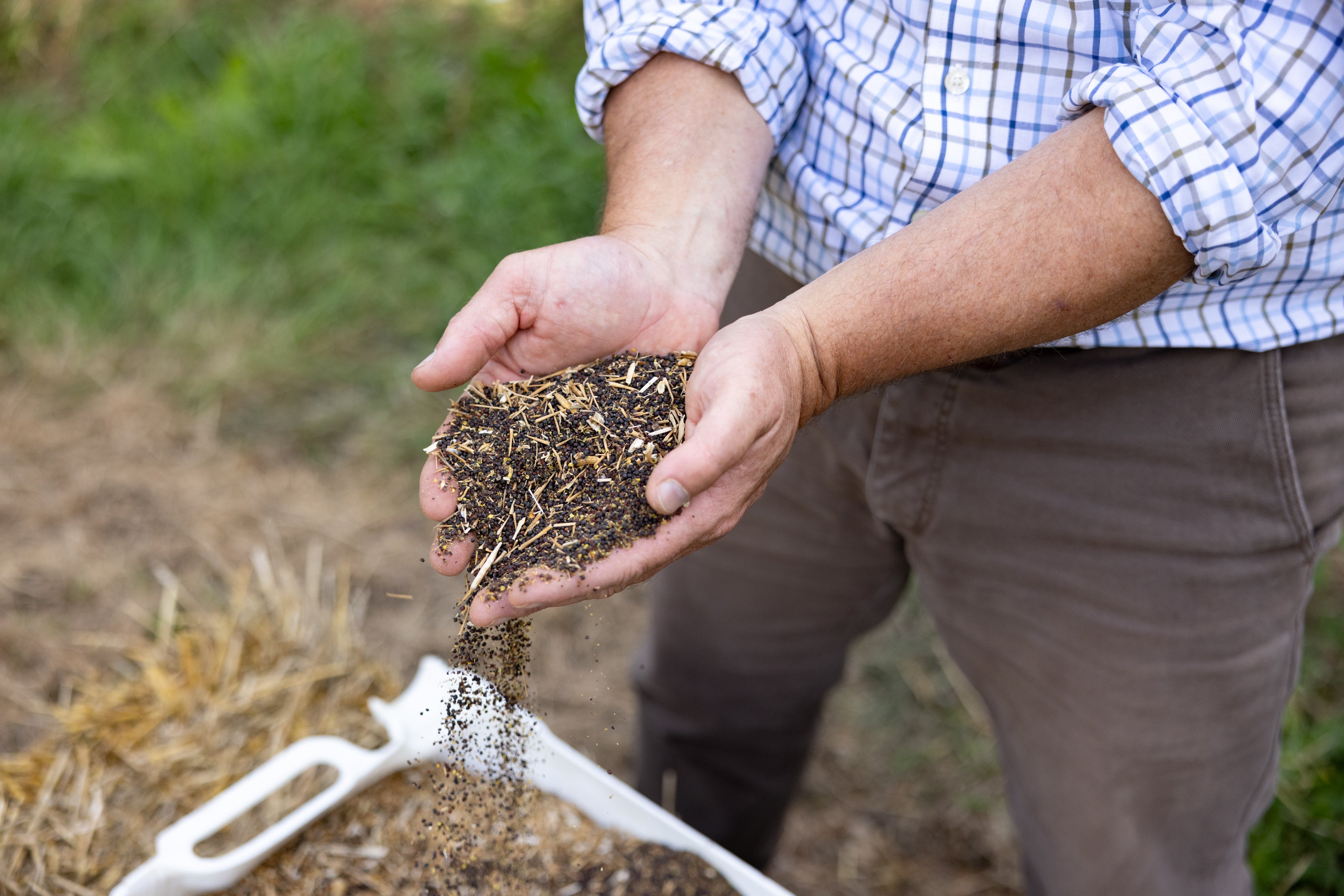
Graham scatters a range of seed for a variety of species: “I use naked oats, which are soft smaller seeds, for yellowhammers, linnets and reed buntings. Rape dressings work well and I’ve found white millet more popular than red.” Hand-feeding takes a lot of Graham’s spare time. In the winter he is out most days for an hour, scattering seed by hand in his cover crops or hedgerows, so that the little birds can feed safe from predators. In the early summer the turtle doves get the benefit. He said: “Initially, the RSPB advised against feeding turtle doves to reduce disease risk, but we’ve been doing it for generations and after seeing it work here, they asked me what I fed them and have adopted my method and mix as part of their conservation strategy.”
Creating and managing habitat for farmland birds and insects
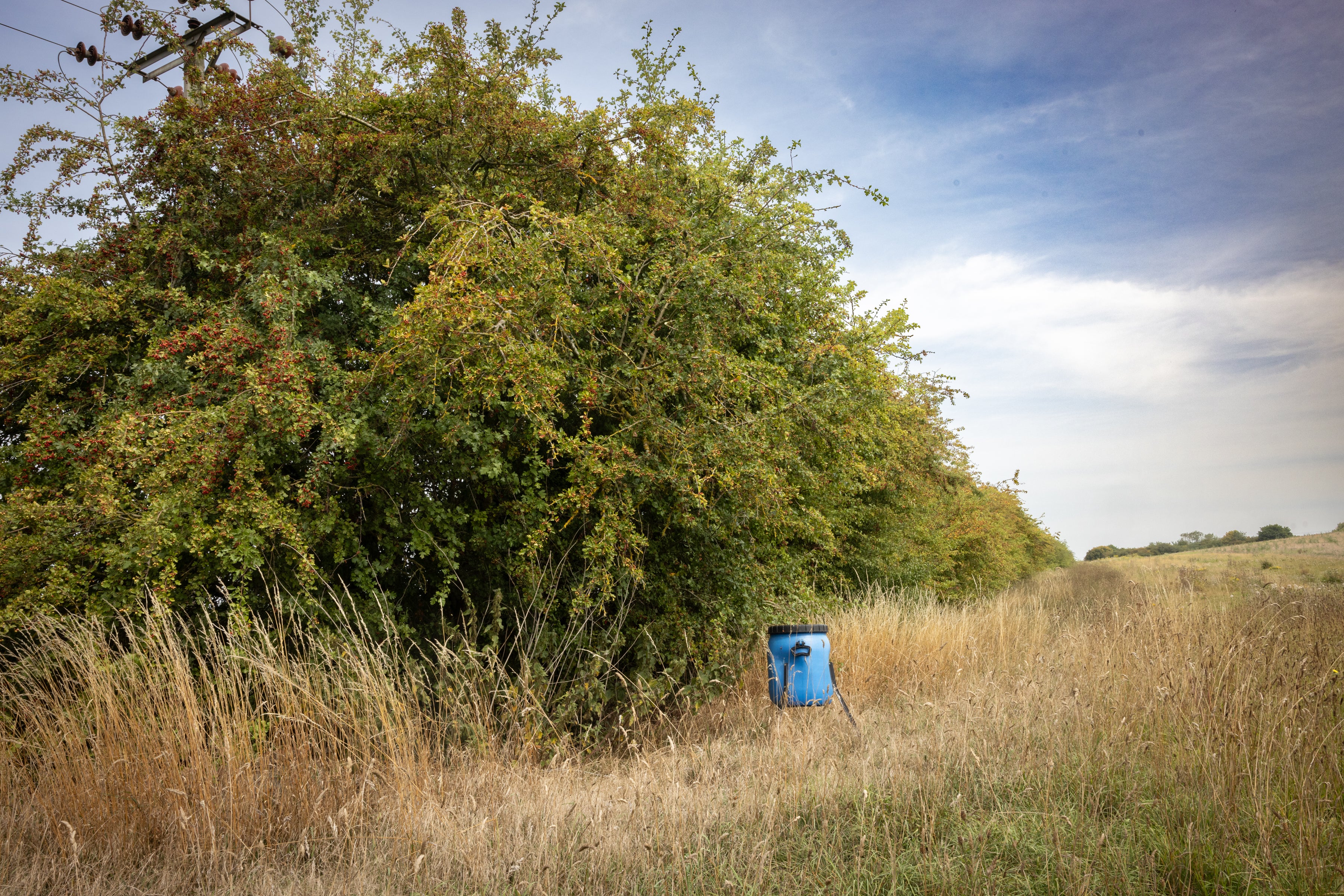
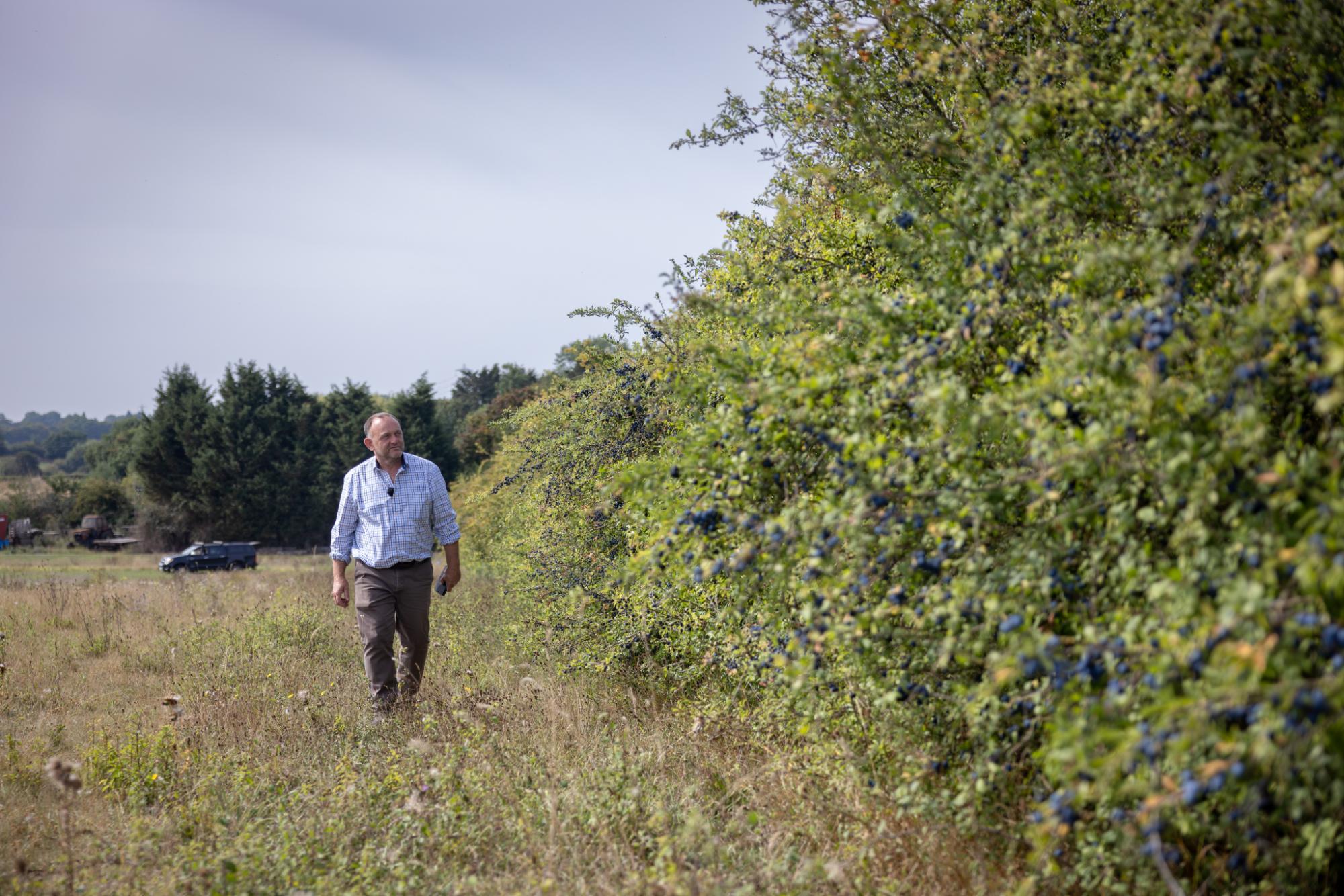
As well as feeding, Graham is committed to providing the right breeding habitat. Turtle doves have particular requirements, preferring large bramble bushes supported by small trees to give strength and structure. Their nests take the form of a few sticks making a flimsy platform deep inside the thicket.
At Brewery Farm, several pairs nest in the hedge next to the main road, unbeknownst to passers-by, but their distinctive “purring” call can be heard, if you listen carefully. Graham has actively encouraged bramble growth in his orchard and believes better hedge management will be essential if we are to reverse farmland bird declines. He said: “It frustrates me the way many hedges are cut lower each year and rarely coppiced. If you cut one side every other year, it will save you time and money and provide hedgerow food in the winter.”
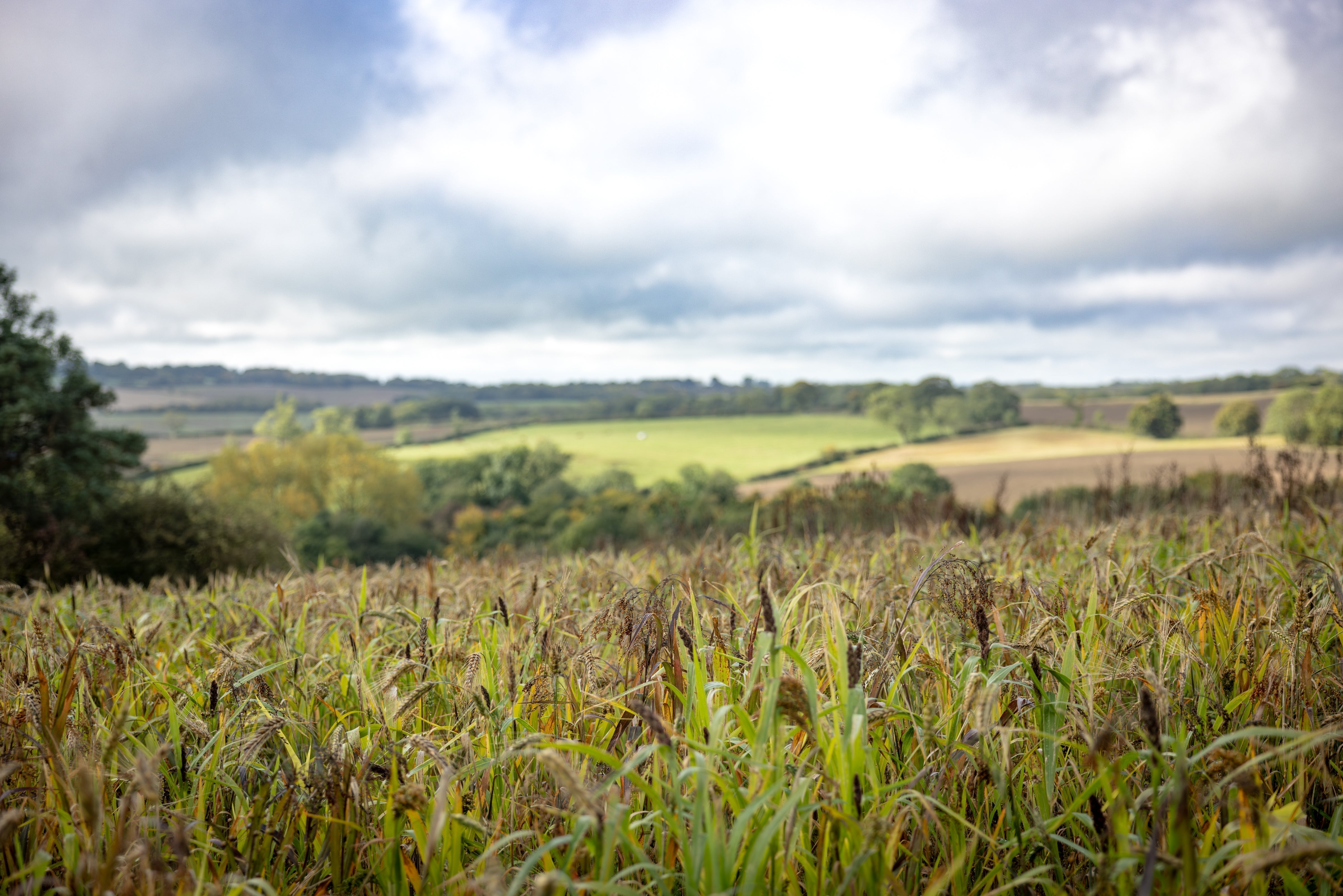
Wild bird habitat and food also come in the form of 29 options across the farm including winter bird food, nectar flower mix, over winter stubble, flower-rich grassland, cultivated uncropped areas and autumn sown bumble/bird mix. Mixes include maize, sorghum, white and red millet, fodder radish, mustard, dwarf sunflowers and oilseed rape. Graham is always keen to experiment: “You need to keep an open mind. Maize gets a lot of bad press but it often stands when other crops fail, providing vital winter protection.”
He takes the same care over cover crops as he does his commercial crops, grows pest resistant crop varieties and never uses insecticides. About 20 years ago, a broad-spectrum insecticide called Dursban was applied in the local area two years running to combat orange wheat blossom midge. Graham believes that the birds never fully recovered. He said: “Everybody sprayed at the same time and it killed everything. The knock-on effect for the birds was terrible.”
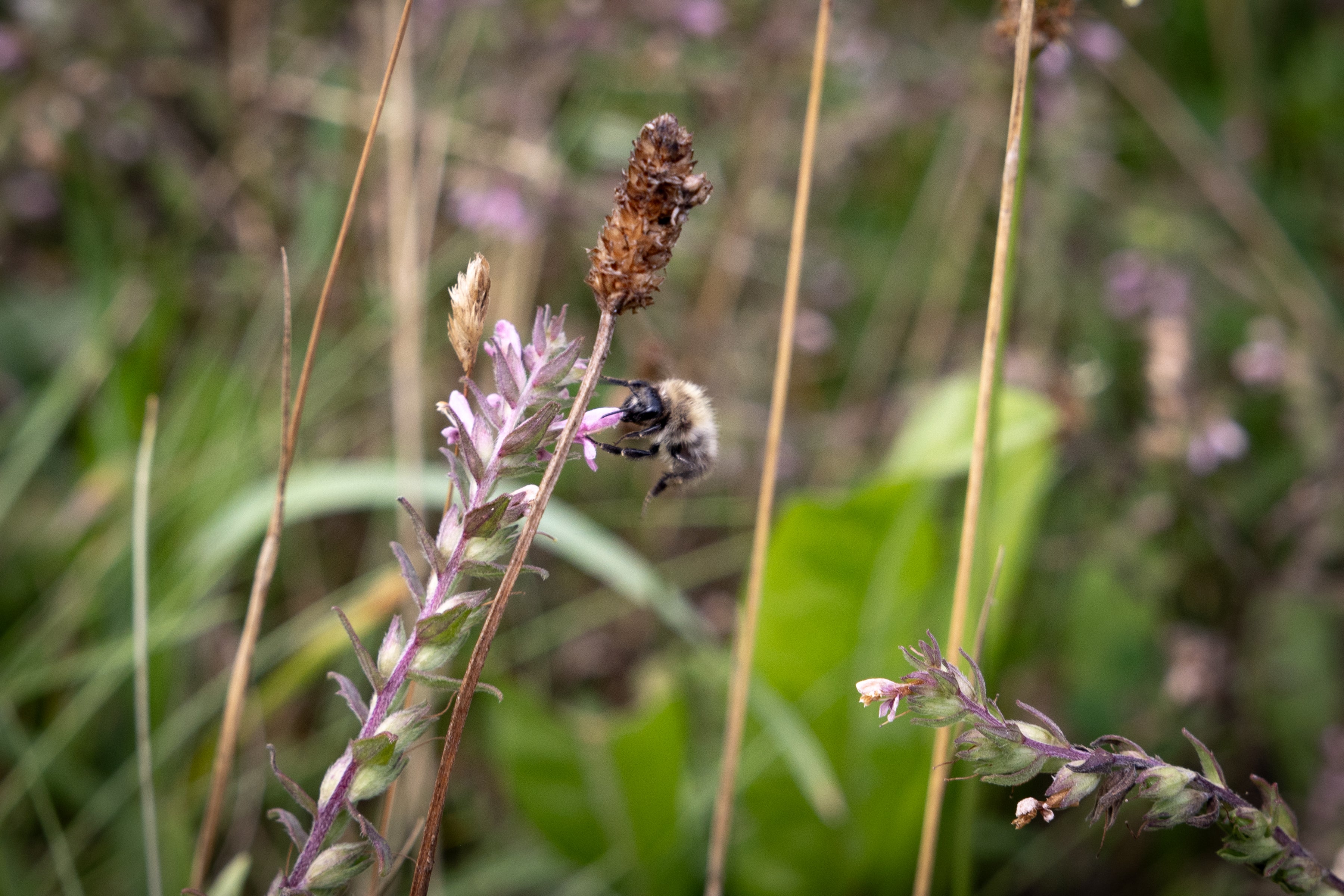
At Brewery farm, however, invertebrates have made a remarkable recovery. In 2025 surveys found 112 species. Twelve with a national conservation status designation were recorded alongside six locally important ones. Solitary bees and butterflies thrive with some rare sightings of Section 41 Conservation Priority species including ruderal bumblebee, squat furrow bee and numerous small heath butterflies.
The importance of predation management for wildlife on Britain’s farms
As well as feed and habitat, the third leg of the conservation stool, predation management is a key element of Graham’s success and he undertakes it as part of his work on the shoot. Fox control is carried out throughout the year, and Larsen traps are set in the spring to prevent carrion crows and magpies stripping the hedgerows of songbirds eggs and young.
According to Graham, the grey squirrel is an underrated threat: “I have seen squirrels attack swallows’ nests in the barn looking for young, and in the summer a male will empty a hedge of eggs at breeding time.” He believes another predator having a serious impact on turtle doves is the sparrowhawk. “I was approached to be involved in an RSPB project to radio tag 10 doves, which ended with five being killed by sparrowhawks in the UK. Conditions in Africa will be partly to blame for their decline, but so is predation on these shores.”
Bird-ringing at Brewery Farm has demonstrated that farmland birds show remarkable fidelity to particular sites. Graham makes the point that if you are successfully attracting birds to your land or nature reserve, there is a responsibility to protect them from predators, or you could be doing more harm than good.

The commercial seed corn grown on the farm fetches a premium, and Graham does some construction and digger work to supplement his income, but agri-environment payments are essential. He invests a huge amount of his own money and spare time, and shooting is an important driver for him. He said: “I wouldn’t have done nearly as much, if I wasn’t shooting minded.”
Agri-environment schemes and the value of data and record keeping
Graham was an early adopter of agri-environment schemes going into Countryside Stewardship (CS) in 1998 followed by Higher Level Stewardship then a Results Based Agri-environment Payment Scheme (RBAPS) trial and for the past five years Mid-Tier CS. He often found the earlier options too restrictive. For example, one year a sudden snowfall required him break his agreement to cut a cover crop for the birds, which were starving. On another occasion he chose to come out of a scheme for a year and lose the payment rather than destroy a scrub habitat that was working well for warblers, whitethroats and turtle doves. He said: “I’m a good advert for agri-environment schemes in that I’ve got a lot of wildlife, but if you asked me have I always stuck to the prescription, I’d say no. In the past, Natural England advisors have helped me with derogations because I produce the ringing reports and can show the birds increasing. Keeping good records is critical.”

The newer schemes are better paid, more flexible and there is less risk of fines or suspension of payment, if the prescription isn’t followed to the letter. Graham sees potential for them to deliver an impressive biodiversity net gain across the UK but believes there should be more scrutiny on how well they are being implemented by farmers. He said, “I think it would be good to have a more results-based approach both to allow for greater flexibility and to require evidence of successful habitat creation. Otherwise, it’s far too easy just to sow a mix and say job’s done. If it isn’t properly maintained, it will not deliver the biodiversity return the public has paid for.”
What are the major failings of the Sustainable Farming Incentive (SFI)?
In Graham’s view one of the major failings of the Sustainable Farming Incentive (SFI) in its initial form was that there was no limit on how much one farm could apply for. He said, “It is critical to share resources more evenly across the country to improve connectivity of habitats. Otherwise, you end up with big businesses planting vast areas of wild bird seed mix, which can be counterproductive. You attract lots of farmland birds but also predators which come to eat the grain. Rather than boosting the overall population, you risk creating a sink.”
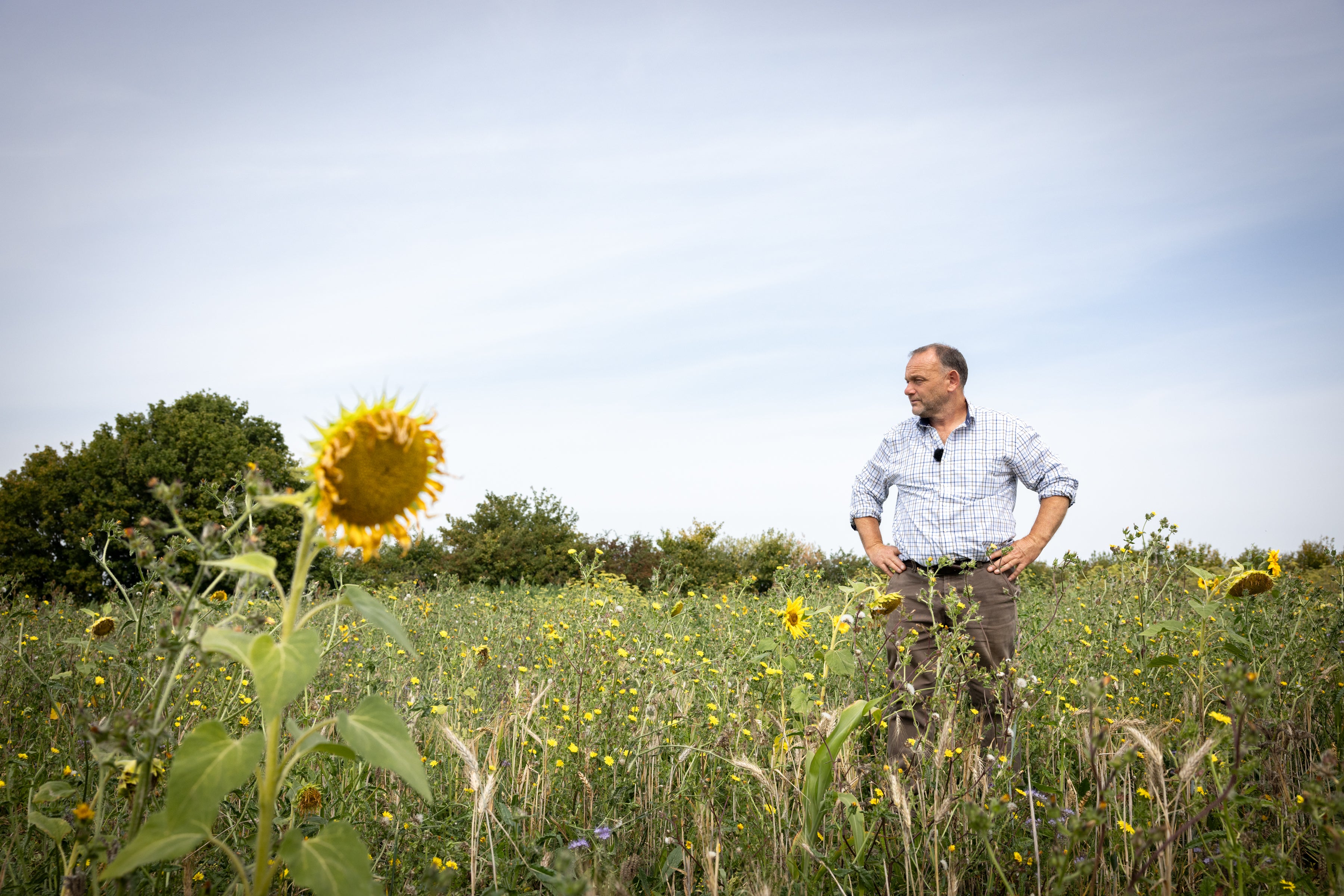
Graham is adamant that he cannot afford to continue with his conservation measures without payment, so if workable subsidies cease to exist, he will be forced to put his current options under the plough and cut back his hedges. He said, “People don’t realise that some of the habitats that will be destroyed have taken over 25 years to create. We are looking at a huge amount of long-term public investment being lost overnight.”
Nonetheless, Graham is determined to do his best for the birds whatever happens, and as a former Suffolk FWAG Silver Lapwing and Purdey Game and Conservation award winner, he has an impressive track record. Most recently he was a finalist in the Working Conservationist category the 2025 Schöffel Countryside Awards in partnership with GWCT. He puts his remarkable achievements down to a holistic approach: “If you plant cover for breeding birds, but you don’t have feed on the ground, it won’t work. If you feed it, but don’t control any rats, you create more problems. You’ve got to put everything into it.”
This article was first published in Gamewise, the Game & Wildlife Conservation Trusts free membership magazine.
The 2025 Working Conservationist category is sponsored by Harrison Spinks
 Schöffel Countryside Awards5 min readThe unsung heroes of the countryside | Episode 5: Geoff EyreRead post
 Schöffel Countryside Awards5 min readNominations open for 2026 Schöffel Countryside AwardsRead post
 Schöffel Countryside Awards7 min readThe unsung heroes of the countryside | Episode 4: Hooves and habitatRead post
 Schöffel Countryside Awards9 min readThe unsung heroes of the countryside | Episode 3: Rupert BrewerRead post
 Schöffel Countryside Awards4 min readWinners crowned in Schöffel Countryside AwardsRead post
 Schöffel Countryside Awards11 min readSchöffel Countryside Awards | Insights from the judgesRead post
 Schöffel Countryside Awards16 min readThe Schöffel Countryside Awards – meet the judges | Part 2Read post
 Schöffel Countryside Awards5 min readFinalists unveiled for the Schöffel Countryside AwardsRead post

