

















How can we help our pollinators?
The Game & Wildlife Conservation Trust’s Amber Hopgood provides a fascinating insight into the organisation’s research work over the years. The message is clear: It is crucial that we take a broader approach to pollinator conservation and acknowledge the unique contributions of the many different native species we are so lucky to have.
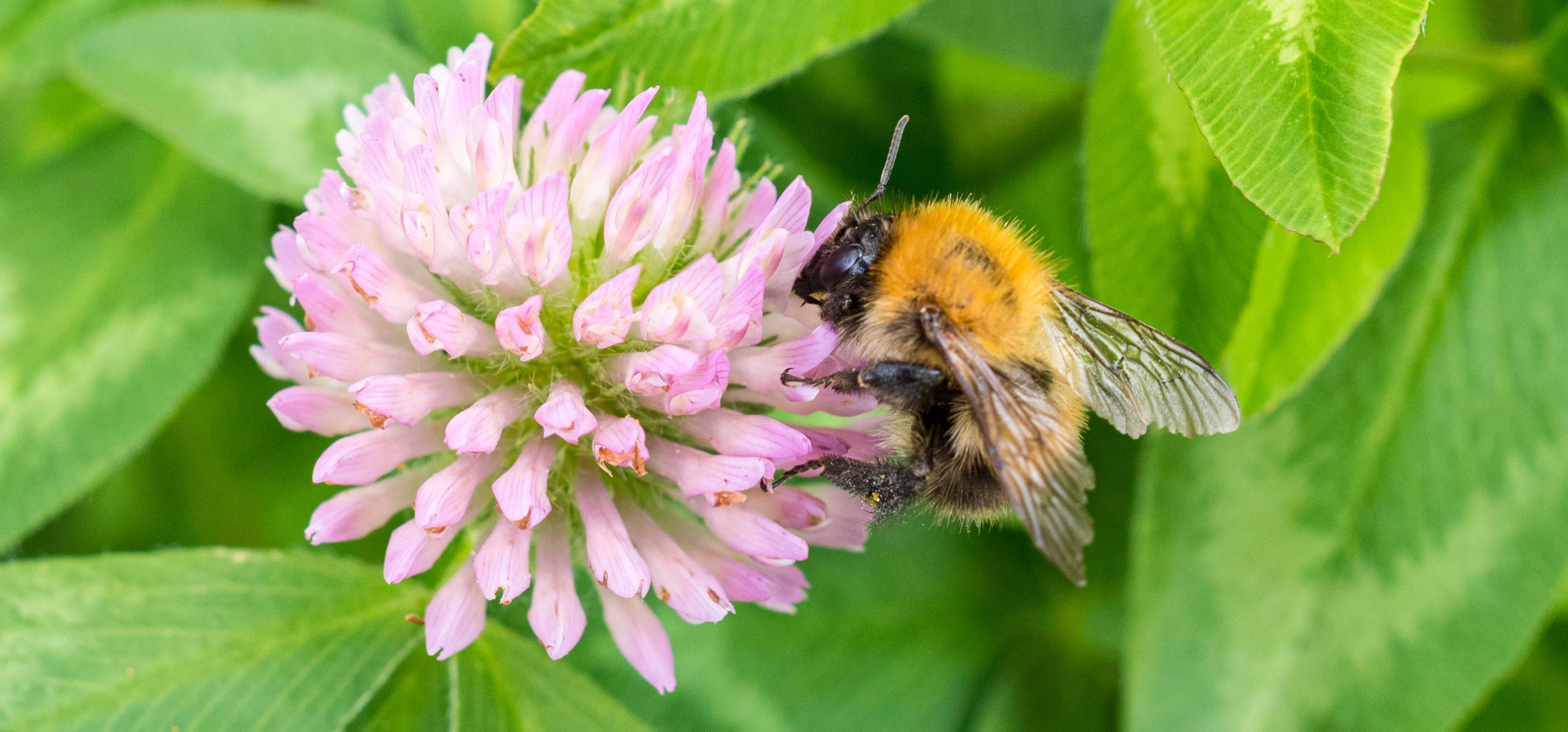
Many pollinating insects have declined in abundance in recent decades. In Britain, much of the public and political effort is concentrated on bumblebees, but these make up only around 10 per cent of the total number of bee species on our shores, with more than 250 species of solitary bees calling the UK home.
As the name suggests, solitary bees mostly nest and work alone, with the female making her own individual nest where her eggs are laid and left to hatch and mature by themselves. That being said, certain species will often choose very particular locations to make their nests, and so it is not unusual to see a number of nests in close proximity.
Solitary bees are incredibly important for pollination – an ecosystem service that contributes around £690 million to the UK economy every year. Rather than having pollen baskets (corbiculae) on their legs as social bee species do, they instead have scopae. These are an array of modified hairs on the hind leg, designed for carrying pollen. They are not as highly developed as the social bees’ pollen baskets and so solitary bees lose much more pollen as they fly, indirectly dispersing pollen to a large number of flowers, pollinating them in the process.
In comparison to honeybees, solitary bees also have the ability to stay active in colder temperatures, so can be more efficient pollinators, and in some cases can pollinate plants that honeybees and bumblebees are unable to. For example, due to their larger size, honeybees and bumblebees are poor pollinators of many plants in the Apiaceae family such as carrots, parsnips, and parsley. These plants instead rely on smaller pollinators, including many solitary bees – such as mining bees (Andrena), plasterer bees (Colletes), yellow-faced bees (Hylaeus), nomad bees (Nomada), and base-banded furrow bees (Lasioglossum) – along with hoverflies and beetles. More than 75 per cent of the world’s food crops depend on pollination, so it is vital we look after the important insects that fulfil this role.
GWCT research: How can we help pollinators?
To try and better understand how to help pollinators and monitor their numbers, the GWCT has launched a number of projects and carried out extensive research over the years. The GWCT Farmland Ecology Unit has been involved in pollinator research since the late 1990s through multiple PhD projects, large collaborative projects such as Farm4Bio (2005-10) and QuESSA (2013-17), and several smaller projects that evaluated different flowering mixtures. The simple message from all of this work is that if flower-rich habitats are established with the plant species preferred by bees, then they will find them.
Notably we launched the BEESPOKE project, led by the GWCT and funded by the EU Interreg Programme, North Sea Region, to increase pollinator populations and enhance crop pollination across the region. The project brought together 16 project partners – including policymakers, research institutes, advisory bodies, and farmer co-operatives – from the United Kingdom, Belgium, the Netherlands, Denmark, Germany, and Sweden.
The region had been identified as having a very low pollination potential, which was attributed to the loss of flower-rich habitats, such as meadows, and the degradation of other habitats such as hedgerows.
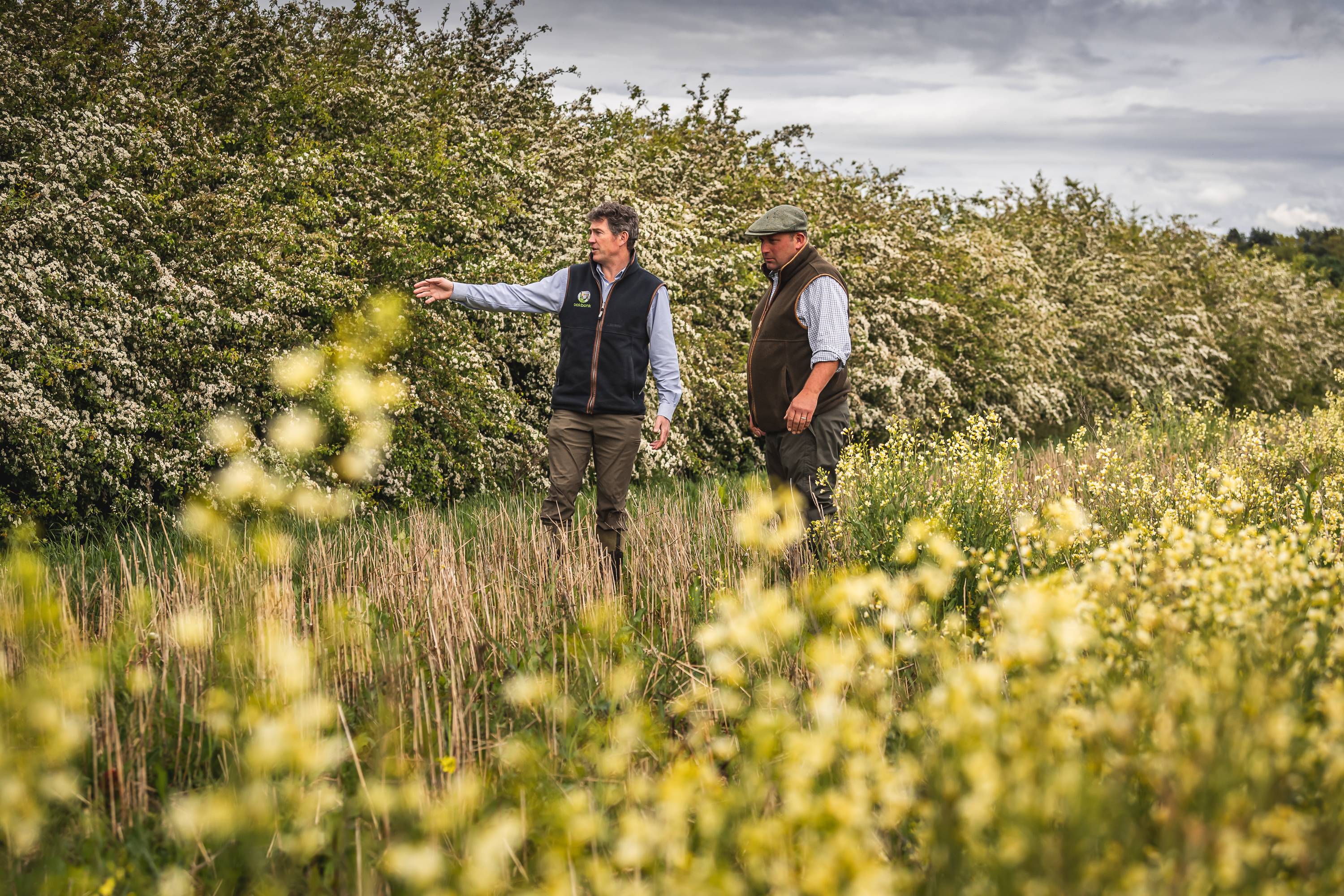
Previous GWCT-supported research showed that hedgerow plants such as hawthorn and blackthorn produced few fruits in the absence of insect pollinators. Pollinator declines, therefore, have serious implications for the survival of wild plants and also the animals that depend on the seeds and fruit resources they provide, such as mammals and fruit-eating birds.
The project came to an end in 2023, but the information it gave us will provide valuable insight for years to come. Pollinators, like many living creatures, need food, shelter, and somewhere to nest. The need for floral diversity to provide pollinators with food sources that suit them is a key point around which the BEESPOKE project was largely based. As was the need for diverse habitats this wide range of bee species can call home. Unlike honeybees, wild bee species such as solitary bees and bumblebees do not inhabit hives laid out by humans, but they may use bee hotels. Other wild bees use bare earth, tree cavities, tussocky grass, and leaf litter.
In addition to projects like this, we have done extensive research on pollinators over the years, working to understand how they interact with farmed landscapes. This has involved looking at how useful bare ground habitats are for ground-nesting bees, which flowers are most attractive to bees, what types of field margins are good for pollinators, and how different flower seed mixes can attract different types of pollinators to crop fields to improve pollination rates.
So, where do honeybees fit in?
When we think of pollinators, honeybees often come to mind. They’re widely recognised for their role in commercial agriculture and, of course, for producing honey – a product valued for its anti-inflammatory, antibacterial, and other health-promoting properties. However, the government FERA National Bee Unit recently urged UK beekeepers to check their hives regularly, as recent inspections revealed that many bee colonies are running dangerously low on food stores. Some colonies have already succumbed to starvation due to a prolonged wet and cold spring that prevented bees from replenishing their winter reserves. With climate change, such conditions could become more frequent.
Despite their value, honeybees aren’t the most efficient pollinators. Their primary role is honey production, and while they do contribute to pollination, they account for only 13-30 per cent of global pollination services. This raises a critical point: relying solely on honeybees might not be enough to support the pollination needs of our farms and natural ecosystems. While honeybees are helpful, they cannot replace the complex web of pollinators that support our environment and agriculture.
Honeybees are such efficient gatherers for honey that they drop very little pollen, and so provide relatively little cross pollination as they travel from flower to flower. Bumblebees and solitary bees, however, drop pollen more readily and therefore provide better cross pollination. These wild bees are also ‘hardier’ and will be active during colder conditions when honeybee activity is greatly reduced. These wild bees are the ones that we really need to support, and they cannot be commercially bred like honeybees.
Ultimately, it is crucial that we take a broader approach to pollinator conservation, acknowledging the unique contributions of different species.
You can learn more about the GWCT’s pollinator research here.